
Pasta Quality Assessment Tool
How Italian Is Your Pasta?
Answer these questions to see how closely your pasta matches Italian quality standards
Ever bitten into a plate of spaghetti in Italy and wondered why it felt alive-springy, fragrant, and deeply satisfying-only to go back home and find your pasta mushy, bland, or just… off? You’re not imagining it. The difference isn’t just the sauce or the chef. It’s the wheat. The water. The way it’s made. And it starts long before the pot boils.
The Grain Makes All the Difference
In Italy, pasta is almost always made from 100% durum wheat semolina. That’s not a marketing term-it’s the law. Italian regulations require pasta labeled as pasta di semola di grano duro to come from hard, high-protein durum wheat grown in specific regions like Puglia and Sicily. This wheat has a dense, golden structure that holds up under cooking. When you bite into it, it gives slightly, then springs back. That’s called al dente-not just a texture, but a promise.
In the US, most supermarket pasta is made from softer, lower-protein wheat, often blended with other flours like enriched white flour. Why? Because it’s cheaper. Durum wheat costs more, and American manufacturers prioritize volume over quality. The result? Pasta that absorbs too much water, turns gummy, and loses its structure within minutes. You’re not eating pasta-you’re eating starch soup.
How It’s Made Matters More Than You Think
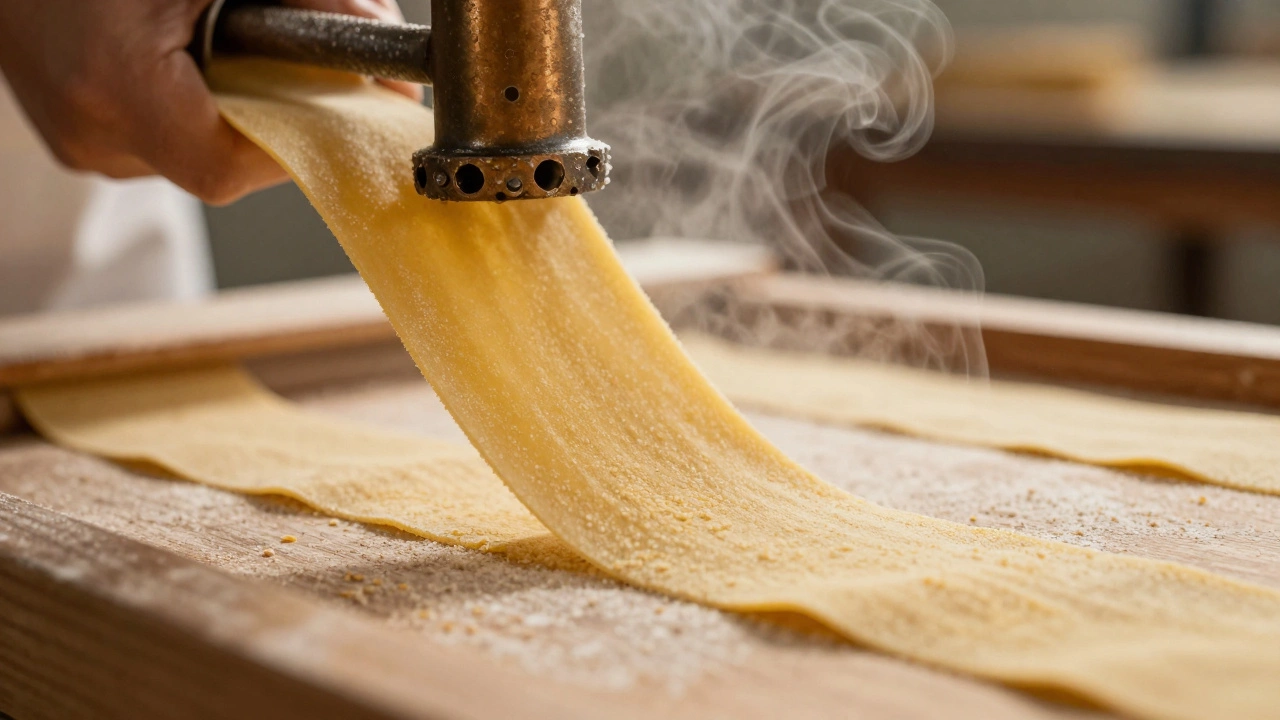
Italian pasta isn’t pressed through steel dies in a factory that runs 24/7. Traditional producers use bronze dies-rough, textured surfaces that create a slightly uneven surface on the pasta. That tiny roughness is what lets sauce cling. It’s not decorative. It’s functional. When you toss your spaghetti with a simple tomato sauce, the sauce sticks. Not slides off. Sticks.
Most American pasta is extruded through Teflon-coated dies. Smooth. Fast. Efficient. But that smooth surface means sauce pools at the bottom of the bowl. You end up pouring extra oil or butter just to make it stick. You’re compensating for bad design.
The Water Isn’t Just Water
Italians don’t salt their pasta water to make it taste better. They salt it to strengthen the gluten. The mineral content of Italian water-especially in the south-has natural calcium and magnesium. These minerals help the pasta retain its shape and texture as it cooks. In many parts of the US, water is heavily treated, softened, or chlorinated. That changes how the starches behave. Even if you use the same brand of pasta, the water can turn a perfect bite into a soggy mess.
Try this: Boil the same brand of Italian pasta in two pots-one with tap water, one with bottled mineral water. Taste the difference after 8 minutes. You’ll notice the mineral water version holds its bite better. That’s not magic. That’s chemistry.
Drying Time Changes Everything
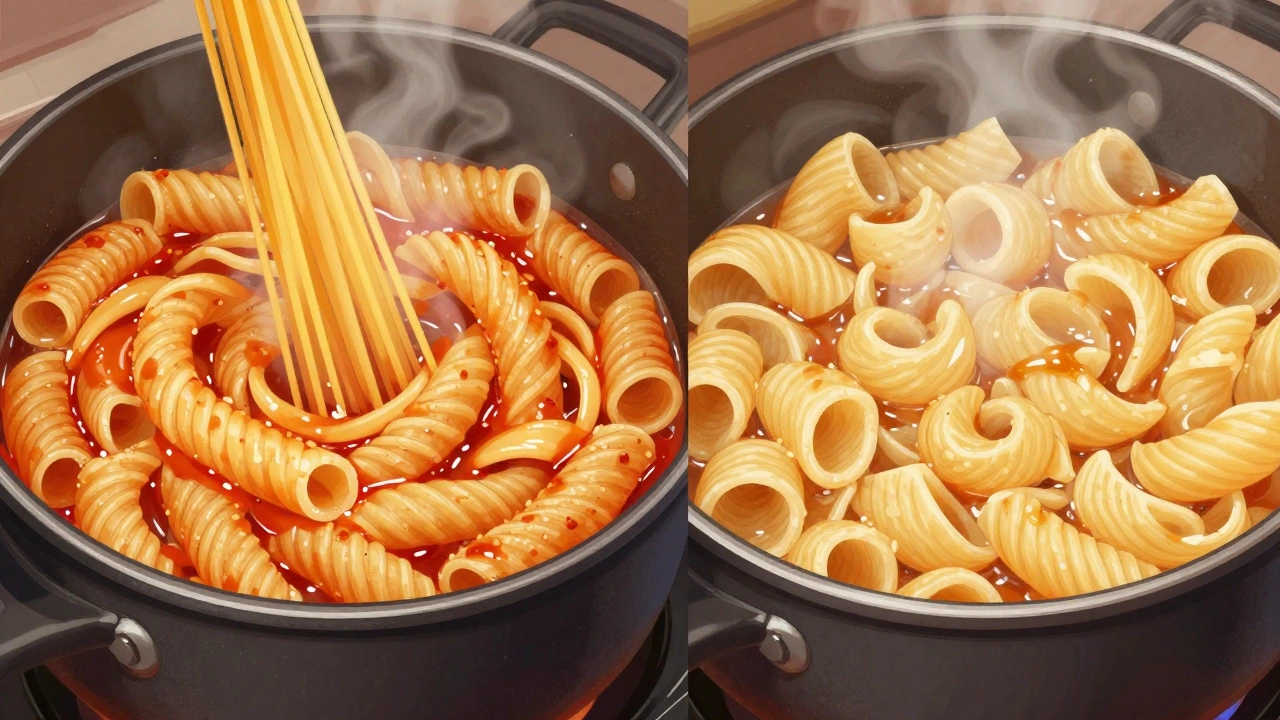
Italian pasta is dried slowly-at low temperatures, over 24 to 72 hours. That gentle drying preserves the wheat’s natural sugars and proteins. It keeps the pasta firm and gives it a subtle nutty flavor. When you cook it, it doesn’t break apart. It doesn’t turn to glue.
Most American pasta is dried in under 6 hours using high heat. Speed saves money. But it cooks the wheat too fast. The proteins denature. The starches become unstable. The pasta becomes brittle and overcooked before you even realize it. That’s why your box says “cook for 9-11 minutes,” but by minute 7, it’s already falling apart.
It’s Not About the Sauce
People blame the sauce. They think if they use more garlic, more olive oil, more parmesan, it’ll fix the pasta. But the sauce doesn’t fix bad pasta. It just hides it. A simple aglio e olio in Italy tastes like heaven because the pasta carries the flavor. In the US, that same recipe often tastes like garlic oil with a side of mush.
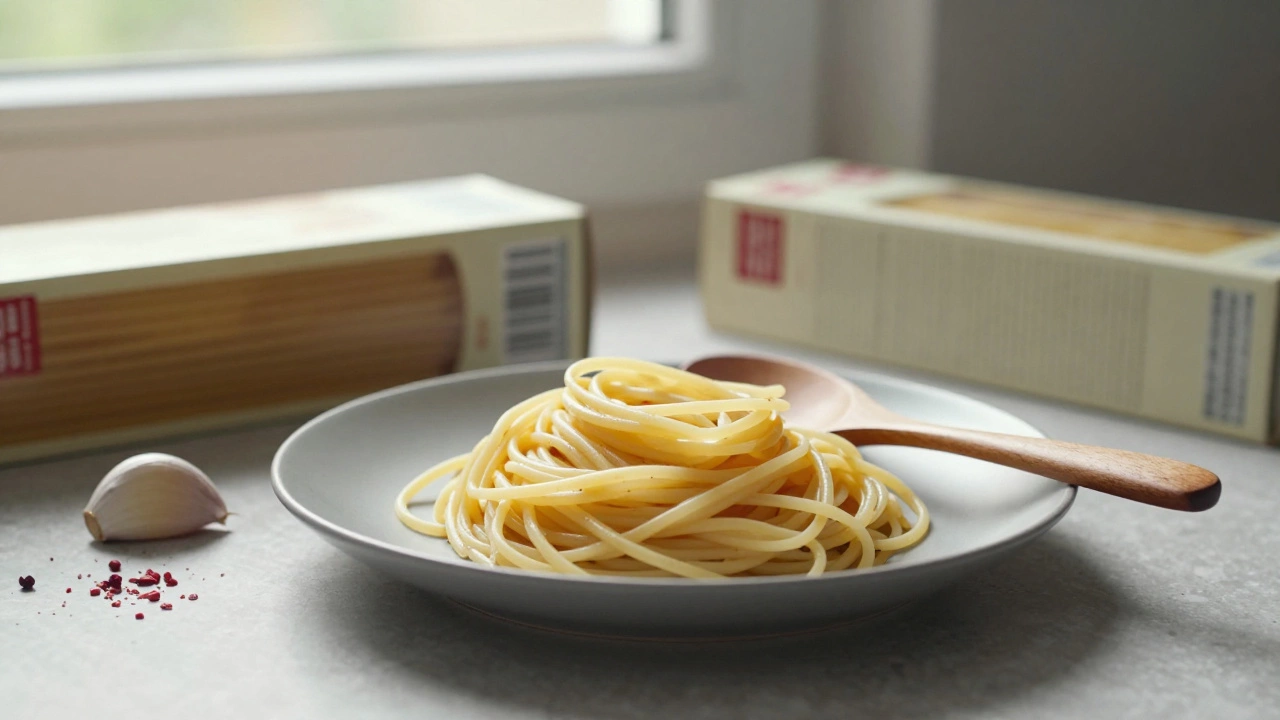
Try this experiment: Cook two batches of pasta-one high-quality Italian semolina, one standard American. Drain both. Toss each with a tablespoon of olive oil, a clove of crushed garlic, and a pinch of red pepper flakes. Taste them side by side. The Italian pasta sings. The American one just… sits there.
Where to Find Better Pasta in the US
You don’t have to wait for a trip to Rome. Good pasta exists in the US-it’s just not on the standard shelf. Look for brands that say:
- 100% durum wheat semolina (not just “made with durum wheat”)
- Bronze die extruded (check the label or website)
- Dried slowly (some list drying time-look for 48+ hours)
Brands like De Cecco, Rustichella d’Abruzzo, and La Molisana are widely available in US grocery stores. If you can’t find them, order online. A $5 bag of real semolina pasta lasts longer, cooks better, and tastes infinitely better than $2 boxes of the stuff.
Why This Isn’t Just a “Taste” Issue
This isn’t about snobbery. It’s about nutrition. Durum wheat semolina has more protein and fewer simple carbohydrates than blended flours. It digests slower. It keeps you full longer. It doesn’t spike your blood sugar the same way. That’s why Italians don’t feel sluggish after pasta. They feel energized.
And let’s not forget tradition. In Italy, pasta is treated like bread-something sacred. It’s not a quick fix. It’s a ritual. Boiling water, timing the salt, stirring gently, tasting at exactly 8 minutes. That attention changes the outcome. You don’t just eat pasta-you experience it.
What You Can Do Today
Stop blaming the recipe. Stop blaming the cook. Start with the ingredient.
- Swap your current pasta for a brand that uses 100% durum wheat semolina.
- Use coarse sea salt-1 tablespoon per 4 quarts of water.
- Don’t rinse the pasta after draining. That washes off the starch that helps sauce cling.
- Finish cooking the pasta in the sauce for 1-2 minutes. Let it absorb the flavor.
- Use a wooden spoon, not a metal one. It’s gentler and doesn’t break the pasta.
That’s it. No fancy tools. No expensive gadgets. Just better wheat and a little care.
Why Italy Doesn’t Have “Pasta Problems”
In Italy, pasta isn’t a commodity. It’s a cultural product. The government regulates it. Farmers grow the right wheat. Factories use the right methods. Consumers expect quality. There’s no incentive to cut corners because the market won’t accept it.
In the US, pasta is treated like cereal-cheap, mass-produced, and interchangeable. We’ve normalized mediocrity. But you don’t have to. Your plate doesn’t have to be a compromise.
Next time you cook pasta, ask yourself: Is this the best wheat I can find? If the answer is no, you’re not just making dinner. You’re making a choice.
And that choice matters more than you think.