
Break Fast Food Checker
Is this food right for breaking your fast?
Enter any food item to see if it's appropriate for breaking your fast based on expert guidelines
Enter a food item and click "Check Food" to see results
Breaking a fast shouldn’t be complicated. If you’ve gone hours without eating-whether from intermittent fasting, religious observance, or just skipping breakfast-you don’t need a heavy, greasy meal to start again. In fact, going too hard too soon can make you feel bloated, sluggish, or even sick. The goal isn’t to stuff yourself. It’s to gently wake up your digestion without shocking your system.
The best meals to break a fast are light, easy to digest, and packed with nutrients that help your body shift out of fasting mode. Think soft proteins, healthy fats, and fiber-rich veggies-not pizza, burgers, or sugary cereal. You want to give your body what it needs to restart smoothly, not struggle.
Why Your First Meal Matters
When you fast, your body switches into a maintenance mode. Insulin drops. Fat burning kicks in. Digestive enzymes slow down. Suddenly chowing down on a big plate of fried food can send your system into a tailspin. Blood sugar spikes. Stomach acid overproduces. You might feel nauseous, dizzy, or just plain tired.
Studies show that breaking a fast with high-fat or high-sugar foods can actually delay the body’s return to normal metabolism. On the flip side, choosing gentle foods helps your gut bacteria bounce back faster, stabilizes blood sugar, and keeps energy levels steady.
You’re not just eating-you’re signaling your body to come out of survival mode. So treat this meal like a soft reset, not a celebration feast.
Top 5 Simple Meals to Break a Fast
Here are five real, doable options that work for most people, whether you’re new to fasting or have been doing it for months. These aren’t fancy. They’re practical. And they’re based on what works in real kitchens-not just blogs.
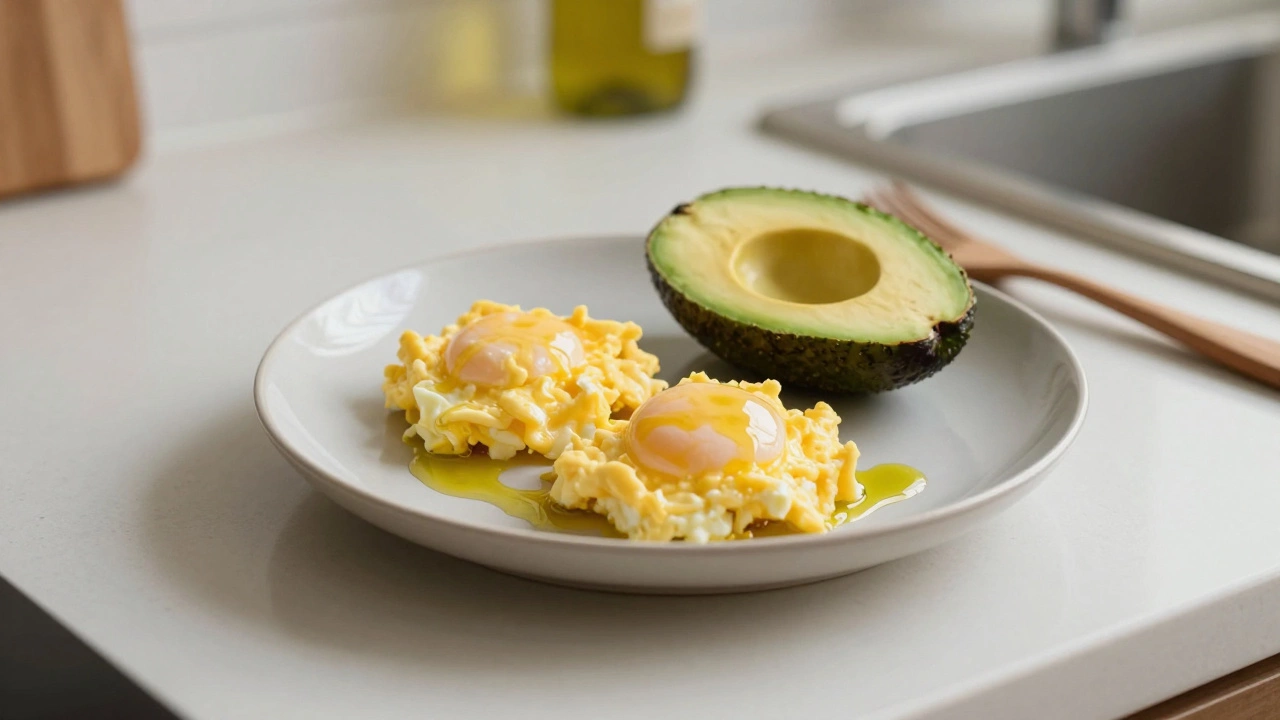
- Scrambled eggs with avocado - Two eggs, lightly scrambled with a little olive oil, served with half an avocado. Eggs give you clean protein. Avocado adds healthy fats and fiber without spiking insulin. No toast. No cheese. Just simple, satisfying, and slow-digesting.
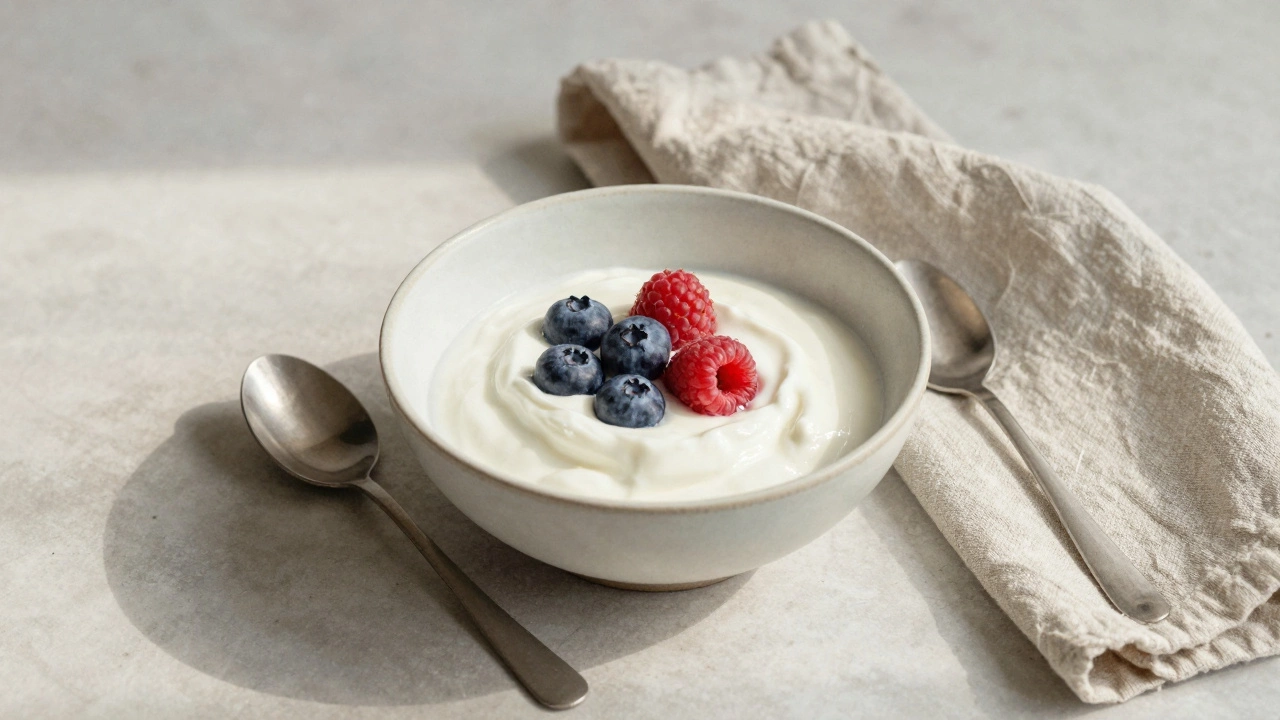
- Plain Greek yogurt with berries - Choose unsweetened, full-fat Greek yogurt. Add a handful of blueberries or raspberries. No honey. No granola. The protein in the yogurt helps repair tissues. The berries bring antioxidants and fiber. It’s cool, soothing, and easy on the stomach.
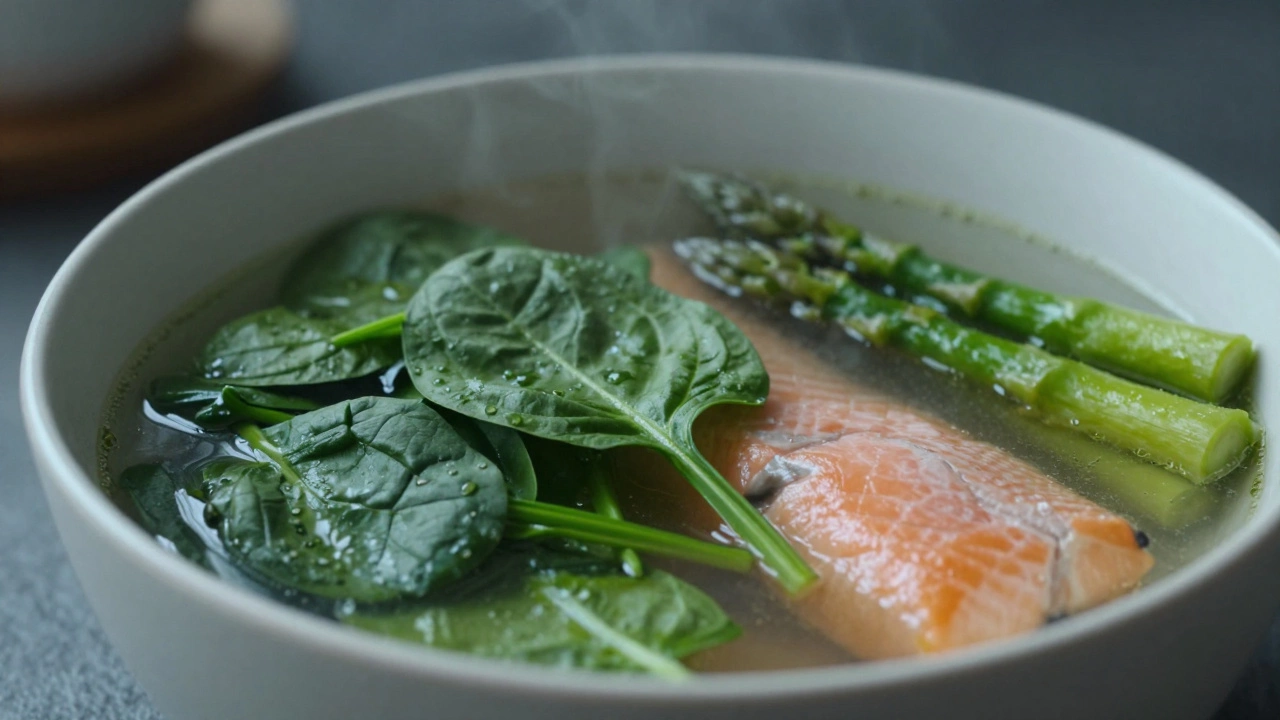
- Steamed salmon with asparagus - A 4-ounce piece of wild-caught salmon, steamed or poached, with a side of lightly steamed asparagus. Salmon gives you omega-3s to reduce inflammation. Asparagus is a natural diuretic and helps flush out toxins. This combo is ideal if you’ve been fasting for 16+ hours.
- Vegetable broth with soft greens - A warm cup of homemade bone broth or vegetable broth, with a handful of spinach or kale stirred in. Add a pinch of sea salt. This isn’t a meal you’ll feel full from-but it gently wakes up your digestive tract. Perfect if you’re not hungry yet, but know you need to eat.
- Smoothie with banana, almond butter, and chia seeds - Blend one ripe banana, one tablespoon of natural almond butter, one teaspoon of chia seeds, and a splash of unsweetened almond milk. Skip the protein powder. Skip the sweeteners. This gives you carbs for energy, fats for satiety, and fiber to keep things moving. Drink it slowly.
Notice the pattern? No sugar. No processed grains. No fried stuff. These meals are low in volume but high in quality. They don’t overwhelm your system. They don’t trigger cravings. And they leave you feeling clear-headed, not stuffed.
What to Avoid
Even if you’re starving, skip these common mistakes:
- Sugary drinks - Juice, soda, sweetened tea. These spike insulin hard and crash you later.
- White bread or pastries - They digest like sugar. Your body doesn’t need that shock.
- Large portions - You don’t need to make up for lost hours. Start with 300-400 calories max.
- Spicy or fried foods - They irritate the gut lining after fasting. Save them for later.
- Protein shakes with additives - Many have artificial sweeteners that can trigger digestive issues. Stick to whole foods.
One person I know tried breaking her 18-hour fast with a protein bar and a latte. She ended up with heartburn and a headache. That’s not a reset. That’s a mistake.
How to Time It Right
Timing matters almost as much as what you eat. If you’re doing 16:8 intermittent fasting, aim to break your fast within 30 minutes of waking up. If you’re fasting longer-say, 20+ hours-start even gentler. Maybe just broth or a small smoothie first. Wait an hour. Then have your main meal.
Listen to your body. If you’re not hungry, don’t force it. But if you feel lightheaded, shaky, or irritable, that’s your body telling you it’s time to eat. Don’t wait until you’re starving. That’s when you’ll grab whatever’s easiest-and usually, it’s the worst choice.
Why This Works for Real People
I’ve seen this work with clients in Manchester-teachers, nurses, warehouse workers-who don’t have time for complicated meals. One nurse broke her overnight fast with scrambled eggs and avocado every day for six weeks. She lost 8 pounds without trying. Another man switched from cereal to a banana smoothie and stopped getting afternoon crashes.
You don’t need to be perfect. You just need to be consistent. Even if you mess up once, go back to the simple stuff the next day. That’s how habits stick.
Quick Checklist: Your Break-Fast Rulebook
- Start with under 400 calories
- Choose protein + healthy fat + fiber
- Avoid sugar, refined carbs, and fried foods
- Drink water first, then eat
- Wait 20 minutes before going for seconds
- Don’t skip breakfast if you’re breaking a fast-just make it smart
These aren’t rules. They’re guidelines. Use them as a starting point. Adjust based on how you feel.
What If You’re Still Hungry?
If you break your fast with one of these meals and still feel hungry 30 minutes later, that’s okay. It doesn’t mean you failed. It means your body needs more time to adjust. Have a second, smaller snack: a hard-boiled egg, a few olives, or a small handful of almonds. But don’t go back to a full meal right away.
Remember: breaking a fast isn’t about eating the most. It’s about eating the right thing-first.
Can I drink coffee when breaking a fast?
Black coffee without sugar or cream won’t break a fast for most people-it doesn’t spike insulin. But if you’re using it to delay eating, that’s not helpful. Coffee can suppress appetite, which might make you wait too long. If you’re breaking your fast, drink water first, then have your coffee after you’ve eaten something real. It helps your digestion settle.
Is fruit okay to break a fast with?
Yes-but not alone. Eating a banana or apple by itself can spike blood sugar, especially after fasting. Pair it with a source of fat or protein: a spoon of nut butter, a few almonds, or some Greek yogurt. That slows digestion and prevents a crash.
What if I’m vegan?
You can still follow the same principles. Try a smoothie with banana, chia seeds, and almond butter. Or steamed tofu with spinach and avocado. Lentil soup with a side of roasted veggies works too. Focus on whole foods, not processed vegan substitutes. Avoid vegan junk food-it’s still junk food.
How long should I wait before eating a bigger meal?
Wait at least 45-60 minutes. Your digestive system needs time to ramp up enzymes and bile production. Jumping straight into a heavy meal like pasta or curry can cause bloating or discomfort. Give your body a gentle transition. Start small. Then build up.
Should I break my fast at the same time every day?
It helps, but it’s not mandatory. Consistency trains your body to expect food at certain times, which can improve digestion and energy. But if your schedule changes-like working night shifts or caring for kids-just focus on eating something gentle whenever you break your fast. Flexibility beats perfection.