
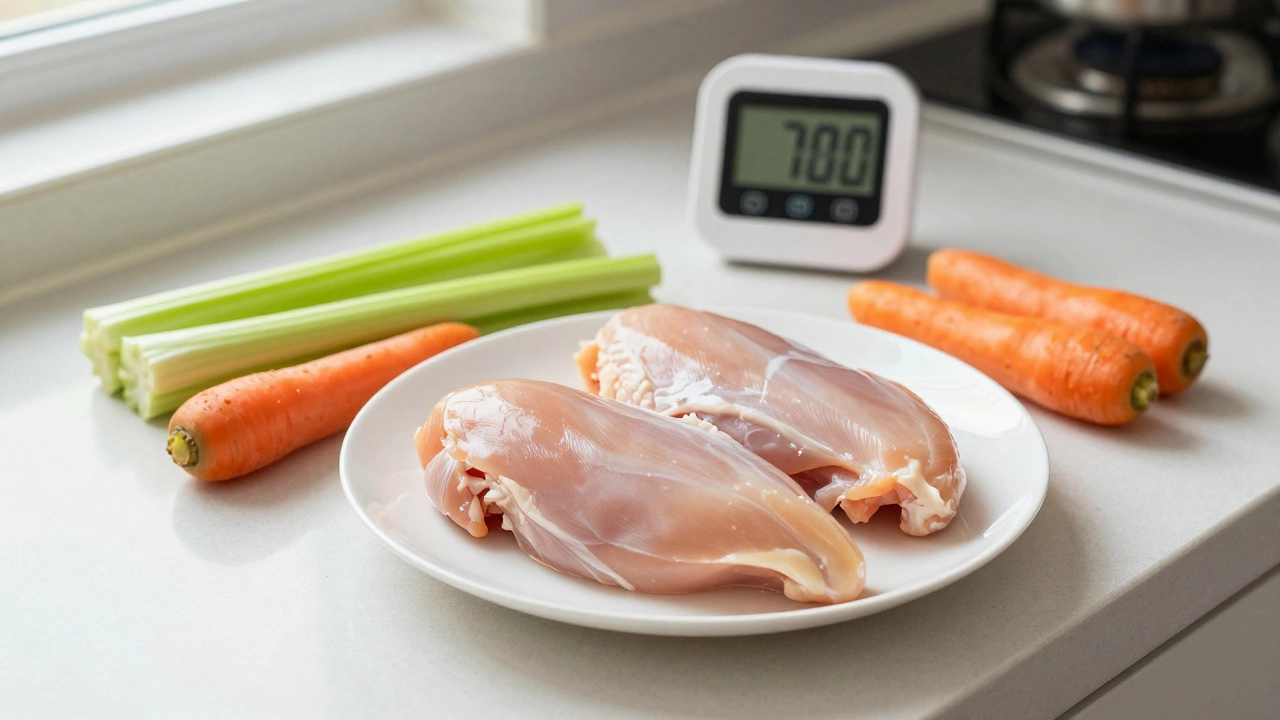
Chicken Safety Timer & Risk Checker
Quick Summary: The Golden Rules
- Never leave chicken out for more than 2 hours.
- If the room is hotter than 90°F (32°C), that window drops to 1 hour.
- "Tempering" is mostly a myth for chicken; it doesn't significantly improve cook time but does increase risk.
- When in doubt, throw it out.
The Danger Zone: Where Bacteria Thrive
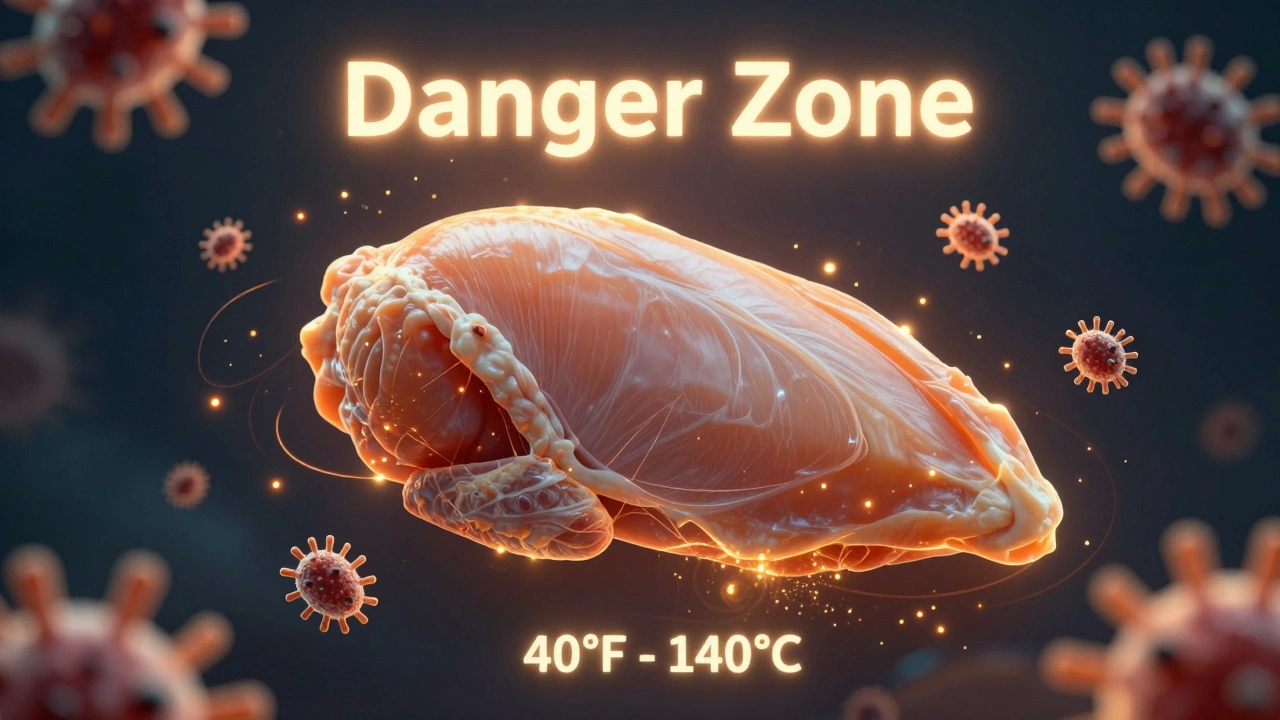
To understand why the clock is ticking, you need to know about the Danger Zone. This is the temperature range between 40°F and 140°F (4°C to 60°C). In this window, bacteria don't just survive-they feast.
When you take a piece of chicken out of the fridge, it slowly climbs into this zone. Once it hits that sweet spot, Salmonella and other microbes start multiplying exponentially. If you leave a tray of wings on the counter for three hours, you're not just dealing with a few bacteria; you're dealing with millions. Cooking the meat to the right internal temperature kills the bacteria, but it doesn't always destroy the heat-stable toxins some bacteria produce while they're hanging out on your counter.
The "Tempering" Myth: Does it Actually Help?
You've probably seen cooking shows where the chef tells you to let the meat come to room temperature before searing. The idea is that if the center is warmer, the meat cooks more evenly, preventing a burnt outside and a raw inside. For a massive 3-inch thick steak, this makes some sense. For a standard chicken breast? Not so much.
Chicken is relatively lean and usually thinner than a prime rib. The difference in cooking time between a piece of chicken at 38°F and one at 65°F is negligible-maybe a couple of minutes. However, the risk of entering the danger zone is a very real trade-off. If you really want a more even cook, your best bet is to brine the meat or use a meat thermometer to pull it off the heat the second it hits the safe mark.
| Feature | Cold from Fridge | Left Out (30-60 min) | Left Out (2+ hours) |
|---|---|---|---|
| Bacterial Risk | Very Low | Moderate | High |
| Cook Time | Standard | Slightly Faster | Same (but risky) |
| Juiciness | High (if not overcooked) | Similar | Possible degradation |
| Safety Status | Safe | Safe | Unsafe |
How to Safely Prep Your Chicken
If you're worried about the meat being too cold, there are ways to handle it without playing Russian Roulette with your stomach. First, always keep your chicken in the fridge until you are ready to season and sear. If you use a marinade, do it inside a sealed bag or bowl in the refrigerator, not on the counter.
If you absolutely insist on letting your meat sit out for a short while, stick to a maximum of 30 minutes. Use a timer. It's easy to get distracted by a glass of wine or a conversation, and suddenly 30 minutes becomes two hours. Also, keep the chicken on a plate or tray to catch any leaks, as raw chicken juices can contaminate your entire countertop, leading to cross-contamination with other foods.
Cooking to the Safe Internal Temperature
Leaving chicken out is one part of the equation; the other is making sure it's actually cooked through. You cannot rely on the color of the meat or the clarity of the juices to tell if it's safe. Some chicken looks white inside but is still in the danger zone.
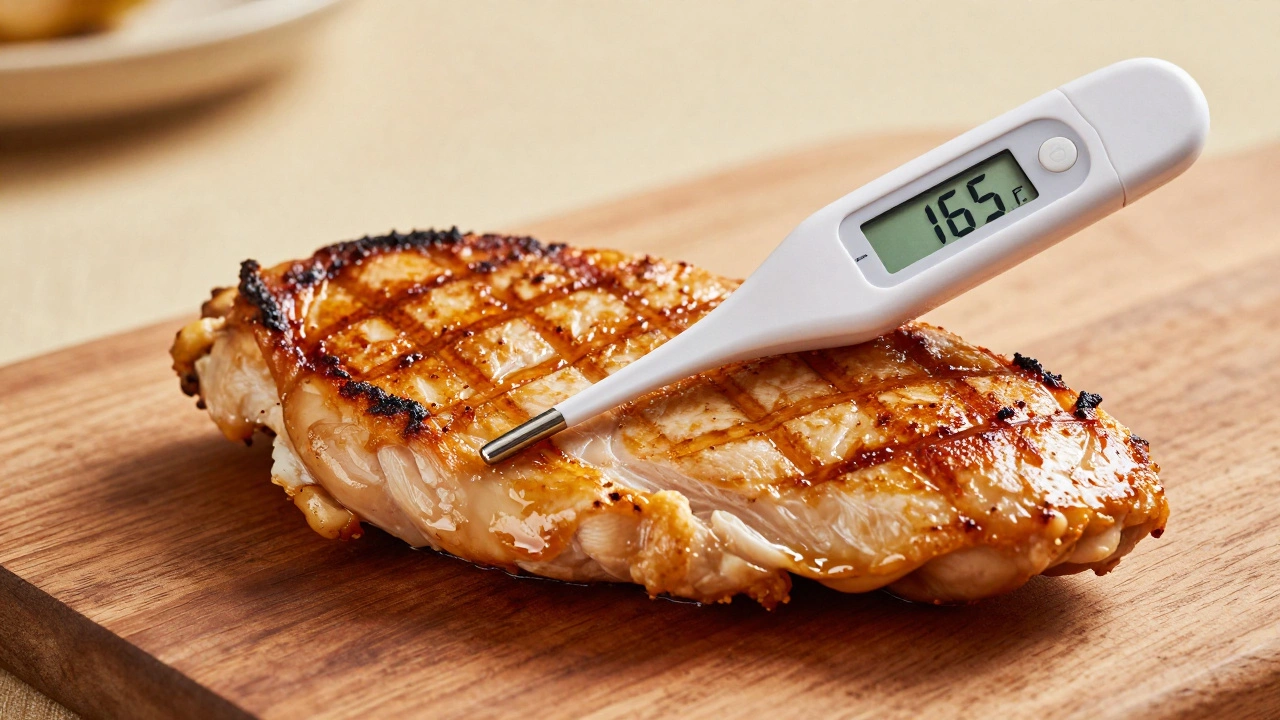
The USDA (United States Department of Agriculture) mandates that all poultry reach an internal temperature of 165°F (74°C). Use a digital meat thermometer and insert it into the thickest part of the meat, avoiding the bone. Once it hits 165°F, the bacteria that grew during that brief time on the counter are neutralized. But remember, if the meat sat out for four hours, 165°F might not be enough to save you from the toxins produced by the bacteria.
Common Pitfalls and Mistakes
One of the biggest mistakes people make is thawing chicken on the counter. This is a disaster waiting to happen. The outside of the chicken thaws and enters the danger zone while the center is still a block of ice. Always thaw chicken in the refrigerator, in cold water (changing the water every 30 minutes), or in the microwave if you're cooking it immediately.
Another common error is "pre-cooking" or searing meat, letting it sit out to rest, and then putting it back in the oven. If that resting period happens in a hot kitchen for too long, you're essentially inviting bacteria back to the party. Keep your resting times reasonable and your environment clean.
Can I leave chicken out if it's marinated?
No. While acid (like vinegar or lemon juice) and salt in a marinade can slow down some bacterial growth, they do not stop it. Marinated chicken still needs to be kept at or below 40°F to remain safe. Never marinate meat on the counter.
What happens if I cook chicken that sat out for 3 hours?
You are taking a significant risk. While heat kills the bacteria themselves, some strains of bacteria produce toxins that are heat-stable. This means even if the meat reaches 165°F, the toxins can still cause food poisoning. The safest move is to discard the meat.
Does the type of chicken (breast vs thighs) matter?
The safety rules are the same for all parts of the bird. Whether it's a wing, a thigh, or a breast, the danger zone applies equally to all raw poultry.
Is 30 minutes really okay?
Yes, 30 minutes is generally considered safe for most households, provided the room isn't excessively hot. It's a reasonable compromise for those who want to take the chill off the meat without risking health.
How do I know if the chicken has gone bad?
Look for a gray or greenish tint, a slimy texture, or a sour, ammonia-like smell. However, be warned: bacteria that cause food poisoning often don't change the smell or look of the meat. Trust the clock more than your nose.
Next Steps for Your Kitchen
If you're planning a big meal, prep your ingredients in stages. Chop your vegetables and set them aside, but leave the chicken in the fridge until the very last moment. This keeps your chicken room temperature exposure to a minimum. For those who struggle with uneven cooking, try the "reverse sear" method or use a brine to keep the meat moist while you cook it thoroughly to the safe temperature.