
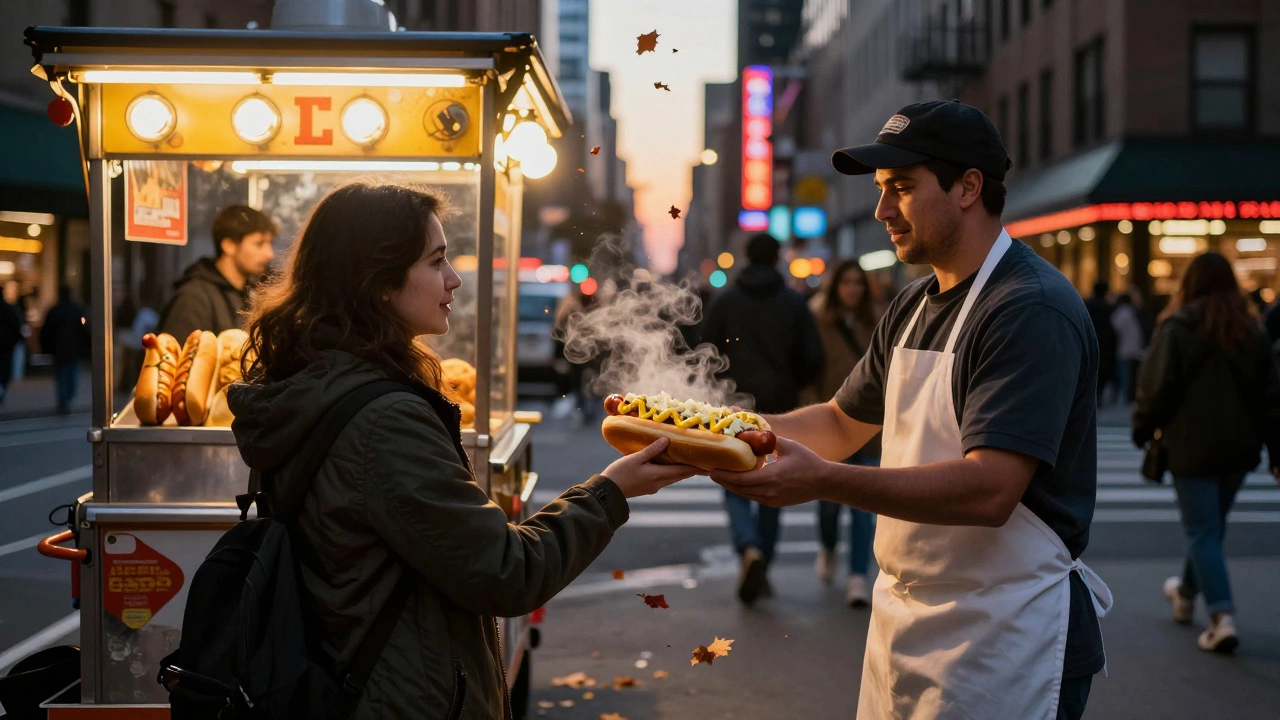
Ask anyone what the number one street food in the United States is, and you’ll hear the same answer over and over - the hot dog. It’s not just popular. It’s everywhere. From Coney Island to LA street corners, from baseball stadiums to midnight food trucks, the hot dog is the undisputed king of American street food. No other snack comes close in terms of reach, history, or emotional connection.
Why the Hot Dog Dominates
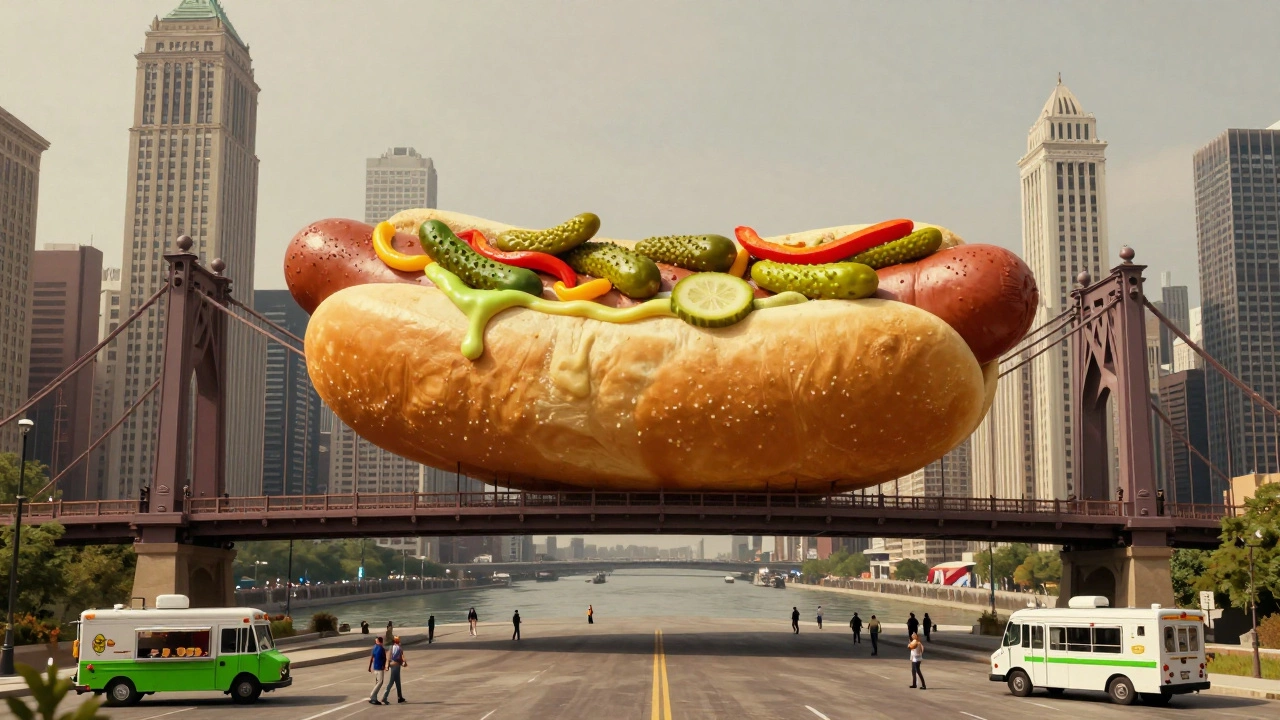
The hot dog isn’t just a sausage in a bun. It’s a cultural symbol. It’s what you eat at summer barbecues, Fourth of July parades, and late-night drives after a concert. It’s cheap, fast, and endlessly customizable. A basic hot dog costs under $3 in most cities. In New York, you can get one with sauerkraut, onions, and spicy brown mustard for $4. In Chicago, it’s loaded with neon green relish, pickled sport peppers, and a poppy seed bun - and no ketchup, because that’s a sin.
There are over 7 billion hot dogs consumed in the U.S. every year, according to the National Hot Dog and Sausage Council. That’s about 20 hot dogs per person. Compare that to tacos, which are huge but spread across dozens of regional styles, or pretzels, which are popular but mostly limited to certain cities. The hot dog doesn’t need regional variation to win. It wins because it’s simple, reliable, and universally understood.
A Brief History of the American Hot Dog
The hot dog traces its roots to German immigrants in the 1800s who brought over frankfurters and wienerwurst. By the 1870s, vendors in New York City were selling them from carts, often to factory workers and baseball fans. Charles Feltman, a German baker, opened the first known hot dog stand on Coney Island in 1867. He sold over 3,600 hot dogs in his first season. By 1916, Nathan Handwerker, a former employee of Feltman’s, started his own stand nearby - Nathan’s Famous - and the rivalry that still exists today was born.
The hot dog became a national icon during World War II. With meat rationing, it was one of the few affordable protein sources. After the war, the rise of suburban living and car culture made it perfect for drive-ins and roadside stands. By the 1950s, frozen hot dogs hit grocery stores, and the bun became pre-sliced and mass-produced. It wasn’t just food anymore - it was a convenience product designed for a fast-moving America.
Regional Styles That Prove Its Power
Even though the hot dog is the same basic thing - a sausage in a bun - every region has made it their own. These aren’t just toppings. They’re identities.
- New York Style: A beef or beef-pork blend frank in a soft, steamed bun. Topped with yellow mustard and sauerkraut. Sometimes onions. Always eaten with a napkin.
- Chicago Dog: All-beef frank, poppy seed bun, no ketchup. Topped with yellow relish, onions, tomatoes, pickled sport peppers, a dill pickle spear, celery salt, and mustard. It’s a sandwich, not a snack.
- Los Angeles Dog: Often grilled, sometimes with melted cheese, jalapeños, or even bacon. The ‘Mexican Dog’ adds refried beans and salsa.
- Detroit Coney: A natural-casing hot dog topped with a thick, spicy meat sauce, chopped onions, and yellow mustard. Served with a side of mustard and sometimes fries.
- Seattle Dog: Wrapped in bacon and grilled, then topped with cream cheese and grilled onions. Sweet, smoky, and weirdly addictive.
These aren’t just variations. They’re traditions. People in Chicago will argue for hours about whether a hot dog should have celery salt. In Detroit, the Coney Island sauce recipe is guarded like a family secret. The hot dog isn’t just food - it’s local pride.
Why It’s Comfort Food
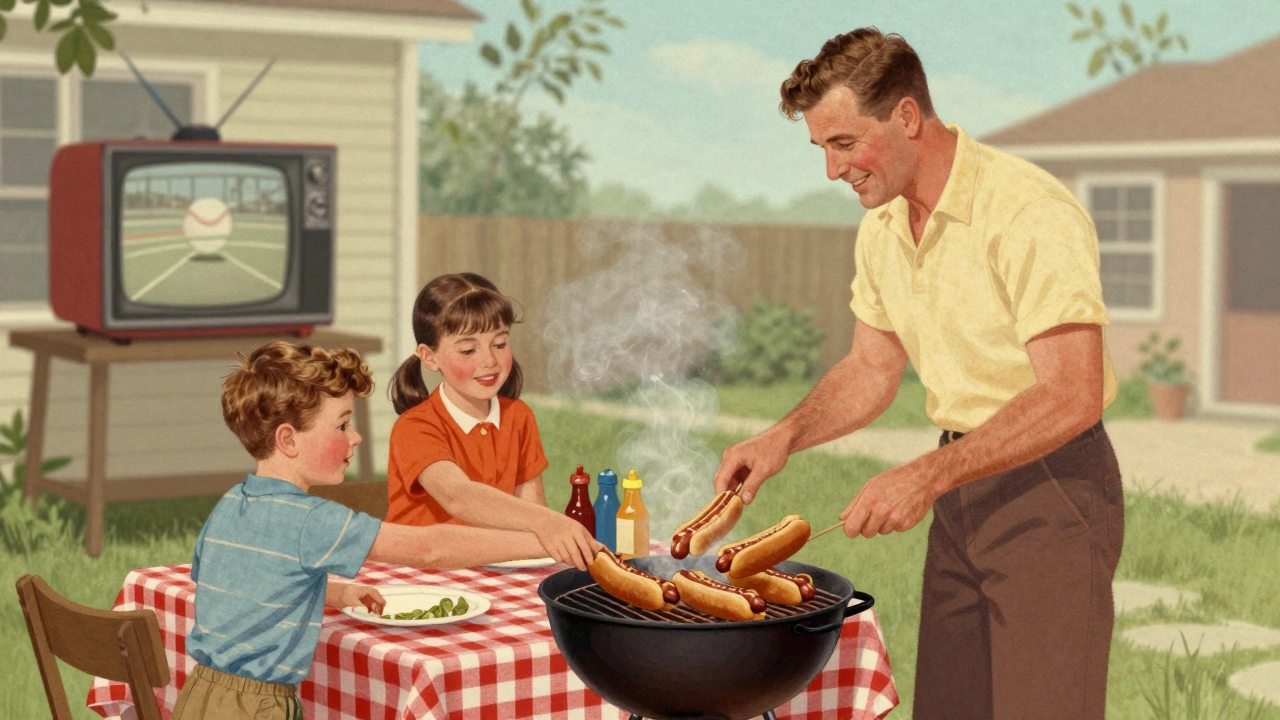
Comfort food doesn’t have to be fancy. It doesn’t need to be homemade. It just needs to make you feel safe. The hot dog does that. It’s the meal you ate as a kid at a county fair. It’s what your dad grilled on a Sunday afternoon. It’s what you grab after a long shift, when you’re too tired to cook but still need something that tastes like home.
Studies show that people associate certain foods with childhood memories - and the hot dog ranks high on that list. A 2023 survey by the Food & Brand Lab at Cornell University found that 68% of Americans under 40 said they ate their first hot dog before age 10. Nearly half said it was their go-to meal during stressful times. That’s not coincidence. It’s psychology.
It’s also portable, easy to eat one-handed, and doesn’t require utensils. You can eat it walking, driving, or standing in line. That’s why it thrives as street food. It fits the rhythm of modern life.
What About Other Contenders?
Some might argue for tacos, burgers, or fried chicken. Tacos are huge, sure - but they vary so much by region and ingredient that they don’t have a single identity. A taco in San Diego isn’t the same as one in New Jersey. A burger is great, but it’s usually a sit-down meal. You don’t see people eating gourmet burgers from carts on the sidewalk every day.
Fried chicken? Delicious, but it’s messy. You need napkins, a plate, maybe even a fork. A hot dog? You hold it. You bite. You’re done in under a minute. No mess. No fuss. That’s why it wins.
Even food trucks, which have exploded in popularity over the last decade, still lead with hot dogs. According to the National Street Vendors Association, over 40% of all food trucks in the U.S. sell hot dogs as their main item. That’s more than tacos, more than grilled cheese, more than vegan bowls. It’s the default.
How to Make the Best Hot Dog at Home
You don’t need a food truck to make a great hot dog. You just need the right approach.
- Choose your sausage. Look for natural-casing franks - they snap when you bite them. Brands like Hebrew National, Nathan’s, or local butchers are good.
- Steam the bun. Boil water in a pot, place the bun in a steamer basket for 30 seconds. It softens the crust and keeps it from getting soggy.
- Don’t boil the dog. Grill it or pan-sear it. Boiling makes it rubbery. A quick sear gives it char and flavor.
- Use fresh toppings. Pre-shredded cheese melts better, but fresh diced onions and pickles taste brighter.
- Try the Chicago style. Even if you’re not from there, give it a shot. The combination of sweet relish, sport peppers, and celery salt is unlike anything else.
And for heaven’s sake - leave the ketchup off unless you’re a kid. It’s not about rules. It’s about respect.
The Future of the American Hot Dog
Plant-based hot dogs are growing fast. Beyond Meat and Impossible Foods now make versions that mimic the texture and flavor of traditional dogs. They’re not perfect - but they’re getting closer. Major league ballparks like Minute Maid Park and Petco Park now offer vegan dogs on their menus.
But the core hasn’t changed. People still want the snap, the smokiness, the simplicity. The hot dog isn’t going anywhere. It’s too embedded in the culture. Too tied to memories. Too perfect for the way we live.
So if you’re looking for the number one street food in the United States - you already know the answer. It’s the hot dog. Not because it’s fancy. Not because it’s expensive. But because it’s real. And it’s always been there when you needed it.
Is the hot dog really the most popular street food in the U.S.?
Yes. According to the National Hot Dog and Sausage Council, Americans eat over 7 billion hot dogs annually - more than any other street food. Food truck surveys show that 40% of vendors sell hot dogs as their main item, outpacing tacos, burgers, and other options.
What’s the difference between a hot dog and a wiener?
Technically, they’re the same thing. ‘Hot dog’ refers to the complete dish - sausage in a bun. ‘Wiener’ is just another name for the sausage itself, usually made from pork or beef. In some regions, like Wisconsin, people say ‘wiener’ to mean the meat, while ‘hot dog’ means the whole meal.
Why is ketchup frowned upon on hot dogs in Chicago?
It’s tradition. In Chicago, a proper hot dog is loaded with specific toppings: yellow relish, onions, tomatoes, pickled sport peppers, a dill pickle spear, celery salt, and mustard. Ketchup is seen as overpowering and unnecessary. Many Chicagoans consider it a sign of inexperience or disrespect to the craft.
Are there vegetarian or vegan hot dogs?
Yes. Brands like Beyond Meat, Impossible Foods, and Field Roast make plant-based hot dogs that mimic the texture and flavor of traditional ones. Many ballparks and food trucks now offer them. They’re not the same as meat dogs, but they’re close enough for most people.
Can I freeze hot dogs?
You can, but it’s not ideal. Freezing can make the casing brittle and the texture rubbery. If you must freeze them, do it for no more than 1-2 months and thaw them slowly in the fridge. Better yet, buy in small batches and eat them fresh.
If you’ve never tried a Chicago-style hot dog, do it. If you’ve only ever eaten them from a gas station cooler, try grilling one at home. The hot dog isn’t just food - it’s a piece of American life, served on a bun.