

Pasta Sauce Alternatives Calculator
Select ingredients you have available to find your perfect sauce-free pasta solution:
You’ve boiled the pasta. The pot’s clean. The clock’s ticking. And you just realized-you have no sauce. No jarred marinara, no cream, no olive oil with garlic, nothing. Sound familiar? It happens to everyone. But here’s the truth: you don’t need sauce to make delicious pasta. Not even close.
Butter and Parmesan-The Classic Rescue
Start with the simplest combo: butter and grated Parmesan. Melt two tablespoons of unsalted butter in the hot pot after draining the pasta. Toss the pasta in it while it’s still wet-this helps the butter cling. Then add a quarter cup of freshly grated Parmesan. Stir fast. The heat from the pasta will melt the cheese into a creamy coating. Add a pinch of black pepper. That’s it. This is the Italian version of comfort food called spaghetti aglio e olio’s quieter cousin: spaghetti al burro e parmigiano. It’s been feeding families in Northern Italy for generations. No fancy ingredients. Just good ones.
Garlic Oil-Fast, Flavorful, and Foolproof
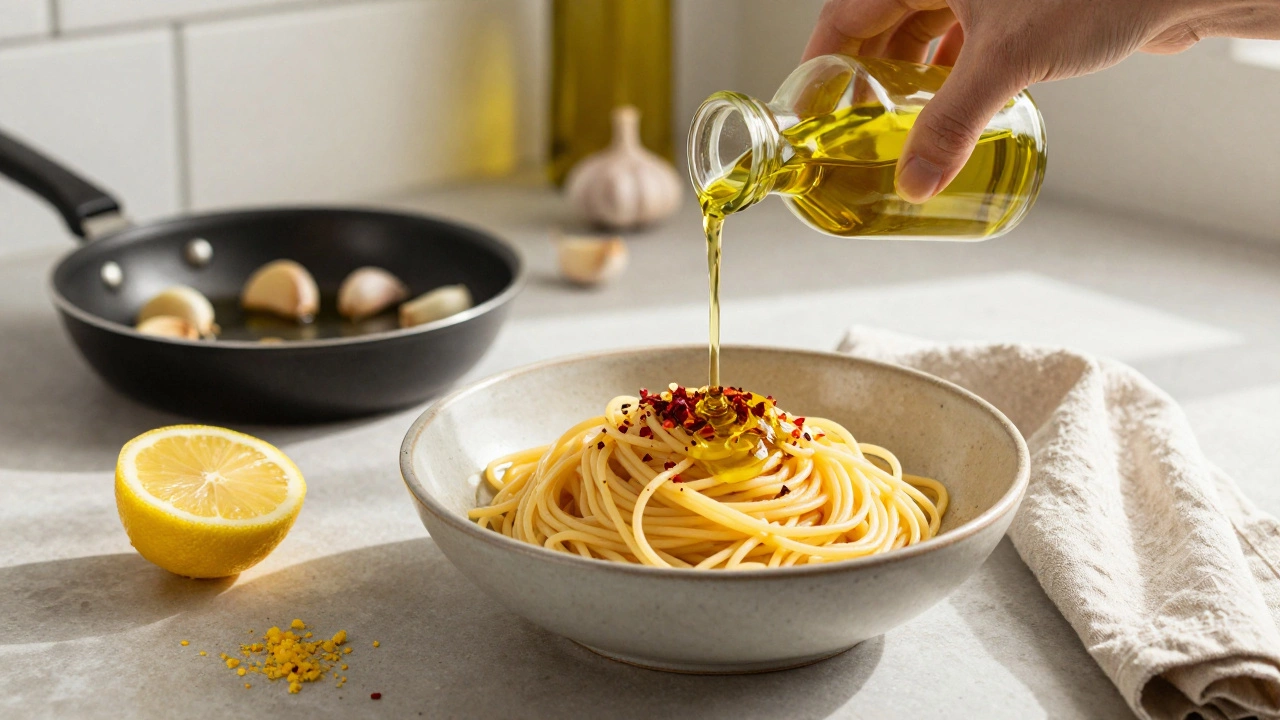
Heat three tablespoons of olive oil in a pan over low heat. Add two minced garlic cloves. Let them sizzle gently for 45 seconds-just until they smell sweet and golden. Don’t let them brown. Burnt garlic turns bitter. Pour this oil over your drained pasta. Toss. Add salt. A squeeze of lemon juice cuts through the richness. Sprinkle with red pepper flakes if you’ve got them. Done in five minutes. This is what you make when you’re tired, broke, or both. It’s not fancy, but it’s real. And it tastes better than most takeout sauces.
Cheese Power-Beyond Parmesan
You don’t need a fancy cheese platter. Even a half-eaten wedge of cheddar or a few shavings of mozzarella from the fridge can save your pasta. Grate or tear it into small pieces. Toss with hot pasta and a splash of pasta water. The starch in the water helps the cheese melt evenly. Add a spoonful of butter if you want it silkier. Feta? Crumble it on top. It won’t melt, but it adds a salty punch. Ricotta? Dollop it on warm pasta. It softens slightly and turns creamy. The key is using cheese that’s already in your fridge-not what you wish you had.
Raw Egg + Cheese = Creamy Magic
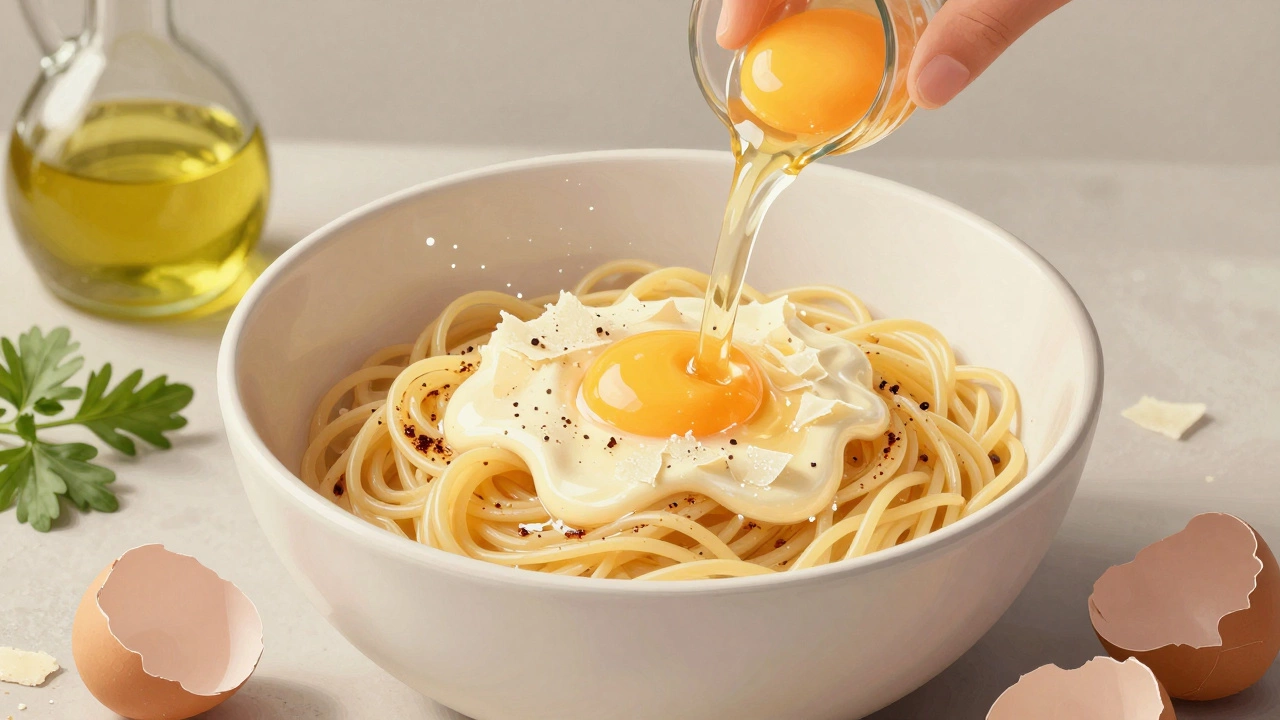
This is the Roman trick: carbonara without pancetta. Crack one egg into a bowl. Add two tablespoons of grated Pecorino or Parmesan. Whisk it up. Drain your pasta, but save a half cup of the starchy water. Toss the hot pasta into the egg mixture. Stir fast. The heat from the pasta cooks the egg into a rich, custardy sauce. Add a splash of pasta water if it’s too thick. Finish with pepper. It’s not raw egg in the sense of danger-it’s cooked by the pasta’s residual heat. People in Rome do this daily. It’s safe, fast, and unbelievably good.
Vegetables-Even the Bare Ones
Don’t toss those wilting spinach, half a bell pepper, or the lonely zucchini. Chop them small. Toss them into the hot pasta pot right after draining. The steam from the pasta will soften them in under a minute. Add a drizzle of olive oil, salt, and a handful of cheese. Done. You’ve got texture, color, and nutrients. Even a few frozen peas work. Throw them in for 30 seconds. They’ll thaw and sweeten the dish. This isn’t a salad on pasta-it’s a shortcut to a balanced meal.
Herbs and Citrus-Brighten It Up
Herbs aren’t just garnish. A big handful of chopped basil, parsley, or cilantro changes everything. Toss them in at the end. Same with lemon zest. Grate a teaspoon of zest over the pasta. Squeeze a little juice. It wakes up the whole dish. You don’t need sauce when you’ve got brightness. Even dried oregano or thyme from the back of the cabinet works if you bloom it in oil first. A pinch of salt, a handful of herbs, and a squeeze of lemon turns plain pasta into something you’d order at a trattoria.
Toast the Noodles-Yes, Really
Here’s a trick most people don’t know: toast your dry pasta before boiling. Heat a skillet over medium. Add a tablespoon of olive oil. Toss in the dry pasta-spaghetti, penne, whatever-and stir for 3 to 4 minutes. It turns golden and smells nutty. Then boil it like normal. Drain. Toss with butter and cheese. The toasting adds a deep, caramelized flavor that makes the pasta taste like it came from a restaurant. It’s not magic. It’s science. Maillard reaction. Same thing that makes seared steak taste good. You just skipped the sauce and built flavor from the ground up.
Why This Works-No Sauce Doesn’t Mean No Flavor
Most sauces are just fat, salt, acid, and umami. You don’t need a jar to get those. Butter gives fat. Cheese gives salt and umami. Lemon or vinegar gives acid. Garlic and herbs give depth. Pasta water gives body. Combine those elements, and you’ve got sauce. You just made it from scratch-with what you already have.
Think of pasta as a canvas. Sauce is one brushstroke. But butter, cheese, garlic, herbs, lemon, toasted nuts, even a fried egg on top-they’re all brushes too. You don’t need the whole palette to make something beautiful.
Quick Checklist: What to Grab When You Have No Sauce
- Butter or olive oil
- Grated Parmesan, Pecorino, or cheddar
- Garlic (fresh or powdered)
- Black pepper
- Lemon or vinegar
- Fresh herbs (parsley, basil, cilantro)
- Red pepper flakes
- One egg
- Leftover veggies
Keep these in your pantry or fridge. You don’t need a full grocery haul to make pasta taste amazing. Just the right combo of what you already own.
Common Mistakes to Avoid
- Draining pasta too well-always save at least half a cup of starchy water. It’s your secret weapon.
- Adding cheese to cold pasta-it won’t melt right. Toss it while the pasta is hot.
- Overcooking garlic-it turns bitter. Keep it gentle.
- Forgetting salt in the pasta water-it’s the only chance to season the pasta itself.
- Using pre-grated cheese-it has anti-caking agents that make it grainy. Grate your own.
These aren’t rules. They’re just the things that make the difference between okay and oh, I’ll make this again.
Can I use olive oil alone on pasta?
Yes, but it’s bland on its own. Olive oil needs salt, garlic, herbs, or cheese to become something worth eating. Use it as a base, not the whole flavor.
Is it safe to eat raw egg on pasta?
It’s safe if you use fresh, refrigerated eggs and toss the pasta while it’s still very hot. The residual heat cooks the egg enough to make it creamy without being runny. People in Italy do this daily. Avoid if you’re pregnant, immunocompromised, or very young.
What if I have no cheese at all?
Use butter, garlic, and herbs. Add a splash of soy sauce or Worcestershire for umami. A spoonful of miso paste dissolved in pasta water works too. Even a pinch of nutritional yeast gives a cheesy depth without dairy.
Can I use canned tuna or beans?
Absolutely. Drain and rinse canned tuna or white beans. Toss them with warm pasta, olive oil, lemon, and parsley. It’s a Mediterranean staple. Tuna adds protein. Beans add texture and fiber. Both turn pasta into a full meal.
How do I make pasta taste fancy without sauce?
Toast nuts-walnuts, pine nuts, almonds-in a dry pan until fragrant. Sprinkle them on top. Add a drizzle of honey or balsamic glaze. The crunch, sweetness, and salt create balance. It’s restaurant-level without the sauce.
Final Tip: Your Fridge Is Your Secret Ingredient
Next time you open the fridge and think, there’s nothing here, pause. Look again. That half-wheel of cheese? The lonely clove of garlic? The wilted herbs? The leftover roasted veggies? They’re not scraps. They’re ingredients. Pasta is the most forgiving dish on earth. It doesn’t care if you’re out of sauce. It just wants to be warmed, seasoned, and loved. And you already have everything you need to do that.