
Sauce Selector: Marinara vs. Spaghetti
Not sure which jar to grab? Answer these three quick questions to find the perfect sauce for your meal.
Select your options and click "Get Recommendation" to see which sauce suits your dish best.
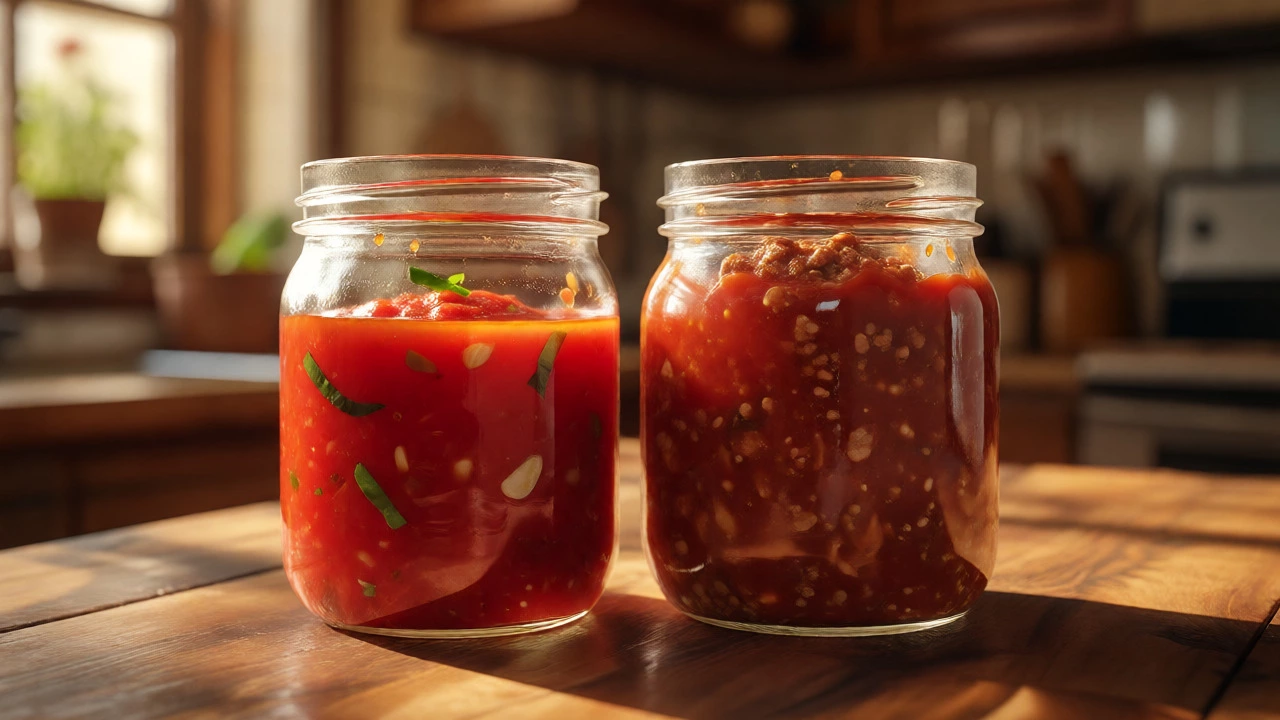
You’re standing in the aisle, staring at two jars that look suspiciously similar. One says "Marinara," the other says "Spaghetti Sauce." They’re both red. They’re both made of tomatoes. So why does one cost $2.50 and the other $4.00? And more importantly, will your dinner guests notice if you swap them?
Here’s the truth: most people treat these sauces as interchangeable, and honestly, in a pinch, they are. But if you want to cook like an Italian grandmother or just understand why your local trattoria tastes different from your home kitchen, you need to know the difference. It comes down to time, ingredients, and purpose.
The Quick Breakdown
Before we get into the nitty-gritty, here is what you need to know right now:
- Marinara is a quick, simple sauce made with tomatoes, garlic, herbs, and onions. It simmers for 30-60 minutes max.
- Spaghetti Sauce (often called Sunday Gravy or Ragu) is a slow-cooked meat sauce. It includes ground beef, pork, or sausage and cooks for hours.
- Texture: Marinara is smoother and lighter. Spaghetti sauce is chunky, thick, and hearty.
- Use Case: Use marinara for seafood, veggies, or light pasta. Use spaghetti sauce for heavy noodles and comfort food.
What Exactly Is Marinara Sauce?
Marinara sauce is a classic Italian tomato-based sauce that relies on fresh ingredients and short cooking times. The name itself hints at its origins-"marinara" comes from "marinaro," meaning "of the sea." Historically, sailors’ wives would whip this up quickly after their husbands returned from fishing trips. It wasn’t about deep, complex flavors; it was about freshness and speed.
Think of marinara as the sprinter of the sauce world. It’s bright, acidic, and punchy. You make it by sautéing garlic in olive oil, dumping in crushed San Marzano tomatoes, adding basil, and letting it bubble away for no more than an hour. If you cook it too long, you lose that vibrant acidity that makes it shine.
Because it lacks meat, marinara is naturally vegan and gluten-free. This makes it incredibly versatile. You can dip mozzarella sticks in it, spoon it over roasted chicken, or use it as a base for shakshuka. In Manchester, where I live, you’ll find excellent marinara served alongside fried cod chips-a perfect pairing because the acid cuts through the grease of the fish.
Defining Traditional Spaghetti Sauce
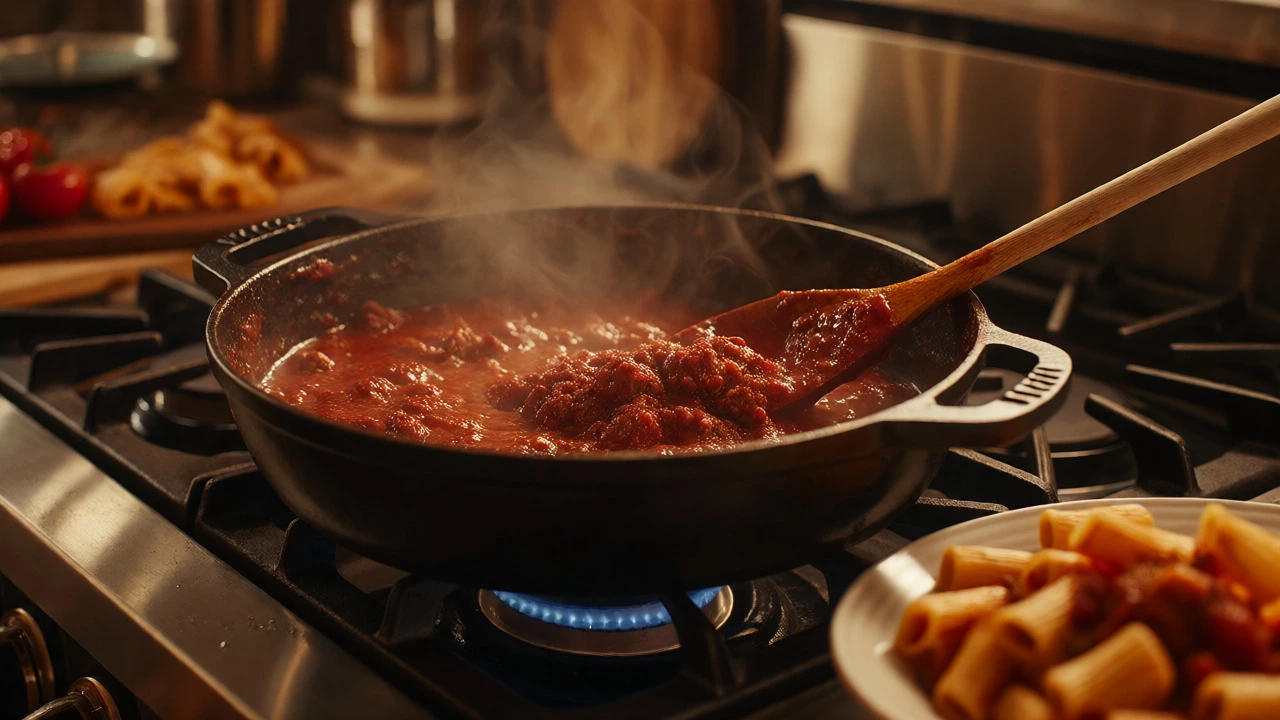
Now, let’s talk about Spaghetti sauce, which is typically a meat-heavy, slow-simmered ragù designed to coat dense pasta shapes. Unlike marinara, this isn’t something you rush. Real spaghetti sauce, often referred to as "Sunday Gravy" in Italian-American households, involves browning meats, sweating vegetables, and simmering for three to six hours.
The magic happens during those long hours. The collagen in the meat breaks down into gelatin, giving the sauce a silky, rich body. The sugars in the tomatoes caramelize, reducing acidity and creating a deep, savory sweetness. You’re not just mixing flavors; you’re building layers.
Traditional recipes usually include a mix of ground beef, Italian sausage, and sometimes pancetta. You’ll also see soffritto (onions, carrots, celery) as the aromatic base. This sauce is heavy. It clings to rigatoni and ziti better than any thin liquid could. If you pour marinara over penne, it slides off. If you pour spaghetti sauce over penne, it stays put.
Side-by-Side Comparison
To help you decide which jar to grab, here’s how they stack up against each other.
| Feature | Marinara Sauce | Spaghetti Sauce |
|---|---|---|
| Main Ingredients | Tomatoes, garlic, olive oil, basil | Tomatoes, ground beef, sausage, onion, carrot, celery |
| Cooking Time | 30-60 minutes | 3-6 hours |
| Texture | Smooth, slightly chunky, liquid | Thick, hearty, meaty chunks |
| Flavor Profile | Bright, acidic, herbaceous | Rich, savory, sweet, umami |
| Dietary | Vegan, Vegetarian, Gluten-Free | Omnivore (contains meat) |
| Best Pairing | Seafood, Angel Hair, Lasagna | Spaghetti, Rigatoni, Meatballs |
Why Texture Matters More Than Taste
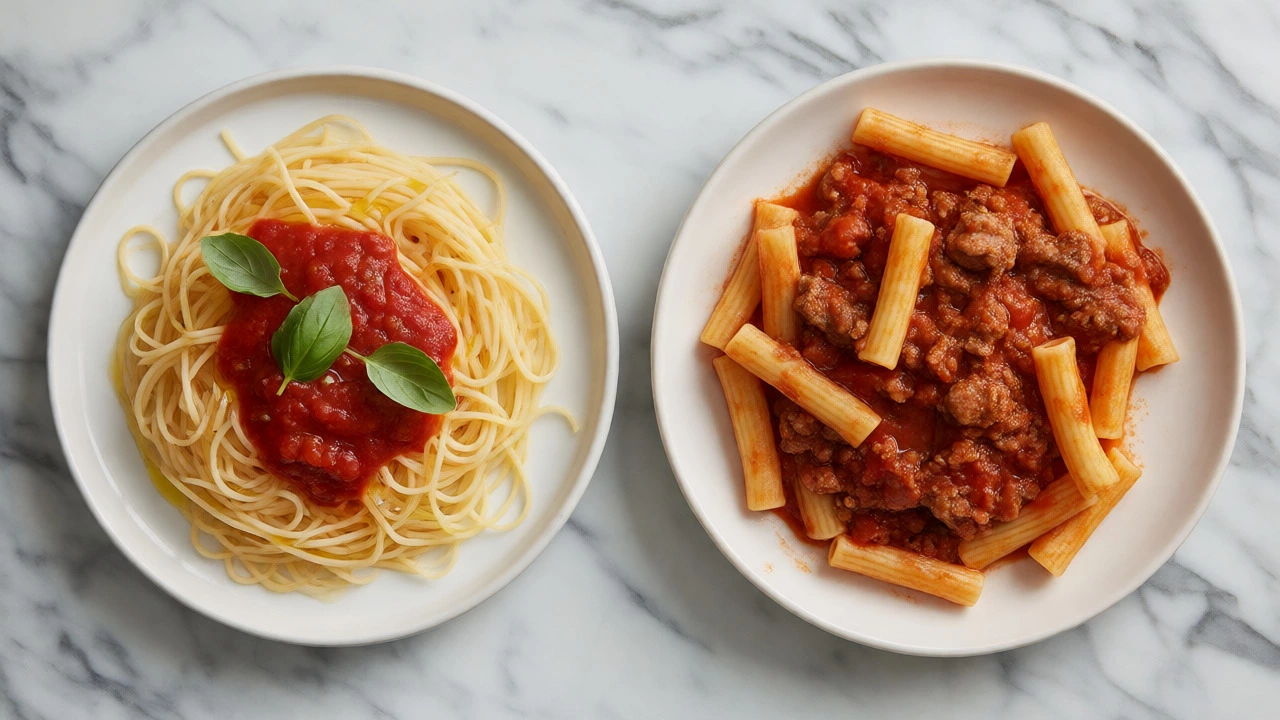
You might think flavor is the main difference, but texture is actually the dealbreaker. Pasta has a job: to hold sauce. Different pasta shapes have different surface areas and ridges. Thin strands like angel hair or linguine have little grip. If you drown them in a heavy, meat-laden spaghetti sauce, the noodles disappear under the weight. The dish becomes a mouthful of gristle and gravy.
Conversely, wide, tubular pastas like rigatoni or fusilli have holes and ridges designed to trap chunky bits. Marinara, being thinner, won’t stay inside those tubes. It pools at the bottom of the bowl. When you pair marinara with delicate seafood pasta, you let the shrimp or scallops take center stage. The sauce supports them without overpowering them.
This is why restaurants rarely serve marinara with spaghetti unless it’s a specific regional style. They serve it with linguine or fettuccine. If you’re making a quick Tuesday night meal with thin spaghetti, stick to marinara. If you’re prepping a weekend feast with thick rotini, go for the meat sauce.
Can You Swap Them?
Yes, but with caveats. If you only have marinara and want a meatier vibe, brown some ground beef separately and stir it in at the end. It won’t taste exactly like slow-cooked ragu-the meat will be grainier and less integrated-but it works in a crisis.
If you have spaghetti sauce and want a lighter option, strain out the meat and solids. What’s left is essentially a seasoned tomato broth. Simmer it down to thicken it, add fresh basil, and you’ve got a passable marinara substitute. Just remember, you’ve lost the depth of flavor, so you might need to add a splash of wine or a pinch of sugar to balance the acidity.
How to Make Better Sauce at Home
Making either sauce from scratch is easier than buying premium jars. Here are my top tips from years of testing recipes in my Manchester kitchen:
- Start with good tomatoes. For marinara, use canned whole peeled San Marzano tomatoes. Crush them by hand. Avoid "tomato puree" or "paste" as your main ingredient-it tastes metallic.
- Don’t burn the garlic. Garlic turns bitter fast. Sauté it gently in olive oil until it’s just fragrant, not brown. If you’re making marinara, add the garlic early. For spaghetti sauce, add it later with the onions so it doesn’t char during the long simmer.
- Finish with fat. A knob of butter or a drizzle of high-quality extra virgin olive oil stirred in at the very end gives the sauce a glossy sheen and rounds out the sharp edges.
- Reserve pasta water. Never drain your pasta completely. Save a cup of the starchy water. Add a splash to your sauce before tossing. The starch helps the sauce emulsify and cling to the noodles.
Common Mistakes to Avoid
One big mistake is over-seasoning marinara. Because it’s cooked briefly, the flavors don’t mellow out. Too much salt or oregano will dominate the dish. Start with less, taste, and adjust.
For spaghetti sauce, the common error is rushing the browning step. If you don’t brown the meat properly before adding tomatoes, you end up with boiled gray meat instead of flavorful crumbles. Take the time to get a nice crust on the beef. That Maillard reaction is where the flavor lives.
Another pitfall? Using low-quality olive oil. In marinara, the oil is a primary flavor carrier. Cheap, neutral oil tastes flat. Use something fruity or peppery to elevate the dish.
Frequently Asked Questions
Is marinara sauce healthy?
Generally, yes. Marinara is low in calories and fat, provided you don’t add excessive oil or cheese. It’s rich in lycopene, an antioxidant found in cooked tomatoes, which is linked to heart health. However, store-bought versions can be high in sodium and added sugars, so always check the label.
Can I use spaghetti sauce for pizza?
You can, but it’s not ideal. Spaghetti sauce is often too watery and chunky for pizza dough, leading to a soggy crust. Marinara is a better choice because it’s thicker and less likely to make the bread wet. For authentic Neapolitan pizza, use a raw crushed tomato sauce with minimal cooking.
Why is my marinara sauce too acidic?
Tomatoes are naturally acidic. If your sauce tastes sharp, try adding a small pinch of baking soda (it neutralizes acid) or a teaspoon of sugar (it masks it). Alternatively, cook the sauce longer to allow the natural sugars to concentrate, or add a splash of heavy cream for richness.
What pasta goes best with marinara?
Long, thin pastas like spaghetti, linguine, or vermicelli work well because they don’t compete with the light sauce. Short pastas like penne or farfalle also work if you want more texture. Avoid stuffed pastas like ravioli, as the delicate filling gets overwhelmed by the strong tomato flavor.
Is there a difference between tomato sauce and marinara?
In the US, "tomato sauce" often refers to a plain, unseasoned puree used as a base. In Italy, "salsa di pomodoro" is a broader term. Marinara is a specific type of tomato sauce flavored with garlic, herbs, and oil. Think of tomato sauce as the canvas, and marinara as the finished painting.