
🍽️ Southern Dish Explorer
Select a dish below to explore its details, or view the full comparison table.
Click on a dish card above to see details here.
| Dish Name | Primary Ingredient | Cooking Method | Typical Meal Occasion |
|---|
There is a specific kind of warmth that comes from a plate of Southern food is a culinary tradition rooted in the American South, characterized by slow-cooked meats, rich gravies, and soulful side dishes. It’s not just about eating; it’s about community. If you’ve ever wondered what makes this region’s cuisine so distinct, you’re looking at a history of resourcefulness, hospitality, and deep flavor profiles that rely on patience rather than speed. Whether you are new to these flavors or a seasoned cook looking for inspiration, understanding these six staples gives you a real map into the heart of Southern hospitality.
The Foundation: Grits and Country Ham
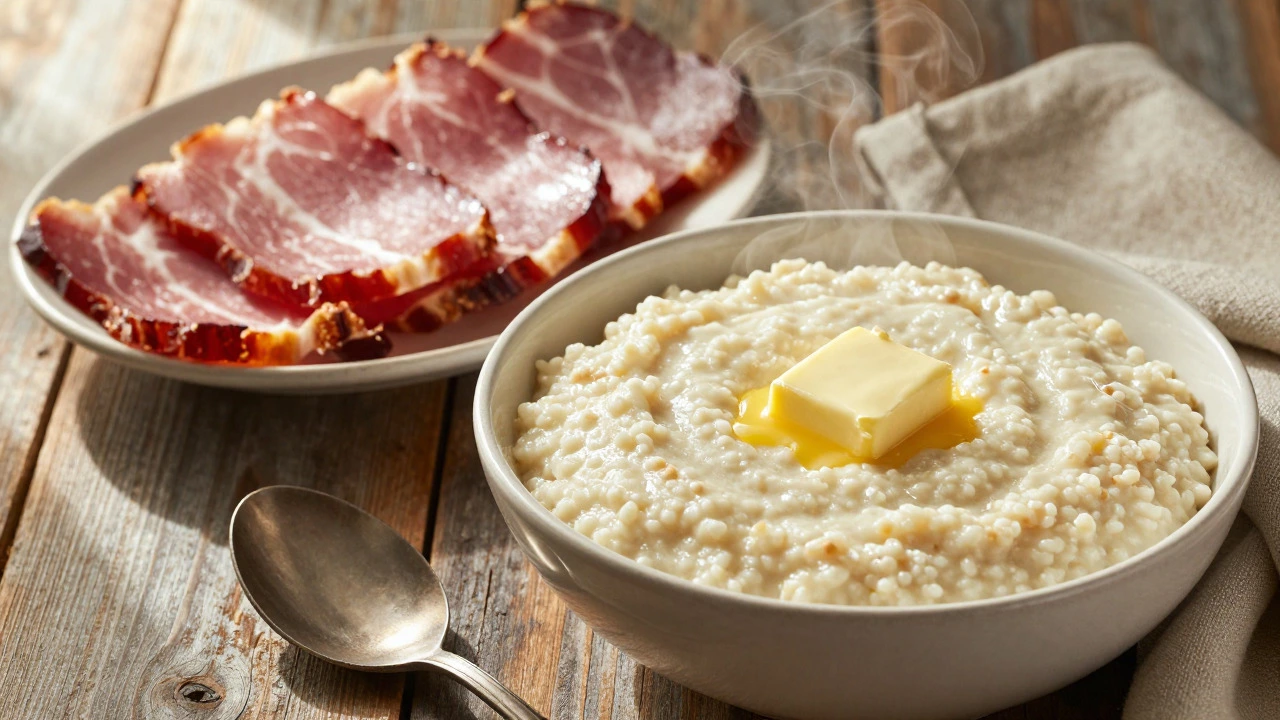
You can’t talk about breakfast in the South without starting with Grits is a porridge made from coarsely ground corn, typically served with butter and salt. Unlike polenta, which is often drier, true Southern grits have a creamy, almost custard-like texture when cooked properly. The key here is time. Rushing them results in a gritty mess, but simmering them slowly allows the starches to break down completely. Pair this with Country Ham is a dry-cured ham that is salty, firm, and traditionally sliced thin. This isn’t the sweet, glazed ham you find at holiday dinners. It’s lean, intensely savory, and usually served cold. The contrast between the soft, milky grits and the sharp, salty ham creates a balance that defines the morning meal in many households across Georgia and the Carolinas.
Slow-Cooked Excellence: Pulled Pork and Collard Greens
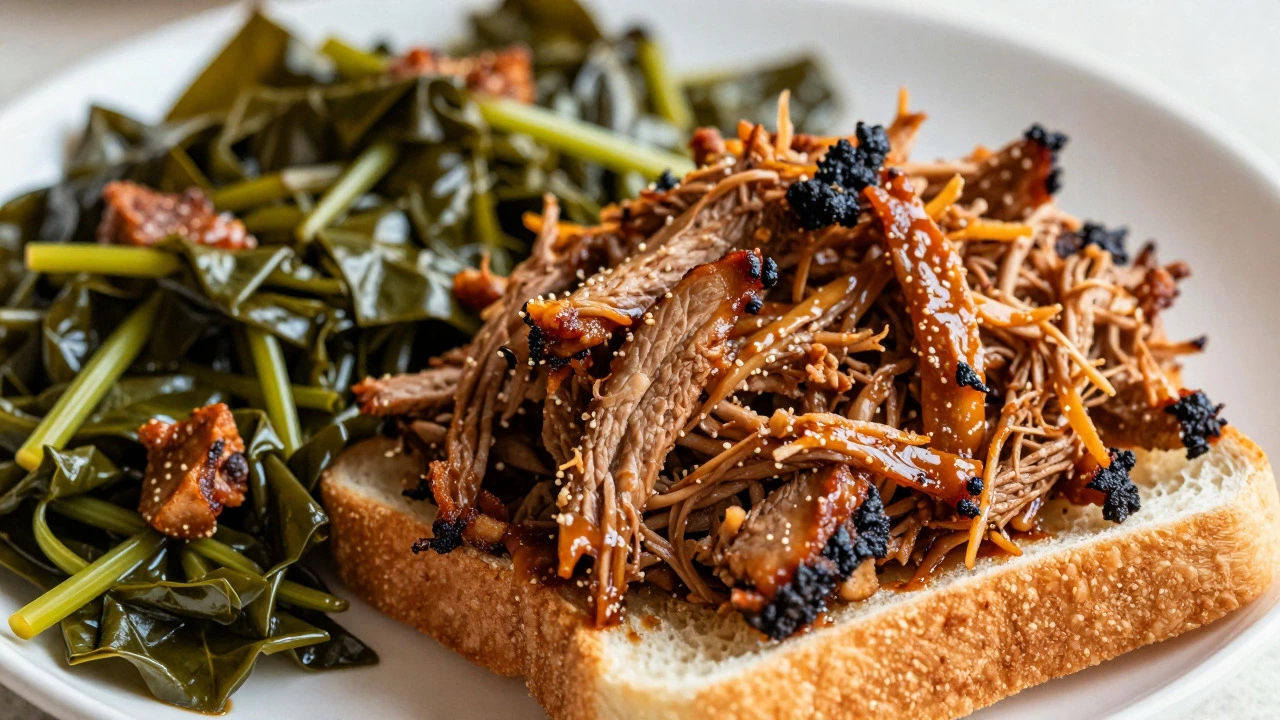
Lunch and dinner in the South often revolve around meat that has been treated with extreme patience. Pulled Pork is a barbecue dish made by smoking pork shoulder until tender, then shredding it and serving with sauce. The secret lies in the cut. You need a pork shoulder, also known as a Boston butt or picnic shoulder, because the fat content keeps the meat moist during the long smoking process. When done right, the meat falls apart with a fork, absorbing smoky flavors from hickory or post oak wood. It’s rarely eaten alone. It sits atop white bread or biscuits, often accompanied by slaw.
To cut through that richness, you need Collard Greens are leafy green vegetables braised slowly with smoked meat and vinegar. These aren’t your average salad greens. They are tough leaves that require hours of simmering to become tender. Traditionally, they are cooked with a piece of smoked turkey neck or ham hock, which infuses the pot with deep, smoky umami. A splash of apple cider vinegar at the end brightens the dish, making it essential for balancing the heavy meats on the table.
The Sweet Side: Peach Cobbler and Cornbread
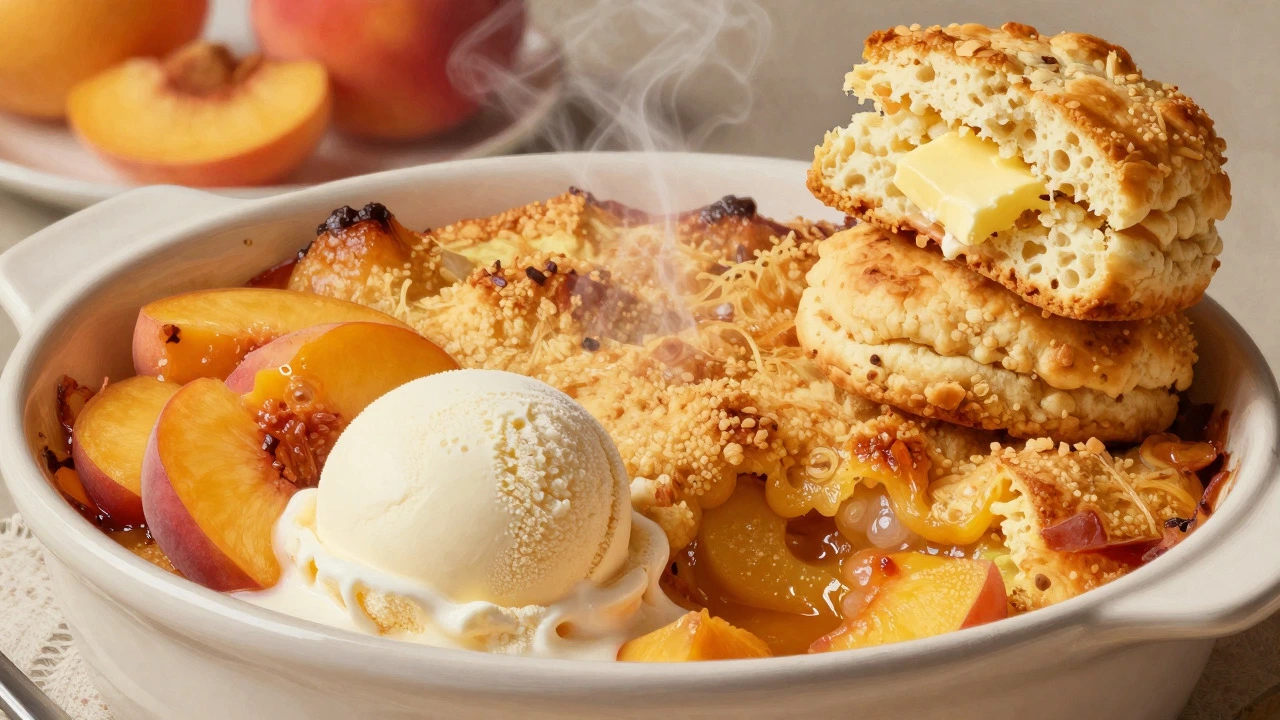
Dessert in the South is less about precision and more about abundance. Peach Cobbler is a fruit dessert featuring peaches under a biscuit or crumb topping, often baked with vanilla ice cream. While pies have defined crusts, cobblers are rustic. The topping is usually a drop-biscuit dough that bakes into uneven, golden mounds over the bubbling fruit. The best versions use ripe, local peaches that collapse slightly during baking, releasing their juices to create a syrupy base. Serving it warm with a scoop of vanilla ice cream is non-negotiable for most Southerners.
Butter doesn’t stop at dessert. Cornbread is a quick bread made primarily from cornmeal, often containing eggs, milk, and lard. There is a famous debate about whether cornbread should be sweet or savory. In the Deep South, it’s often made with sugar and honey, leaning toward a cake-like texture. In the Upstate regions, it might be denser and saltier. Regardless of the style, it serves as the perfect vehicle for gravy or as a standalone snack with extra butter. Its versatility makes it a staple at every meal, from breakfast to late-night snacks.
Hearty Mains: Fried Chicken and Biscuits
No list is complete without Fried Chicken is chicken pieces coated in seasoned flour and fried in hot oil until crispy and golden. This is where technique matters most. The chicken is usually brined overnight to ensure juiciness, then dredged in a mix of flour, paprika, garlic powder, and cayenne. The frying temperature must be precise-too hot burns the coating, too cool makes it greasy. The result is a shatteringly crisp exterior and juicy, flavorful meat inside. It’s a dish that demands attention but rewards you with one of the most satisfying meals you can make at home.
Finally, there are Biscuits are soft, leavened bread rolls made with flour, shortening, and buttermilk. These are not the hard, dry biscuits you might find elsewhere. Southern biscuits are tall, flaky, and incredibly soft. The trick is using cold ingredients and handling the dough as little as possible to keep the layers distinct. They are best served warm with whipped butter and honey, or split open and filled with gravy. Their simplicity belies their importance; they are the backbone of many Southern meals, providing a neutral canvas for savory toppings.
| Dish Name | Primary Ingredient | Cooking Method | Typical Meal Occasion |
|---|---|---|---|
| Grits | Corn | Simmering | Breakfast |
| Pulled Pork | Pork Shoulder | Smoking/Braising | Lunch/Dinner |
| Collard Greens | Collards | Braising | Side Dish |
| Peach Cobbler | Peaches | Baking | Dessert |
| Fried Chicken | Chicken | Deep Frying | Dinner/Snack |
| Biscuits | Flour/Lard | Baking | Breakfast/Side |
Why These Dishes Matter
These six dishes represent more than just recipes; they are cultural markers. They reflect a history of making do with available resources, turning humble ingredients like corn, pork, and leafy greens into something memorable. For anyone interested in comfort food, these dishes offer a gateway to understanding how food connects people. They are forgiving to cook, scalable for large gatherings, and deeply satisfying. Whether you are trying to recreate a family memory or simply want to expand your culinary horizons, starting with these classics is the best way to go. Each dish tells a story of resilience and joy, proving that good food doesn’t need to be complicated to be extraordinary.
What is the difference between grits and polenta?
While both are made from corn, grits are typically finer and cooked longer to achieve a creamy consistency, whereas polenta is coarser and often served firmer. Grits are a staple in the American South, while polenta is more common in Italian cuisine.
Can you make Southern dishes without a smoker?
Yes. Many Southern dishes can be adapted for oven cooking. For pulled pork, you can braise it in the oven with liquid smoke added to the sauce for similar flavor. Fried chicken works perfectly in a regular fryer or Dutch oven. The key is maintaining the moisture and seasoning balance.
Are collard greens healthy?
Yes, collard greens are high in vitamins A, C, and K, as well as calcium and fiber. However, traditional preparation involves adding salt and sometimes bacon, so watching portion sizes helps maintain nutritional benefits.
What is the best type of cornmeal for cornbread?
Stone-ground cornmeal provides the best texture and flavor for cornbread. It retains more of the germ and bran, resulting in a richer taste and slightly coarser crumb compared to finely milled cornmeal.
How do you keep biscuits from getting dense?
To avoid dense biscuits, use cold butter or shortening and handle the dough minimally. Overworking develops gluten, which makes the biscuit tough. Chilling the dough before baking also helps maintain flakiness.