

Vegan Ketchup Ingredient Checker
Scan the Label
Check the boxes that match the ingredients listed on your ketchup bottle.
Select ingredients above
Click "Check Vegan Status" to see if your ketchup is safe for vegans.
You grab a packet of ketchup from the fast-food counter. It’s red, it’s sweet, and it looks completely harmless. But if you’re following a strict vegan lifestyle, that little squeeze bottle might actually be hiding a secret ingredient derived from animals. It sounds crazy, right? How can a tomato sauce contain meat or dairy? The answer isn’t always obvious, but for many vegans, standard ketchup is a no-go. Understanding why requires looking past the label and into the supply chain.
The Sugar Problem: Bone Char and Refined Cane Sugar
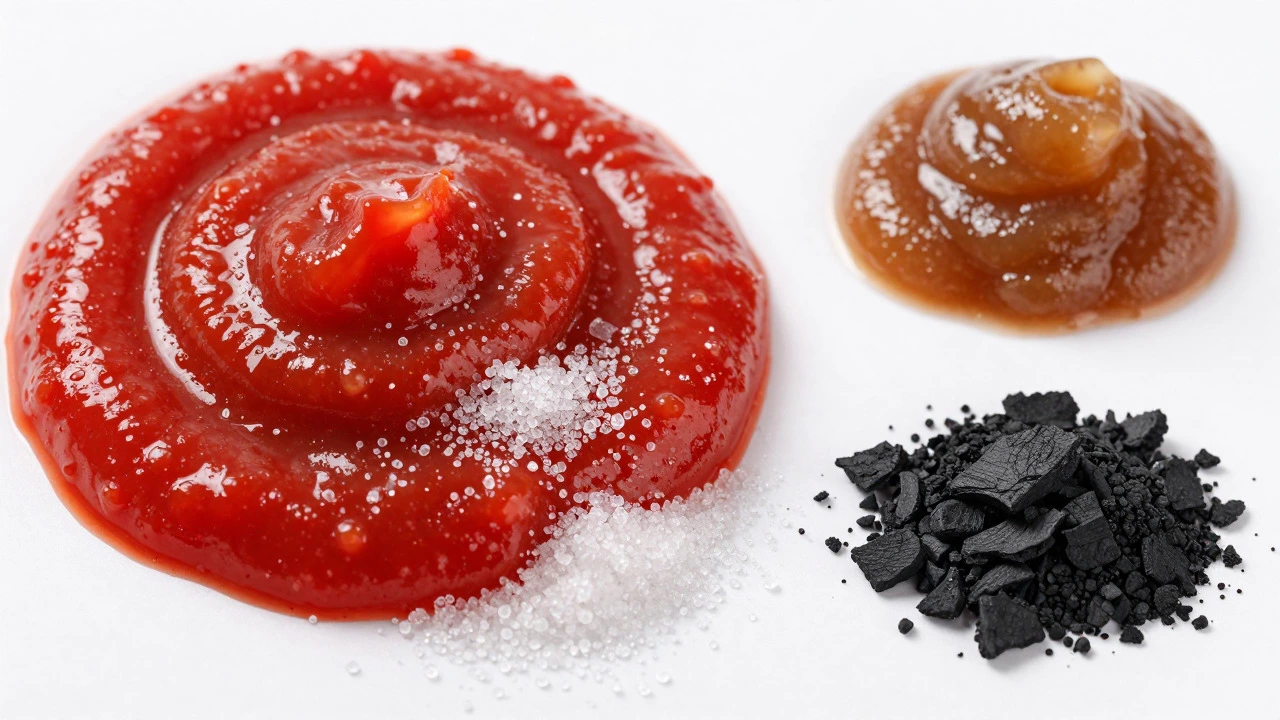
The biggest reason regular ketchup often fails the vegan test has nothing to do with tomatoes. It comes down to sugar. Most major commercial brands use refined white cane sugar as their primary sweetener. While sugar itself is plant-based, the process used to turn raw brown cane juice into sparkling white crystals often involves an animal byproduct called bone char.
Bone char is made from the bones of cattle. These bones are burned at high temperatures to create a black charcoal-like substance. Refineries pump sugarcane juice through filters lined with this bone char to remove color impurities, resulting in pure white sugar. Once the filtering is done, the bone char is removed, but trace amounts may remain, and the ethical question remains: was an animal product used in your food?
This practice is common in the United States and some other countries, though less so in Europe, where beet sugar (which doesn't require bone char) is more prevalent. If a ketchup brand uses generic "sugar" without specifying "organic" or "beet sugar," there is a significant chance it passed through bone char filters. For strict vegans who avoid any exploitation, this makes standard ketchup non-vegan.
| Sugar Type | Source | Refining Process | Vegan Status |
|---|---|---|---|
| White Cane Sugar | Sugarcane | Often uses bone char filters | Debatable/Non-Vegan |
| Beet Sugar | Sugar Beets | Uses carbon granulation (no bone char) | Vegan |
| Organic Cane Sugar | Sugarcane | USDA Organic bans bone char | Vegan |
| Coconut Sugar | Coconut Palm Sap | Minimally processed | Vegan |
Hidden Additives: Colorings and Flavor Enhancers
Beyond sugar, manufacturers sometimes add other ingredients that blur the line between plant-based and animal-derived. One common culprit is certain food colorings. While most red dyes like Red 40 are synthetic, some natural colorants can be problematic. Carmine, also known as cochineal extract, is a bright red pigment made from crushed female cochineal insects. It’s rare in ketchup because tomatoes provide plenty of red, but it’s worth knowing about when scanning labels for "natural colors."
Another area of concern is flavor enhancers. Some older or specialty recipes might include fish sauce or anchovy paste to add umami depth, mimicking the savory notes usually provided by onions or vinegar. This is uncommon in mass-market brands but appears in artisanal or Asian-fusion sauces labeled as "ketchup-style." Always check for words like "anchovy," "fish sauce," or "shellfish extract."
Dairy is another potential trap, though less frequent. Some creamy ketchup variations or specific regional brands might add whey powder, casein, or milk solids to smooth out the texture or balance acidity. Whey is a byproduct of cheese making. If the ingredient list includes anything ending in "-ose" that isn't glucose or fructose (like lactose), pause and investigate.
How to Spot Vegan-Friendly Ketchup
Finding safe condiments doesn’t mean giving up your favorite dipping sauce. It just means becoming a smarter label reader. Here is what you should look for to ensure your ketchup is truly plant-based.
- Look for "Organic": In the US and many other regions, USDA Organic certification prohibits the use of bone char in sugar refining. If the ketchup says "Organic Sugar," it is almost certainly vegan-safe regarding the sweetener.
- Check for Beet Sugar: Brands that explicitly state "beet sugar" are using a root vegetable source that never touches animal bones during processing.
- Scan for Honey: While rare in traditional ketchup, some "sweet and tangy" variants use honey instead of sugar. Honey is not considered vegan because it exploits bees.
- Verify Certifications: Look for the V-Label, Certified Vegan logo, or similar third-party certifications. These organizations audit supply chains to ensure no animal products or testing were involved.
If the label just says "Sugar" or "Cane Sugar" without the organic tag, you have two options. You can contact the manufacturer directly-many companies now disclose their refining methods on their websites-or you can choose a brand that is transparently vegan.
Top Vegan Ketchup Brands to Trust
You don’t need to make ketchup from scratch to stay vegan. Several major and niche brands have already cleared the hurdle. Knowing which ones to pick saves time at the grocery store.
Heinz Organic Ketchup is a widely available option that uses organic sugar, ensuring no bone char was used in its production. Because it carries the organic seal, it is a staple in many vegan households. Note that regular Heinz Ketchup (non-organic) is often debated; while Heinz states they do not use bone char in their UK/EU operations, their US supply chain history has led many strict vegans to stick with the organic version or switch brands entirely.
Primal Kitchen Ketchup is a popular choice among health-conscious consumers, sweetened with apple cider vinegar and organic cane sugar. It avoids high-fructose corn syrup and artificial additives, making it clean and vegan-friendly.
Trader Joe’s Organic Ketchup is an affordable store-brand option that meets organic standards. It’s simple, effective, and safe for vegans due to its organic certification.
Other reliable brands include Cherry Tomato Ketchup by various artisan makers, which often use fruit juices for sweetness, and Steakhouse Ketchup alternatives that rely on mushroom or soy extracts for umami rather than fish.
Making Your Own Vegan Ketchup at Home
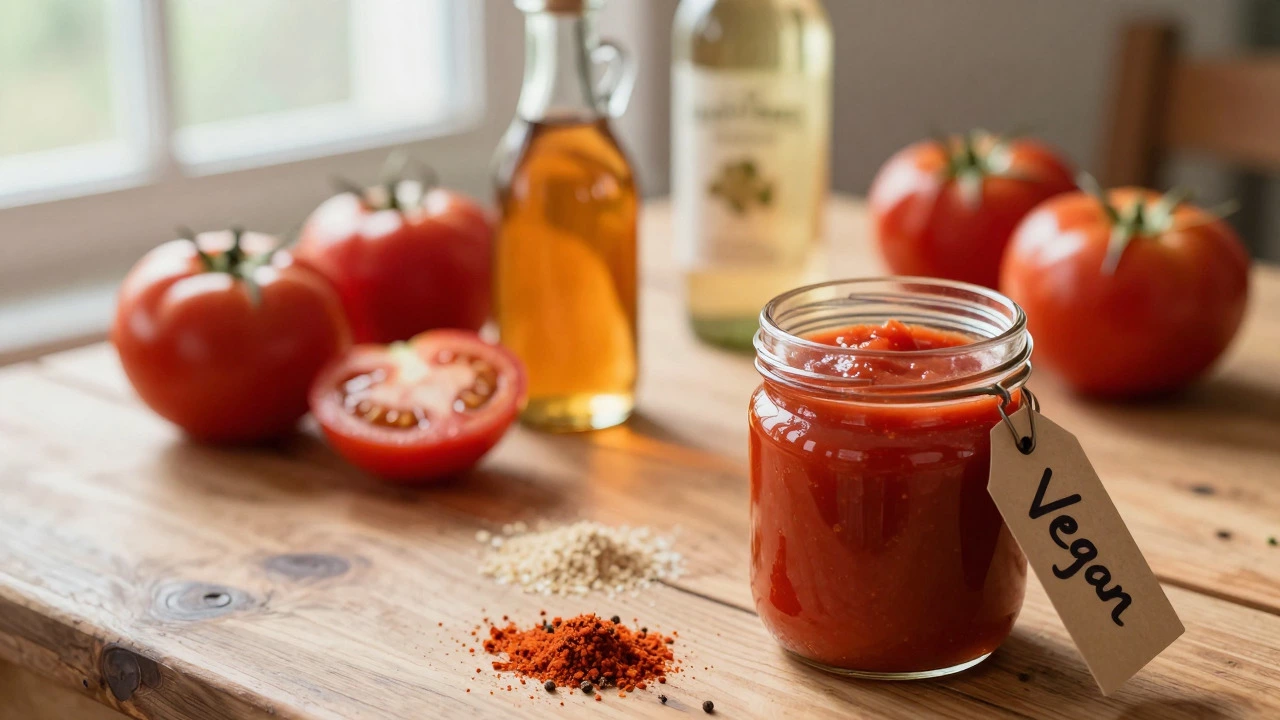
If you want total control over every ingredient, making ketchup at home is surprisingly easy. It takes about 30 minutes and results in a fresher, less acidic taste than store-bought jars. Plus, you know exactly where the sugar came from.
- Gather Ingredients: You’ll need one large can (28 oz) of crushed tomatoes, 1/4 cup apple cider vinegar, 1/4 cup maple syrup or organic sugar, 1 tablespoon onion powder, 1 teaspoon garlic powder, 1/2 teaspoon smoked paprika, 1/4 teaspoon mustard powder, salt, and black pepper.
- Combine: Mix all ingredients in a medium saucepan over medium heat.
- Simmer: Let the mixture simmer uncovered for 20-30 minutes, stirring occasionally, until it thickens to your desired consistency.
- Cool and Store: Allow it to cool completely before transferring to a glass jar. It will keep in the refrigerator for up to three weeks.
This recipe avoids preservatives and ensures the sweetener is either maple syrup (from trees) or organic sugar (bone-char free). You can adjust the spice levels to match your preference, adding cayenne for heat or extra garlic for punch.
Why Does This Matter to Vegans?
For some people, avoiding obvious meat and dairy is enough. But for many vegans, the philosophy extends to minimizing harm wherever possible. Bone char represents industrial animal exploitation. By choosing bone-char-free sugar, vegans align their purchasing power with their values. It’s not just about nutrition; it’s about ethics.
Additionally, cross-contamination concerns exist for those with severe allergies, though this is less common for general vegans. However, the principle of "clean eating" often overlaps with veganism. Avoiding unnecessary additives, synthetic colors, and ambiguous processing aids leads to a healthier diet overall.
Frequently Asked Questions
Is Heinz Ketchup vegan?
Regular Heinz Ketchup is controversial. While it contains no direct animal ingredients, the sugar used in the US version may be filtered through bone char. Heinz Organic Ketchup is considered vegan because organic standards prohibit bone char. In the UK and Europe, Heinz states their sugar does not use bone char, making it generally accepted by vegans in those regions.
What is bone char?
Bone char is a decarbonized material made from cattle bones. It is used in the sugar industry as a filtration agent to remove color impurities from raw cane sugar, turning it white. It is not an ingredient left in the final sugar, but its use makes the refining process non-vegan for many.
Are there any animal products in ketchup besides sugar?
Rarely, yes. Some specialty ketchups may contain fish sauce, anchovies, or dairy derivatives like whey. Additionally, natural red coloring like carmine (made from insects) could theoretically be used, though it is uncommon in tomato-based sauces. Always read the full ingredient list.
How can I tell if sugar is vegan?
Look for labels that say "Organic," "Beet Sugar," or "Unrefined Cane Sugar." Organic certification typically bans bone char. Beet sugar is naturally vegan because it is refined using carbon granulation, not bone char. Generic "white sugar" or "cane sugar" without these qualifiers may have been processed with bone char.
Is homemade ketchup always vegan?
Yes, as long as you use vegan ingredients. When you make ketchup at home, you control the sweetener. Using maple syrup, agave nectar, or certified organic sugar ensures the final product is free from animal-derived processing aids and additives.