
Slow Cooker Timing & Safety Checker
Enter your cooking details below to check for safety risks and quality issues.
Analysis Result
Recommended Time:
Max Safe Limit:
Your Input:
Temperature Risk:
Recommendations
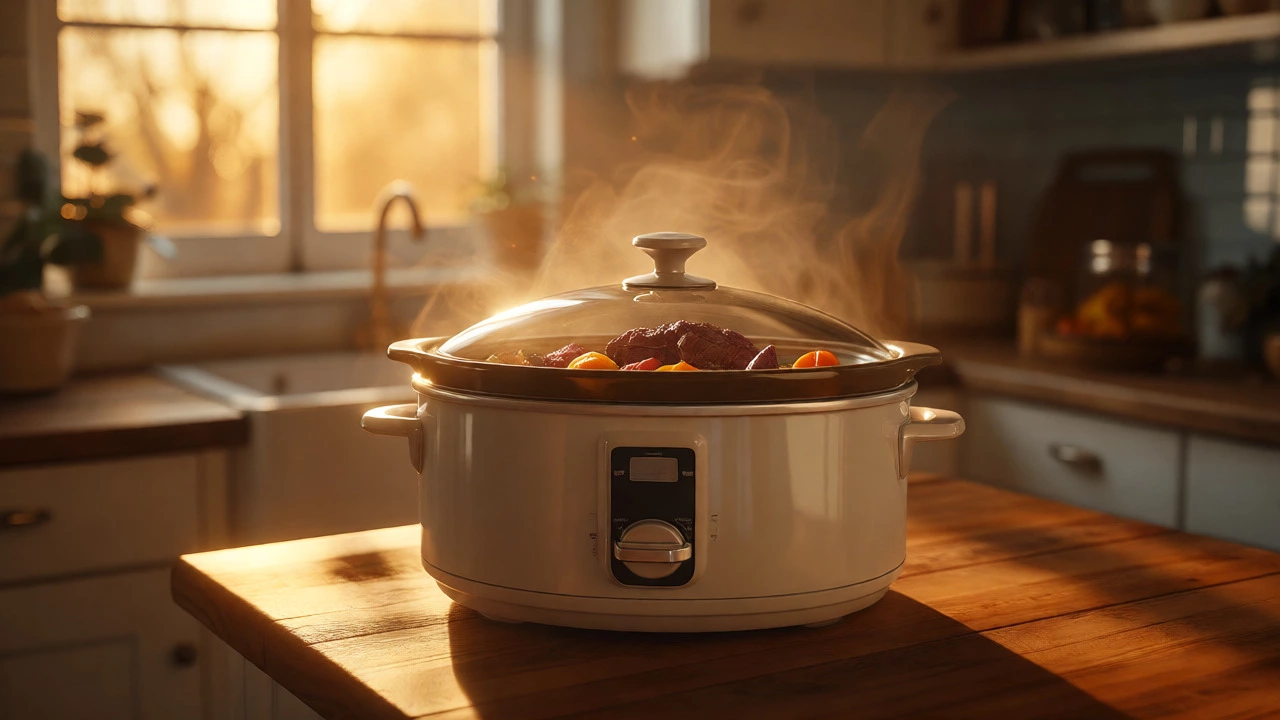
You’re heading out for the day, you toss ingredients into your slow cooker, set it to low, and walk away. But then doubt creeps in: is eight hours too long? Will the meat turn to mush? Is it actually safe to leave it running while you sleep? It’s a question every slow-cook enthusiast hits eventually. The short answer is that most modern units are designed to run safely for 8-12 hours on low, but there are critical nuances depending on what you’re cooking and how old your appliance is.
The Sweet Spot for Most Dishes
Most manufacturers design their appliances with a specific thermal profile in mind. For the vast majority of recipes-stews, soups, pulled pork, and chili-the ideal window on the low setting is between 8 and 10 hours. This timeframe allows connective tissues in tougher cuts of meat to break down into gelatin without evaporating all the moisture or turning vegetables into unrecognizable pulp. If you push past 12 hours, you risk crossing the line from "tender" to "dry and stringy."
Why does this happen? On low, a typical unit maintains an internal temperature between 190°F (88°C) and 200°F (93°C). This is just above the boiling point of water at sea level, ensuring food stays hot enough to kill bacteria but gentle enough to preserve texture. However, heat retention varies wildly between brands. A high-end ceramic insert retains heat better than a thin metal one, meaning the same recipe might finish in 7 hours in one pot and need 9 in another.
Safety First: The Danger Zone and Appliance Age
Food safety isn't just about taste; it's about avoiding bacterial growth. The USDA states that perishable foods must stay above 140°F (60°C) to remain safe. Modern slow cookers are engineered to reach this threshold quickly, usually within the first two hours. Once stable, they hold steady. But here is the catch: older models, particularly those manufactured before 2010, may have degraded heating elements or faulty thermostats. These units might drift below 140°F after several hours, creating a breeding ground for pathogens like Salmonella or E. coli.
If you own a vintage unit, perform a simple test. Fill the pot with water, cover it, and run it on low for 8 hours. Check the temperature with a calibrated food thermometer. If it reads below 140°F, do not use it for overnight cooking or extended periods without supervision. For newer appliances, the built-in fail-safes generally prevent catastrophic cooling, but power outages remain a silent killer. If the power goes out for more than two hours while the food is still raw or partially cooked, discard it. You cannot guarantee the internal temperature stayed safe throughout the interruption.
Ingredient-Specific Time Limits
Not all foods tolerate long cooks equally. While a beef chuck roast loves a 10-hour low-and-slow session, delicate proteins and vegetables suffer. Chicken breast, for instance, dries out rapidly after 6-7 hours on low because it lacks the fat content of thighs or legs. Seafood is even more fragile; fish and shellfish should never cook longer than 2-3 hours on low, regardless of the total cycle time.
| Ingredient Type | Optimal Time (Hours) | Maximum Safe Limit (Hours) | Risk of Overcooking |
|---|---|---|---|
| Tough Cuts of Meat (Beef, Pork Shoulder) | 8-10 | 12 | Dryness, loss of flavor |
| Poultry Thighs/Legs | 6-8 | 9 | Mushy texture |
| Chicken Breast | 4-6 | 7 | Significant dryness |
| Root Vegetables (Potatoes, Carrots) | 6-8 | 10 | Falling apart completely |
| Soft Vegetables (Zucchini, Peppers) | 2-4 | 5 | Becoming watery mush |
| Beans (Dried, Soaked) | 6-8 | 10 | Splitting skins, mushy interior |
Notice the trend? Dense, fatty, fibrous ingredients handle long times well. Lean, watery, or delicate items do not. If you are making a mixed dish, such as a stew with both beef and potatoes, consider staggering your additions. Add the potatoes only in the last four hours to keep them intact while the meat tenderizes over the full duration.
The "Keep Warm" Trap
A common misconception is that the "Warm" setting is identical to "Low." It is not. Warm mode typically holds food at 145°F-165°F (63°C-74°C), which is safe for consumption but insufficient for further cooking. Leaving food on Warm for more than 2-4 hours can lead to quality degradation. Sauces reduce excessively, becoming salty or burnt at the edges, and meats continue to lose moisture. Never rely on the Warm setting to finish cooking raw ingredients. If your timer ends and the food isn’t done, switch back to Low or High, not Warm.
Practical Tips for Extending Cook Times Safely
If you need to extend a cook time beyond the standard 8 hours-perhaps due to a delayed schedule-follow these adjustments to maintain quality:
- Increase Liquid Volume: Evaporation continues slowly even when covered. Add an extra half-cup of broth or water for every additional hour beyond the recommended time to prevent scorching.
- Use Larger Chunks: Cut vegetables and meats into larger pieces. Smaller surface areas resist breaking down faster, giving you a buffer against overcooking.
- Avoid Dairy Early: Milk, cream, and cheese curdle if heated for too long. Stir these in during the final 30 minutes of cooking instead of adding them at the start.
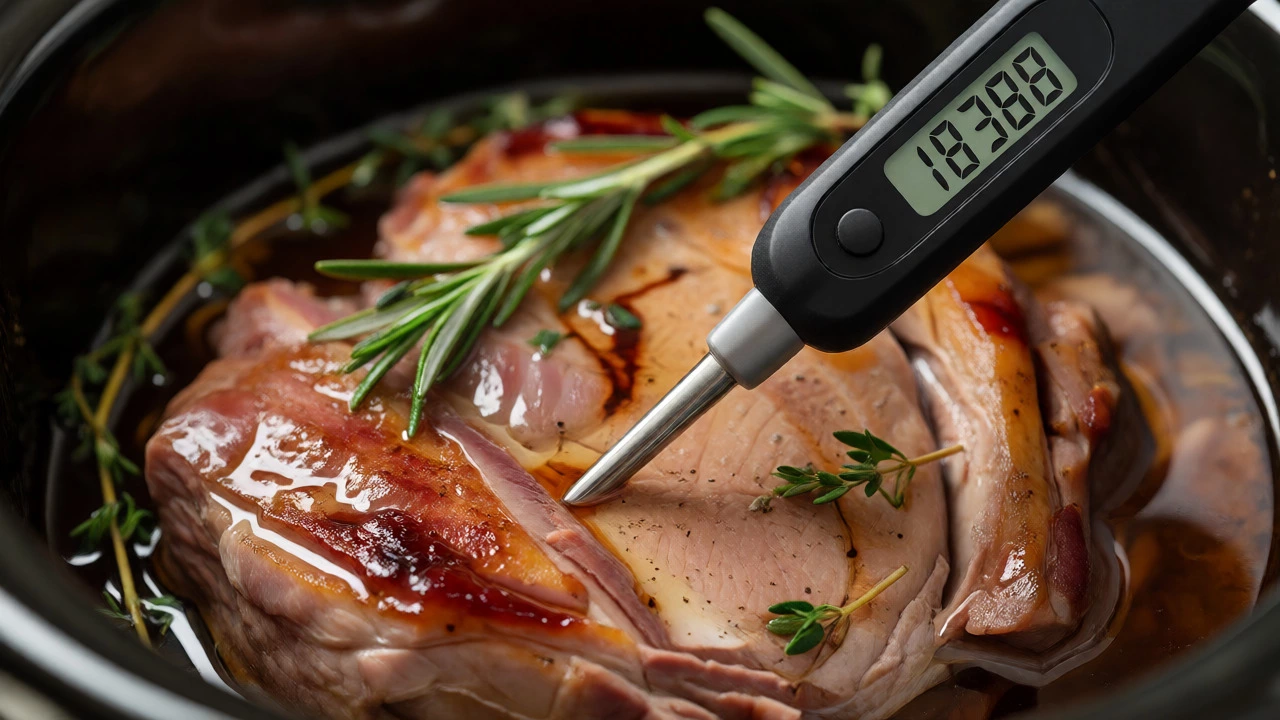
- Check Internal Temperature: Don’t guess. Use a probe thermometer. Beef roasts should hit 195°F-205°F (90°C-96°C) for pull-apart tenderness. Chicken needs 165°F (74°C).
Also, consider the fill level. A slow cooker works best when filled between half and three-quarters full. If it’s less than half full, the food cooks faster and may dry out sooner than the clock suggests. If it’s over three-quarters full, heat circulation is poor, requiring longer times to reach safe temperatures.
When to Abandon the Slow Cooker
There are scenarios where leaving the unit on low for extended periods is a bad idea. Foods high in starch, like pasta or rice, become gummy and glue-like after more than 2-3 hours on low. They absorb liquid aggressively, turning stews into porridge. Similarly, alcohol evaporates slowly on low, so if you’re using wine or beer, add it early but expect some potency to remain after 8+ hours. If precision matters, stick to shorter windows or use a programmable model with auto-switch features.
Ultimately, trust your senses. If the aroma changes from savory to slightly burnt, or if the lid rattles from excessive steam pressure, check the food immediately. Your slow cooker is a tool, not a magic box. Understanding its limits ensures your dinner remains delicious rather than disappointing.
Is it safe to leave a slow cooker on low overnight?
Yes, provided your appliance is in good working order and properly filled. Most modern slow cookers are designed to run safely for up to 12 hours. Ensure the cord is secure, the unit is on a heat-resistant surface, and no flammable materials are nearby. Avoid doing this with very old units unless you have tested their temperature stability.
What happens if I leave food on low for 12 hours?
For tough meats like beef chuck or pork shoulder, 12 hours often results in extremely tender, fall-apart texture. However, vegetables will likely disintegrate, and sauces may reduce significantly, becoming thicker and more concentrated. There is minimal food safety risk if the unit maintained proper temperature, but culinary quality may decline.
Can I leave a slow cooker on low for 24 hours?
Generally, no. While the appliance itself won't break, the food quality deteriorates drastically. Most dishes become overly soft, dry, or burnt around the edges. Additionally, energy efficiency drops, and there is a higher chance of mechanical failure or thermostat drift over such a long period. Stick to 8-12 hours for optimal results.
Does the type of insert affect cooking time?
Yes. Ceramic inserts retain heat more effectively than metal ones, potentially speeding up cooking by 15-20% once preheated. Dark-colored inserts also absorb heat differently than light ones. Always adjust times based on your specific model’s manual, as insulation properties vary significantly between brands.
How do I know if my slow cooker is broken?
Perform the water test: fill the pot halfway with water, cover, and run on low for 8 hours. Measure the temperature. If it is below 140°F (60°C), the heating element or thermostat is failing. Also, check for uneven heating by placing a thermometer in different spots; significant variance indicates damage.