
Gluten-Free Snack Safety & Nutrition Calculator
Select Your Snack Option
Choose the base food item you are considering eating.
Check Specific Details
Answer these questions to assess safety risks.
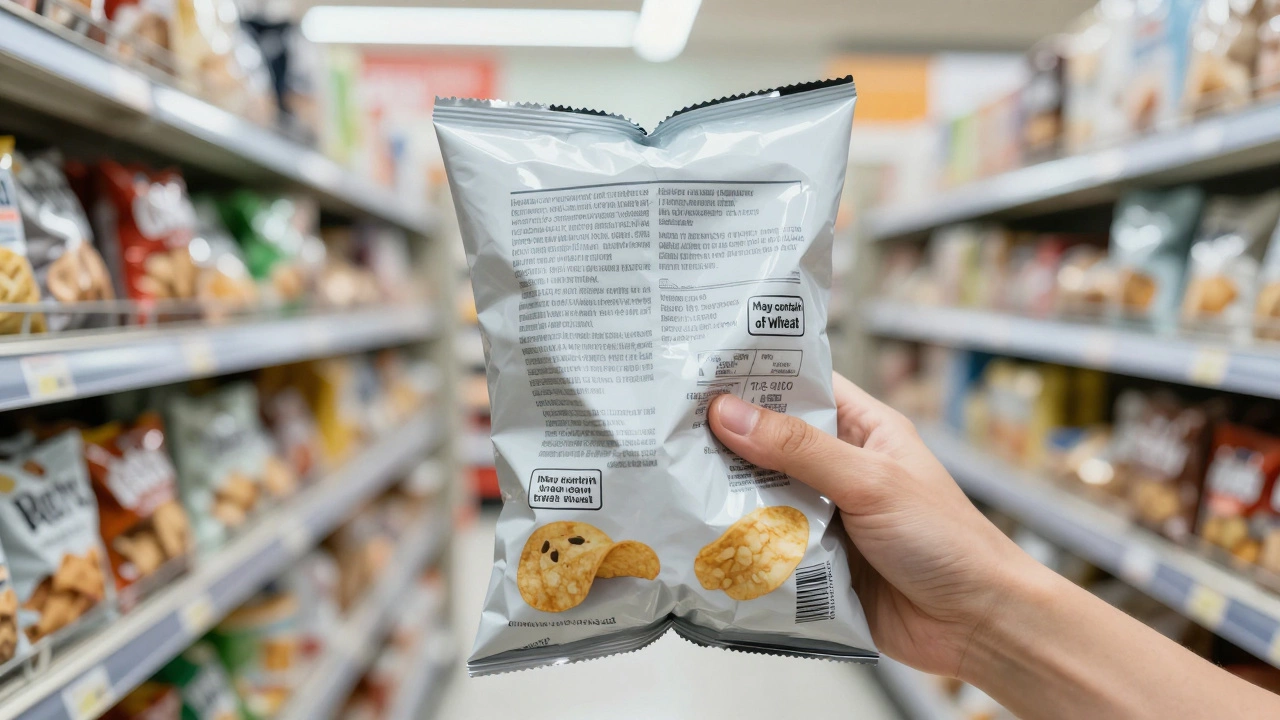
Imagine you are standing in the grocery aisle, staring at a bag of chips that looks perfect. The label says "natural" and "no artificial flavors." But then you flip it over and see that tiny warning: "May contain traces of wheat." If you have Celiac disease or a severe gluten sensitivity, that moment is stressful. You need a snack that isn't just safe, but actually tastes good. Finding a good snack for gluten-free diets used to mean settling for bland rice cakes or expensive specialty bars. Today, however, the landscape has changed dramatically.
The challenge with gluten-free snacking isn't just about avoiding wheat. It’s about navigating a world where cross-contamination is real and labels can be misleading. A "good" snack needs to hit three criteria: it must be strictly free of wheat, barley, and rye; it should offer some nutritional value rather than just empty calories; and it needs to satisfy your craving without making you feel like you’re eating cardboard. Let’s break down exactly what works, what doesn’t, and how to build a snack rotation that keeps you safe and satisfied.
Understanding the Gluten Trap
Before we look at specific foods, we need to understand why standard snacks are dangerous. Gluten acts as a binder in many processed foods. When manufacturers remove gluten, they often replace it with starches like potato, tapioca, or corn. This substitution changes the texture and sometimes the glycemic impact of the food. For someone managing blood sugar alongside gluten intolerance, this matters.
More importantly, you have to watch out for hidden sources. Malt flavoring usually comes from barley. Soy sauce traditionally contains wheat unless labeled tamari or coconut aminos. Even oats, which are naturally gluten-free, are often processed in facilities that handle wheat, leading to cross-contamination. Always look for the word "certified gluten-free" on oat products. Without that certification, an oat-based snack is a gamble you shouldn't take.
Naturally Gluten-Free Whole Foods
The safest and often most satisfying snacks come directly from nature. These foods require no processing, meaning there is zero risk of cross-contamination during manufacturing. They are also typically higher in fiber and nutrients compared to packaged alternatives.
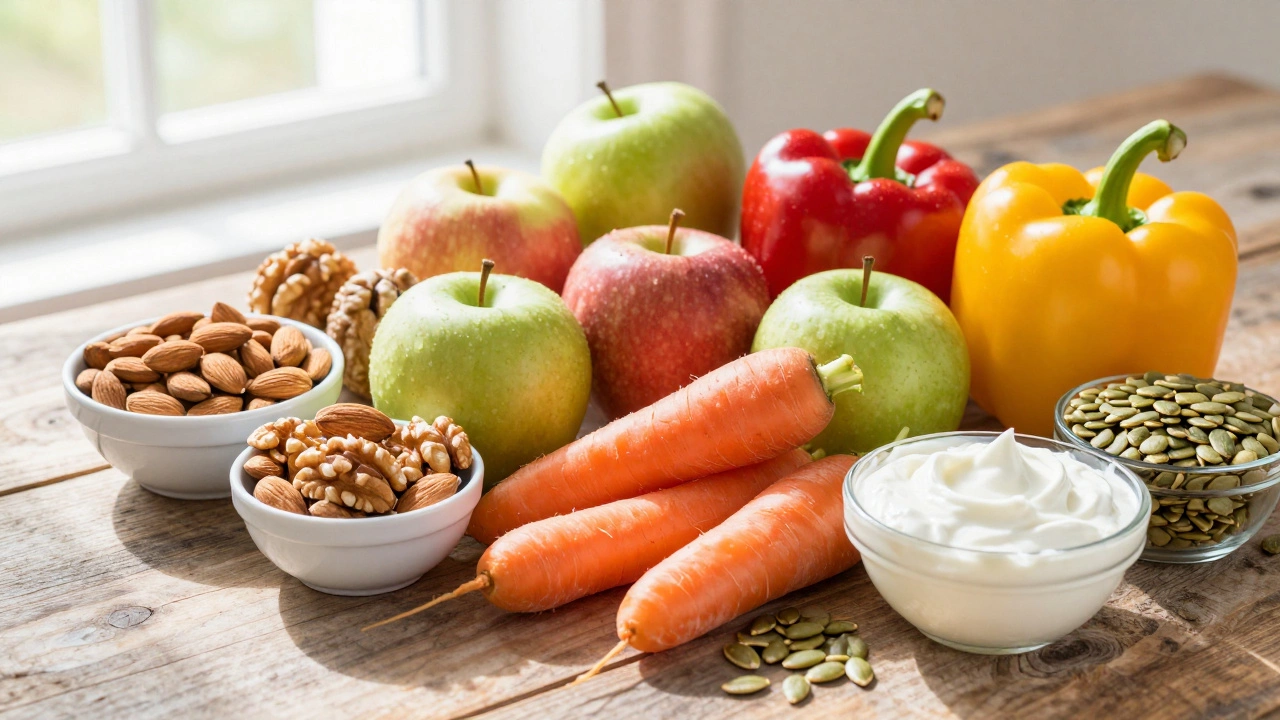
- Fruits and Vegetables: Apples, bananas, carrots, and bell peppers are inherently gluten-free. Pair them with natural fats to slow digestion and keep you full. An apple with almond butter is a classic combination that provides protein, healthy fats, and fiber.
- Nuts and Seeds: Almonds, walnuts, cashews, pumpkin seeds, and sunflower seeds are excellent choices. However, be cautious with flavored nuts. Many roasted almonds are dusted with maltodextrin derived from corn (safe) or wheat (unsafe). Stick to raw or dry-roasted varieties with simple salt.
- Dairy Products: Plain Greek yogurt, cottage cheese, and hard cheeses like cheddar or parmesan are safe. Avoid soft cheeses that might contain additives or anti-caking agents derived from gluten sources, though this is rare. Check the ingredient list for any mention of wheat starch.
Smart Packaged Snacks
Sometimes you need something convenient that fits in your bag. Not all packaged snacks are created equal. Here is how to identify the winners.
Rice cakes have been the go-to for decades, but they can be nutritionally void. Look for versions made from brown rice or quinoa for added fiber. Better yet, try plantain chips or kale chips. These offer a similar crunch to potato chips but with a better nutrient profile. Just check the oil used; some brands use sunflower oil, while others might use oils processed with gluten-containing grains, though this is uncommon in major brands.
Protein bars are another minefield. Many popular brands use wheat flour or barley malt syrup as binders. Look for bars explicitly labeled "Gluten-Free." Brands like Larabar or RXBAR often use simple ingredients like dates, nuts, and eggs, which are naturally gluten-free. Read the back of the package carefully. If it lists "oats," ensure they are certified gluten-free.
| Snack Type | Safety Level | Nutritional Value | Common Pitfalls |
|---|---|---|---|
| Fresh Fruit | Very High | High (Fiber, Vitamins) | Low protein/fat |
| Nuts/Seeds | High | High (Healthy Fats, Protein) | Flavored varieties may contain gluten |
| Rice Cakes | Medium | Low (Carbs only) | High glycemic index, low satiety |
| GF Granola Bars | Variable | Moderate | Cross-contamination, high sugar |
| Potato Chips | High (if plain) | Low | Seasonings often contain wheat |
DIY Gluten-Free Snacks
Making your own snacks gives you total control over ingredients. This eliminates the fear of hidden gluten and allows you to adjust flavors to your liking. Plus, homemade options are often cheaper than buying specialized gluten-free products.
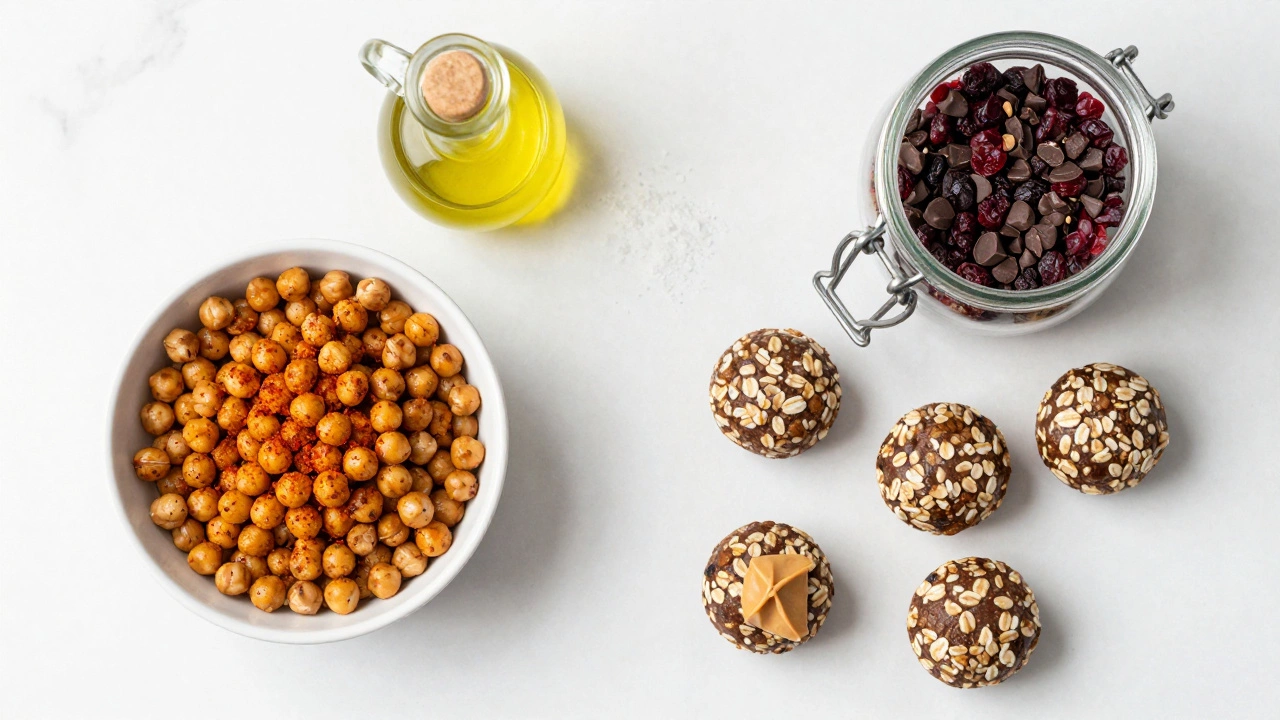
Homemade Trail Mix: Combine raw almonds, dark chocolate chips (check for wheat-derived lecithin, though rare), dried cranberries, and pumpkin seeds. Store in an airtight container. This mix provides a balance of sweet, salty, and crunchy textures.
Roasted Chickpeas: Drain a can of chickpeas, toss with olive oil, paprika, and garlic powder. Roast at 400°F (200°C) for 20-30 minutes until crispy. These are high in protein and fiber, making them far more satiating than typical chips. Ensure your spices are pure and not blended with anti-caking agents containing gluten.
Energy Bites: Mix rolled oats (certified gluten-free), peanut butter, honey, and chia seeds. Roll into balls and refrigerate. These are great for pre-workout energy. Remember, if you don't use certified gluten-free oats, these bites are not safe for those with Celiac disease due to cross-contamination risks.
Reading Labels Like a Pro
You cannot rely on intuition alone. You must become proficient at reading labels. In many countries, including the UK and US, laws require clear labeling of gluten-containing grains. However, the wording can be tricky.
Look for these red flags:
- Modified Food Starch: If the source isn't specified, it could be wheat. In the EU, the source must be declared. In the US, it's less consistent. When in doubt, avoid it.
- Barley Malt: Common in beers, candies, and seasonings. Always avoid.
- Semolina: This is always made from wheat.
- Farina: Another term for wheat flour.
Conversely, look for certifications. Logos from organizations like the Celiac Support Association or local equivalents provide an extra layer of safety. These organizations test products for gluten levels below 20 parts per million (ppm), which is the threshold considered safe for most people with Celiac disease.
Eating Out and Social Situations
Snacking isn't just a home activity. What do you do when friends order pizza or you're at a party? Communication is key. Politely inform your host or server about your dietary needs. Most restaurants now understand gluten-free requirements.
If you're unsure about a dish, stick to naturally gluten-free items like grilled meats, salads (without croutons), and steamed vegetables. Avoid fried foods unless you know the fryer is dedicated to gluten-free items, as shared fryers are a major source of cross-contamination. Carry a small emergency snack, like a packet of plain nuts, just in case options are limited.
Nutritional Balance in Gluten-Free Snacking
A common mistake is replacing gluten-containing carbs with refined gluten-free carbs. White rice pasta or white corn tortilla chips digest quickly, causing blood sugar spikes. Aim for snacks that combine complex carbohydrates with protein and healthy fats. This combination stabilizes blood sugar and keeps you fuller for longer.
For example, instead of just eating a banana, pair it with a handful of almonds. Instead of plain crackers, choose whole-grain gluten-free crackers topped with avocado. This approach ensures you get essential nutrients like iron, magnesium, and B vitamins, which are sometimes lacking in gluten-free diets if not carefully planned.
Are all oats gluten-free?
No. While oats themselves do not contain gluten, they are frequently grown and processed alongside wheat, barley, and rye. This leads to cross-contamination. Unless the package explicitly states "Certified Gluten-Free," you should assume oats contain gluten and avoid them if you have Celiac disease.
Can I eat regular soy sauce?
Generally, no. Traditional soy sauce is made with wheat. Look for "Tamari" which is often wheat-free, but always check the label. Alternatively, use coconut aminos, which are naturally gluten-free and have a similar savory flavor.
What is the safest snack for a child with gluten intolerance?
Fresh fruits, plain yogurt, and unsalted nuts (if age-appropriate) are among the safest. For packaged snacks, choose brands that specialize in gluten-free products and have rigorous testing protocols. Avoid anything with "may contain wheat" warnings.
Is popcorn gluten-free?
Plain, air-popped popcorn is naturally gluten-free. However, movie theater popcorn is often cooked in shared kettles with pretzels or other gluten-containing snacks. Additionally, flavored popcorn kernels may contain maltodextrin or yeast extract derived from gluten sources. Stick to homemade popcorn with olive oil and salt.
Do I need to buy special gluten-free brands for everything?
Not necessarily. Many whole foods like fruits, vegetables, meat, and dairy are naturally gluten-free. You only need specialized gluten-free brands for processed items like bread, pasta, and baked goods where gluten is typically used as a structure builder.