
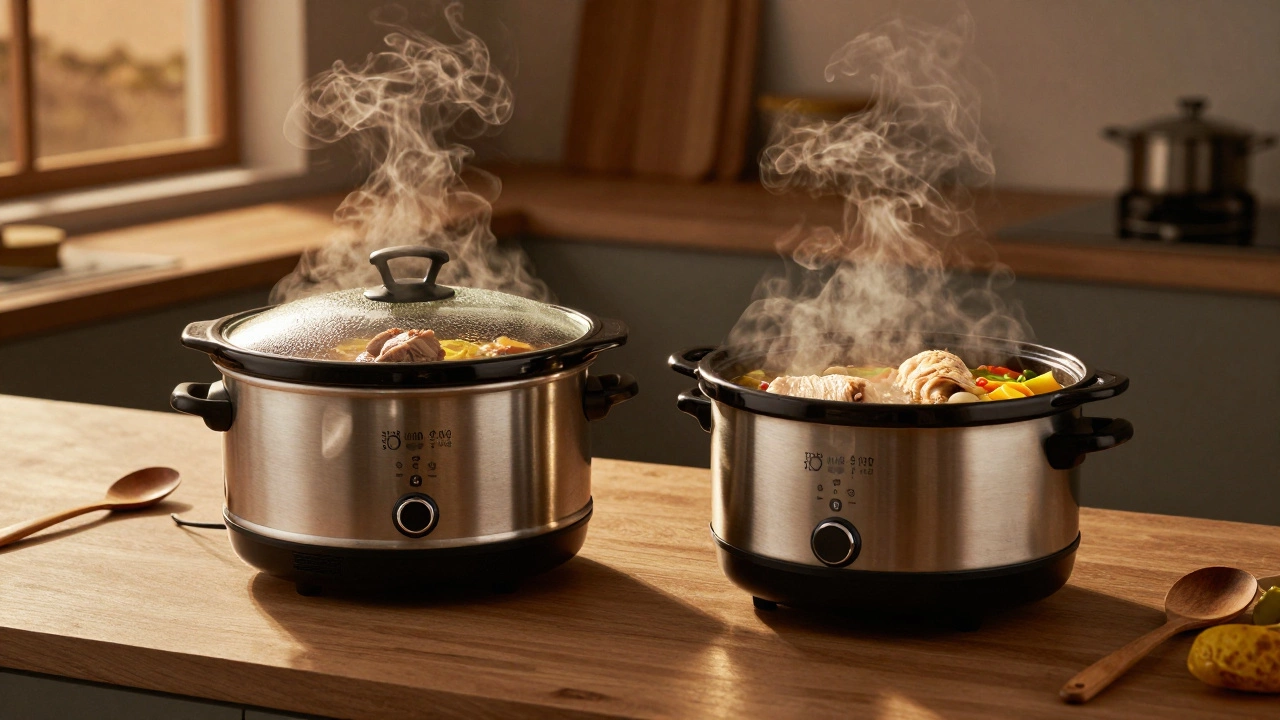
Slow Cooker Time Converter
Convert cooking times between slow cooker low and high settings based on food type and safety guidelines.
Ever stared at your slow cooker, wondering if leaving it on low for six hours is really the same as cranking it to high for four? You’re not alone. This question comes up every week in home kitchens-from busy parents juggling work and kids to retirees who just want a hot meal without babysitting the stove. The truth? It’s not that simple. And getting it wrong can mean dry chicken, mushy veggies, or even food safety risks.
What Actually Happens Inside a Slow Cooker?
Slow cookers don’t just heat food-they cook it slowly, letting flavors develop and tough cuts of meat break down. The difference between low and high isn’t just temperature-it’s how fast the cooker gets there and how long it holds that heat.
On high, the internal temperature hits around 212°F (100°C) in about 3 to 4 hours. On low, it takes 7 to 8 hours to reach the same point. That’s the key: low doesn’t mean colder. It means slower. The final cooking temperature is nearly identical, but the journey there changes everything.
Why Time Isn’t Interchangeable
Let’s say your recipe says 6 hours on low. If you switch to high for 4 hours, you’re not just cutting time-you’re skipping the gentle phase where collagen melts into gelatin, making meat tender without falling apart. On high, that collagen breaks down faster, but the meat can become stringy or even tough because it’s exposed to intense heat before the connective tissues have time to soften evenly.
Vegetables tell the same story. Potatoes and carrots on high for 4 hours? They’ll turn to mush. On low for 6 hours? They’ll be soft but still hold their shape. That’s because low heat lets them cook gradually, absorbing flavor without disintegrating.
And then there’s the liquid. Slow cookers rely on steam and moisture to cook food. On high, evaporation happens faster. Your stew might end up thicker-or worse, dry-if you don’t adjust the liquid. I’ve seen people dump in the same amount of broth, switch from low to high, and end up with a gloopy paste instead of a rich sauce.
The 2:1 Rule (And When It Breaks)
Most cookbooks and manufacturers say you can convert low to high using a 2:1 ratio. That means 8 hours on low = 4 hours on high. But here’s the catch: that rule only works for simple, forgiving recipes.
For tougher cuts like chuck roast, pork shoulder, or beef brisket? Stick to low. These need 8-10 hours on low to truly melt into fall-apart tenderness. Push them to high and you’ll get a chewy, uneven result.
For chicken? You’ve got less room for error. Boneless, skinless chicken breasts on high for 4 hours? They’ll be dry as cardboard. On low for 6 hours? They’ll stay juicy-if you don’t overcook them. Chicken thighs, on the other hand, handle high better. They’ve got more fat and connective tissue, so 4 hours on high works fine.
And beans? Don’t even think about rushing them. Dried beans need a long, slow simmer to soften fully and break down their natural toxins. Cooking them on high for 4 hours won’t make them safe or tender. Stick to low for 7-8 hours, or pre-soak them.
Food Safety: The Hidden Risk
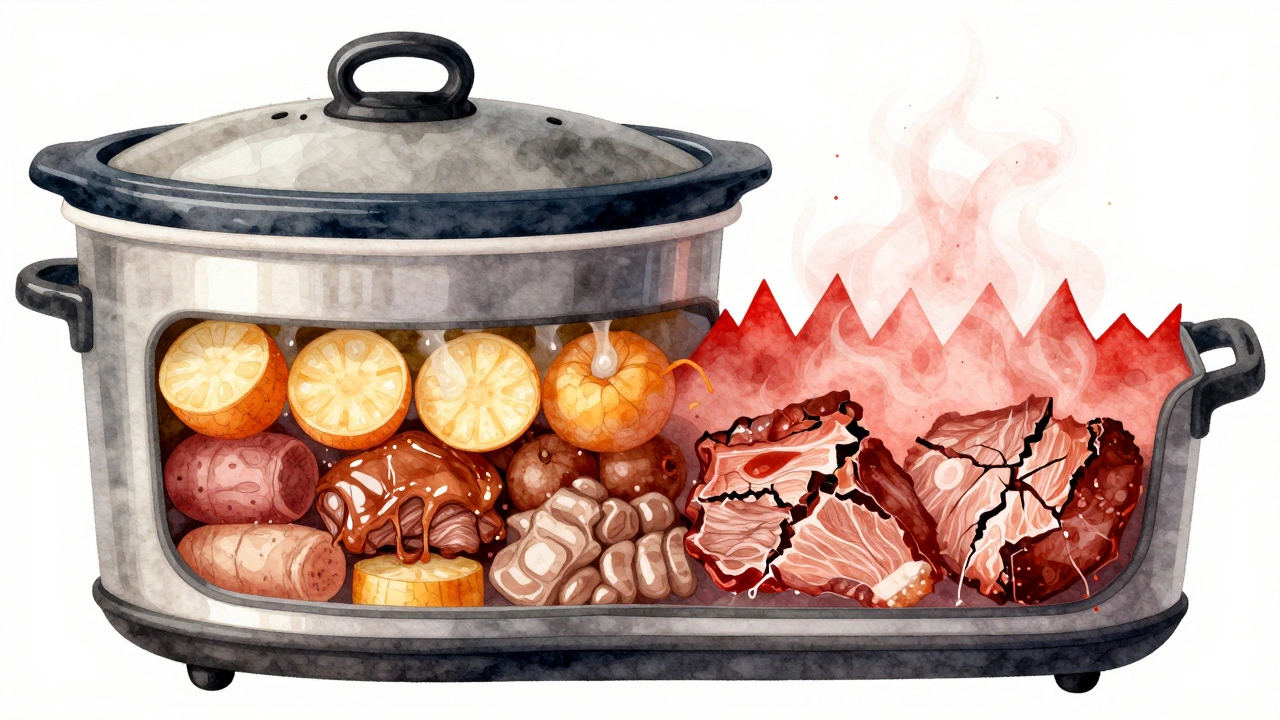
Here’s something no one talks about enough: the danger zone. Bacteria grow between 40°F and 140°F. Your slow cooker needs to get past 140°F within 4 hours to stay safe.
On low, it takes 7-8 hours to reach that point. That’s why you should never start with frozen meat or cold ingredients on low. If your cooker sits at 100°F for 5 hours before heating up, you’re giving bacteria time to multiply. Always thaw meat first-or start on high for the first hour, then switch to low.
On high, you’re safe. It hits 140°F in under 2 hours. So if you’re running late and need to cook something fast, high is the safer bet-just don’t leave it on high for more than 4-5 hours unless the recipe calls for it.
When You Can (and Can’t) Switch Settings
Here’s a simple guide:
- Can switch: Soups, stews with tender cuts (like pork loin), chili with pre-cooked beans, and dishes with lots of liquid.
- Don’t switch: Tough meats (brisket, shank), dried beans, delicate proteins (fish, shrimp), and dishes with dairy (cream, cheese, yogurt). Dairy curdles on high heat.
Also, don’t switch settings mid-cook unless you know what you’re doing. Opening the lid to adjust the heat drops the internal temperature by 15-20°F. That sets you back 20-30 minutes. If you must switch, do it early-within the first hour.
Real-World Examples
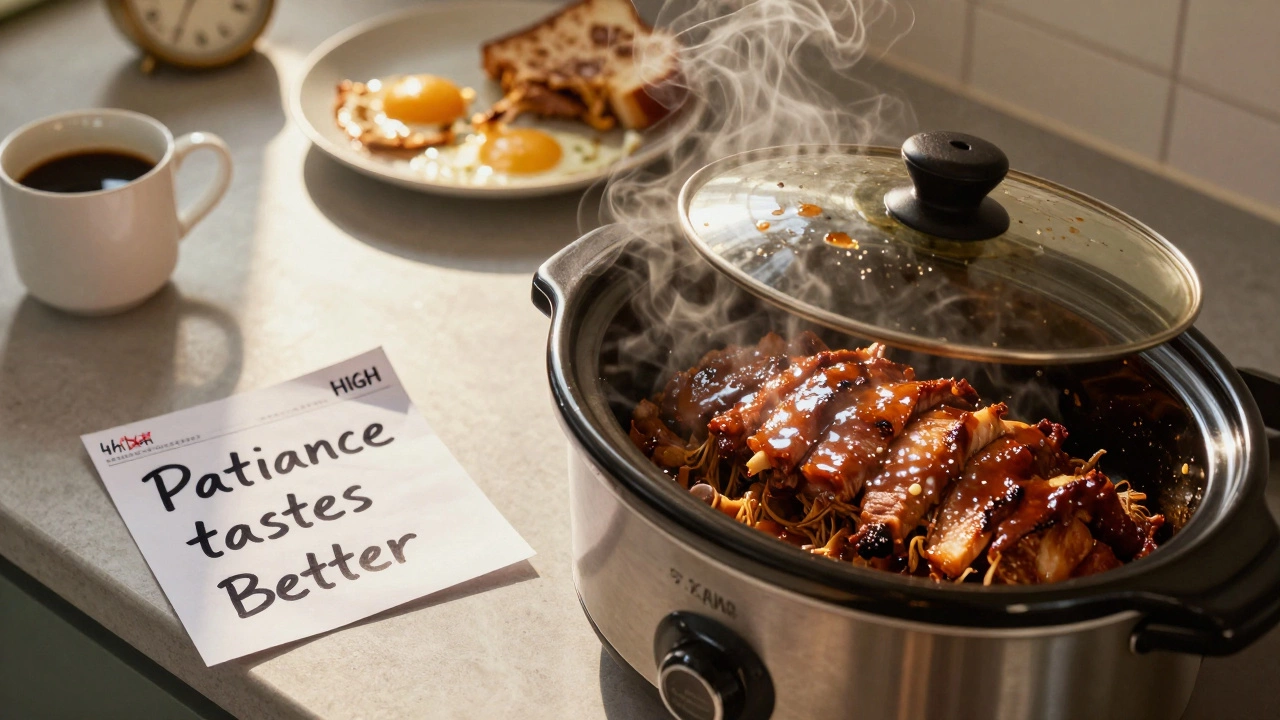
Take my go-to pulled pork recipe: 6 pounds of pork shoulder, 1 cup of apple cider vinegar, 2 cups of chicken broth, and a spice rub. On low? 9 hours. Perfectly tender, pulls apart with a fork. On high? 5 hours. Still edible, but the meat’s grain is tighter, and the sauce doesn’t reduce as nicely.
Or a simple chicken and vegetable stew. On low for 7 hours? Juicy chicken, crisp-tender carrots, and potatoes that hold their shape. On high for 4 hours? Chicken is dry, carrots are mush, and the broth tastes watery because too much evaporated.
And here’s one I learned the hard way: tomato-based sauces. On high, they turn bitter. On low, the acidity mellows out and the flavor deepens. That’s why slow-cooked spaghetti sauce tastes better than stovetop-it’s not just time. It’s temperature control.
Pro Tips for Better Results
- Always start with room-temperature ingredients. Cold meat or frozen veggies delay the heat-up time and risk bacterial growth.
- Don’t overfill. Keep the cooker between half and two-thirds full. Too much and the heat won’t circulate. Too little and it’ll boil over.
- Use the right size. A 6-quart cooker with 2 pounds of meat? You’re cooking in a giant oven. Match your pot size to your food.
- Layer smart. Put root vegetables on the bottom-they take longer. Put meat on top. Liquids go around, not over.
- Resist the urge to peek. Every time you lift the lid, you lose heat. Wait until the last hour.
Final Answer: Is 6 Hours on Low the Same as 4 Hours on High?
No. Not really.
They both get the food to the same final temperature, but the way they get there changes texture, flavor, and safety. Low isn’t just slower-it’s gentler. It gives time for flavors to meld and proteins to break down without tearing apart.
If you’re in a rush, high can work. But only for certain foods. For the best results-tender meat, vibrant veggies, rich sauces-stick to low. It’s not about saving time. It’s about letting the food do its job.
Slow cooking isn’t magic. It’s patience. And patience, in the kitchen, always tastes better.
Can I cook chicken on high for 4 hours instead of low for 6?
Yes, but only if you’re using chicken thighs or drumsticks. Boneless, skinless chicken breasts will dry out on high. If you must use breasts, cook them on low for 4-5 hours max. Never go beyond 6 hours on low or 4 on high with white meat.
What happens if I leave my slow cooker on high all day?
Most modern slow cookers have a warm setting that kicks in after 8-10 hours on high. If yours doesn’t, leaving food on high for more than 6-8 hours can lead to overcooked, dry, or rubbery textures. It’s safe from a bacteria standpoint, but the food quality drops fast.
Can I switch from low to high halfway through?
You can, but it’s not ideal. The sudden temperature change can shock proteins and make meat tougher. If you’re running behind, it’s better to start on high for the first hour, then drop to low. Never switch after the first 2 hours unless it’s a soup or stew with lots of liquid.
Why does my slow cooker take so long to heat up on low?
That’s by design. Low settings are meant to gently bring food to a simmer over 7-8 hours. If your cooker takes longer than 8 hours to reach 140°F, it might be faulty. Always test your cooker: fill it with water, set it to low, and check after 8 hours. It should be steaming hot-around 185-200°F.
Is it safe to cook frozen meat in a slow cooker?
No, not on low. Frozen meat can sit in the danger zone (40-140°F) for too long, letting bacteria grow. If you must use frozen meat, start on high for the first hour to get the temperature up quickly, then switch to low. Better yet, thaw it in the fridge overnight.