
Slow Cooker vs. Crock-Pot Decision Tool
Answer three simple questions to get a personalized recommendation on which type of slow cooker you should buy.
Your Recommendation
Generic Slow Cooker
Best for budget-conscious cooks focusing on standard recipes.
- Suggested Capacity: 6 Quarts
- Key Feature Focus: Reliable High/Low settings
Why this choice?
Since you are prioritizing budget and simple cooking, a generic brand offers nearly identical performance to premium brands at a lower cost. You save money without sacrificing quality for basic dishes.
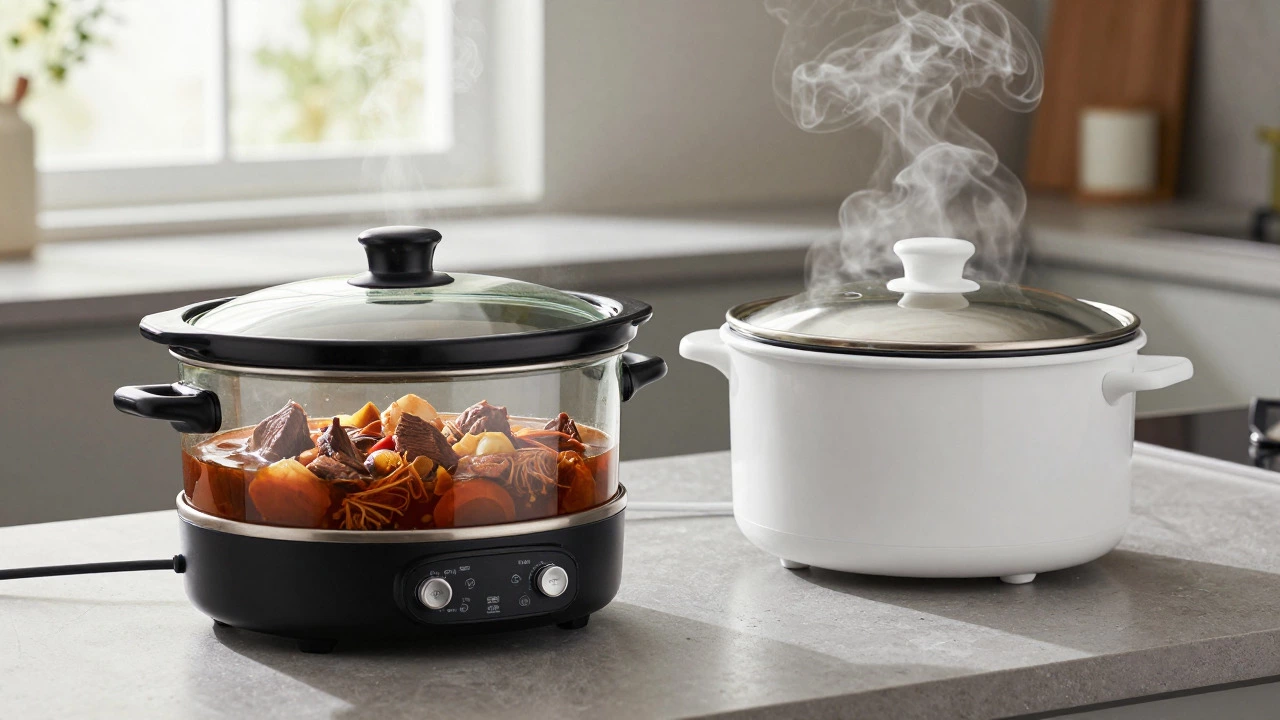
You’ve probably stood in front of a store shelf or scrolled through online listings, confused by two items that look nearly identical but carry different names and prices. One is labeled "Slow Cooker," and the other is "Crock-Pot." Are they the same thing? Is one better than the other? The short answer is no, not exactly. While they perform the same core function-cooking food slowly at low temperatures-they differ in brand heritage, specific features, and sometimes, build quality.
Understanding this distinction saves you money and prevents frustration when your recipe doesn't turn out as expected. This guide breaks down exactly what makes a Crock-Pot different from a generic slow cooker, helping you decide which one fits your kitchen and cooking habits best.
Key Takeaways
- Crock-Pot is a specific brand name owned by Sunbeam, while "slow cooker" is the general category for any appliance that cooks food slowly over several hours.
- All Crock-Pots are slow cookers, but not all slow cookers are Crock-Pots.
- Crock-Pots often feature proprietary settings like "More/less" heat control, whereas many budget brands only offer High/Low.
- Generic slow cookers can be significantly cheaper, offering similar performance for basic recipes.
- The choice depends on whether you value brand reliability and extra features or prioritize cost-effectiveness.
What Exactly Is a Slow Cooker?
A slow cooker is an electric countertop appliance designed to cook food at a low temperature over an extended period, typically ranging from four to ten hours. It consists of a removable ceramic or stoneware pot surrounded by a heating element, all enclosed in an outer housing with a lid. The process relies on moist heat; the liquid from the ingredients steams inside the sealed environment, breaking down tough fibers in meat and melding flavors without drying out the dish.
This method of cooking has roots in ancient civilizations, where large pots were left near hearths for long periods. Modern electric versions emerged in the mid-20th century, revolutionizing home cooking by allowing busy families to prepare meals hands-free. Today, slow cookers come in various shapes, sizes, and capacities, usually measured in quarts. A standard 6-quart model is popular for family-sized meals, serving about six to eight people.
What Makes a Crock-Pot Different?
Crock-Pot is a trademarked brand of slow cooker originally created by Irving Naxon in 1940 and later acquired by Sunbeam Corporation. The term "Crock-Pot" has become so widely used that many people use it interchangeably with "slow cooker," much like how some refer to band-aids as Band-Aids. However, technically, Crock-Pot refers specifically to products manufactured under that brand name.
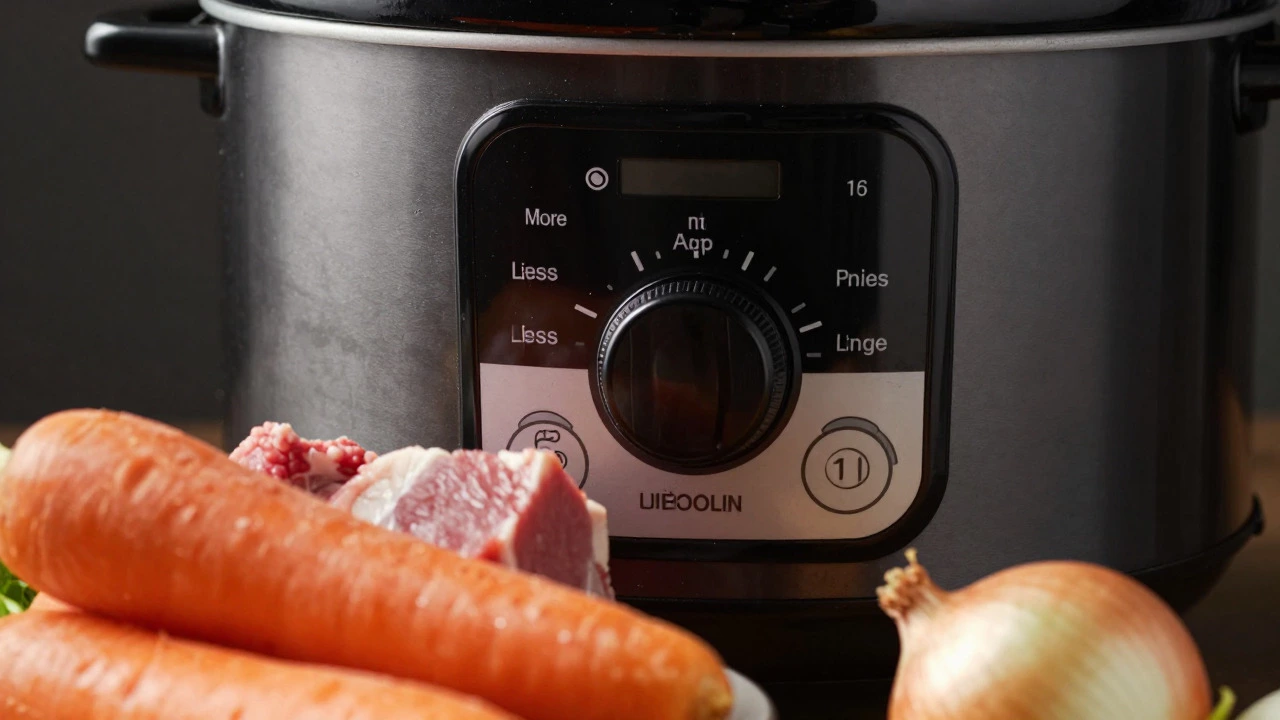
The original innovation was the use of a crock-shaped ceramic pot, which helped distribute heat evenly. Over the decades, the brand has evolved, introducing digital controls, programmable timers, and specialized settings. For instance, newer Crock-Pot models often include a "More/Less" setting, allowing users to adjust the intensity of the Low or High heat. This feature is crucial for recipes that require precise temperature control, such as baking bread or making yogurt, which can be tricky with standard High/Low settings.
Head-to-Head Comparison: Features and Build Quality
When comparing a branded Crock-Pot to a generic slow cooker from retailers like Amazon Basics, Black+Decker, or Hamilton Beach, several differences emerge. These aren't always about performance, but rather about user experience and durability.
| Feature | Crock-Pot (Branded) | Generic Slow Cooker |
|---|---|---|
| Price Range | $50 - $150+ | $30 - $80 |
| Heat Settings | High, Low, Warm, More/Less | High, Low, Warm (usually) |
| Lid Type | Glass (allows viewing) or Plastic | Often Glass, sometimes Metal |
| Warranty | Typically 5 years | Usually 1-3 years |
| Recipe Booklets | Frequently included | Rarely included |
| Availability | Widely available in major retailers | Variety of third-party brands |
One notable difference is the warranty. Crock-Pot products often come with a five-year limited warranty, reflecting confidence in their build quality. Generic brands may offer shorter warranties, which can be a concern if the heating element fails after a year of use. Additionally, Crock-Pot often includes recipe booklets or access to digital recipe hubs, which can be helpful for beginners who are unsure how to adapt oven recipes for slow cooking.
Does the Brand Matter for Cooking Results?
Here’s the truth: for most standard recipes like pulled pork, chili, or soup, the difference in cooking results between a high-end Crock-Pot and a budget generic model is negligible. Both appliances maintain a consistent low temperature, which is the primary requirement for slow cooking. If you’re making a simple beef stew, a $40 generic slow cooker will perform just as well as a $90 Crock-Pot.
However, the gap widens when you tackle more complex tasks. If you plan to bake cakes, make cheese, or ferment foods, the precision of the heating element becomes critical. Crock-Pot’s "More/Less" feature allows for finer control, reducing the risk of overcooking or undercooking delicate dishes. Furthermore, the consistency of the ceramic pot matters. Some cheap generic units have uneven heating spots, which can cause hot spots in the pot. Branded units tend to have better thermal distribution, ensuring even cooking throughout the contents.
Which One Should You Buy?
Your decision should hinge on your cooking frequency, budget, and specific needs. Here is a quick guide to help you choose:
- Choose a Crock-Pot if: You want peace of mind with a longer warranty, need precise heat control for diverse recipes (like baking or yogurt), or prefer the convenience of included recipe resources. It’s also a good gift option due to brand recognition.
- Choose a Generic Slow Cooker if: You are on a tight budget, primarily cook simple soups and stews, or already have a trusted set of recipes that work well with standard High/Low settings. Brands like Black+Decker or Hamilton Beach offer reliable performance at lower price points.
Consider also the size. Regardless of brand, ensure the capacity matches your household size. A 4-quart cooker is ideal for couples or small households, while a 7-quart or larger model is better for families or meal prepping. Don’t oversize; a half-empty slow cooker can lead to uneven cooking and potential scorching.
Maintenance and Longevity Tips
Whether you buy a Crock-Pot or a generic unit, proper care extends its life. Avoid dropping the ceramic insert, as cracks can compromise insulation and safety. Clean the inner pot with warm soapy water, avoiding abrasive scrubbers that can scratch the glaze. The outer housing should be wiped down with a damp cloth; do not submerge it in water unless specified by the manufacturer.
Regularly check the cord for fraying and ensure the unit is placed on a stable, heat-resistant surface. Using trivets or wooden boards underneath protects countertops from heat damage. With basic maintenance, both branded and generic slow cookers can last for many years, making them a worthwhile investment for weekly meal planning.
Frequently Asked Questions
Is Crock-Pot a type of slow cooker?
Yes, Crock-Pot is a specific brand of slow cooker. All Crock-Pots are slow cookers, but not all slow cookers are made by Crock-Pot. Think of it like Kleenex tissues; the brand name became synonymous with the product category.
Are Crock-Pots worth the extra cost?
It depends on your needs. If you only cook simple stews, a generic model works fine. If you want advanced features like "More/Less" heat settings, a longer warranty, or included recipes, the Crock-Pot brand offers added value. For occasional users, the price difference might not justify the upgrade.
Can I use any slow cooker for Crock-Pot recipes?
Generally, yes. Most recipes designed for Crock-Pots will work in any standard slow cooker. However, if a recipe specifies a "More" or "Less" setting, you may need to adjust the time on a standard High/Low unit. Start with the recommended time and check for doneness early.
What is the lifespan of a typical slow cooker?
With proper care, a slow cooker can last 10 to 15 years or more. The main failure points are usually the heating element or the power cord. Regular cleaning and avoiding physical shocks to the ceramic pot help maximize longevity.
Do glass lids affect cooking performance?
Glass lids allow you to see the food without lifting the lid, which preserves heat and moisture. They perform similarly to plastic lids in terms of cooking efficiency. Ensure the lid seals tightly to prevent steam escape, which can extend cooking times.