

Crockpot Layering Calculator
Cooking Guide
Select ingredients and click "Calculate Layer Order" to see the correct sequence
Ever dumped everything into your crockpot at once, only to end up with mushy carrots and tough beef? You’re not alone. The order you put ingredients in matters-more than most people realize. It’s not just about convenience. Getting the sequence right means tender meat, crisp-tender veggies, and a stew that actually tastes like it simmered all day, not like it got thrown in last night.
Why Order Matters in a Crockpot
A slow cooker doesn’t heat like an oven or stovetop. It warms from the bottom up, and the heat moves slowly through the pot. That means whatever’s on the bottom gets the most heat, longest. If you toss in potatoes and carrots on top of raw chicken, those veggies will steam and turn to mush before the chicken even starts to break down. Meanwhile, the chicken might still be chewy because it didn’t get enough direct warmth.The goal isn’t just to cook food. It’s to cook it right. That means matching the cooking time of each ingredient to its natural density and toughness. Tough cuts of meat need hours to become tender. Root vegetables need more time than zucchini. And onions? They need time to soften and sweeten, not just disappear into the broth.
Put Meat on the Bottom
Start with your meat. Always. Whether it’s beef chuck, pork shoulder, chicken thighs, or even lamb shanks-place it directly on the bottom of the crockpot. This lets the heat reach it first and stay with it longest. Tougher cuts have lots of connective tissue. That collagen needs low, steady heat for 6-8 hours to turn into gelatin. That’s what makes the meat fall-apart tender.Don’t just plop it in raw. Brown it first if you can. It’s not required, but searing meat for 2-3 minutes per side in a pan before adding it to the pot adds depth. That Maillard reaction? It builds flavor you can’t get from boiling alone. If you’re short on time, skip it-but still put the meat on the bottom.
Layer Vegetables by Density
Now that your meat is in place, add vegetables in layers based on how long they take to cook. Dense, hard veggies go next: potatoes, carrots, parsnips, turnips, onions, and celery. These can handle 7-8 hours of cooking. Spread them evenly over the meat so they’re in contact with the heat source.Softer vegetables like zucchini, bell peppers, spinach, peas, or mushrooms? Add them in the last hour. They’ll cook through without turning to sludge. If you add them too early, you’ll end up with watery, flavorless mush. I’ve made that mistake too many times. Now I toss in peas and spinach right before serving. They stay bright, fresh, and full of texture.
Onions are a special case. They’re dense, but they also release sugars that caramelize slowly. If you chop them small and put them under the meat, they’ll melt into the sauce and sweeten it. If you leave them in big chunks on top, they’ll stay sharp and raw-tasting. For the best flavor, slice them thin and put them right on the meat.

Liquids and Seasonings: Where and How Much
Pour your broth, sauce, or water around the sides of the pot, not directly on top of the meat. This helps it circulate and prevents the meat from steaming instead of braising. Too much liquid? You’ll dilute the flavor. Too little? You risk burning the bottom or drying out the meat.General rule: Cover the meat by about half. For a 6-quart crockpot with 2 pounds of beef, 2-2.5 cups of liquid is usually enough. Use stock instead of water. Even store-bought stock adds way more depth. And don’t forget salt. Season the meat before adding it. That first layer of seasoning sticks to the surface and carries flavor deep into the dish.
Herbs like thyme, rosemary, or bay leaves? Add them with the meat. They need time to release their oils. Garlic? Minced garlic burns easily. Add it in the last 2 hours, or use roasted garlic for sweeter, mellow flavor. Powdered spices like paprika or cumin? Stir them into the liquid before pouring. They’ll bloom and spread evenly.
What About Frozen Meat?
You can put frozen meat in the crockpot. But it changes the game. Frozen meat takes longer to reach a safe temperature, which means your veggies will overcook waiting for it to thaw. If you’re using frozen chicken thighs or beef cubes, add them on the bottom, but increase cooking time by 1-2 hours. And skip the soft veggies entirely until the last hour.There’s a reason the USDA says to avoid slow-cooking frozen meat in some cases. But if you’re careful with timing and layering, it works. Just don’t expect the same texture as fresh meat. It’ll be fine for stews, but not for dishes where tenderness matters.
Common Mistakes and How to Fix Them
- Mushy veggies? You added them too early. Next time, wait until the last 60 minutes for delicate vegetables.
- Tough meat? You didn’t cook it long enough, or you used a lean cut. Stick with chuck, shank, or shoulder. Cook for at least 7 hours on low.
- Weak flavor? You didn’t season early enough. Salt the meat before putting it in. Use broth. Add a splash of vinegar or Worcestershire sauce at the end to brighten it up.
- Too watery? You added too much liquid or used watery veggies like zucchini too early. Reduce the broth next time, or remove the lid for the last 30 minutes to let steam escape.
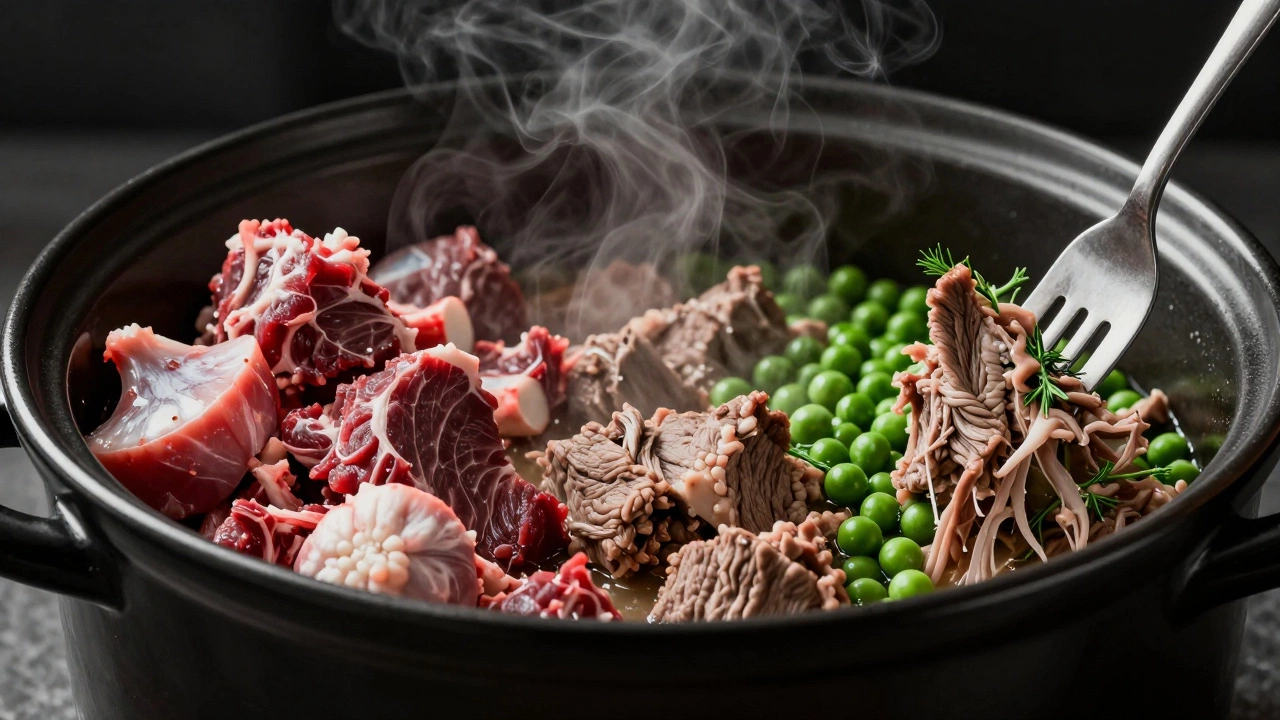
Real Example: Classic Beef Stew
Here’s how it actually looks in my pot on a Sunday night:- 2 lbs beef chuck, cubed, salted and peppered, seared in a pan (optional but recommended)
- Place beef in bottom of crockpot
- 1 large onion, thinly sliced, spread over beef
- 4 medium carrots, peeled and cut into 1-inch chunks
- 3 medium potatoes, peeled and cubed
- 2 celery stalks, chopped
- 3 cups beef stock (not water)
- 2 bay leaves, 1 tsp dried thyme, 1 tbsp tomato paste stirred into the stock
- Cook on low for 8 hours
- 15 minutes before serving: stir in 1 cup frozen peas
The result? Meat that pulls apart with a fork. Carrots that still hold their shape. Potatoes that are creamy inside, not chalky. And peas that pop with color and sweetness.
Vegetarian? Same Rules Apply
Even if you’re not using meat, layering still matters. Start with the densest veggies: sweet potatoes, parsnips, cauliflower, or whole mushrooms. Add beans or lentils next-they need time to soften. Then add tomatoes, zucchini, spinach, or herbs in the last hour. A splash of soy sauce or balsamic vinegar at the end makes all the difference.One trick: roast your vegetables first-just for 20 minutes in the oven-before adding them to the crockpot. It concentrates their flavor and prevents them from turning to soup.
Final Tip: Trust the Clock, Not the Recipe
Recipes give you times. But every crockpot is different. Mine runs hotter than my neighbor’s. Yours might be older, weaker, or newer. The best way to know it’s done? Test it. Poke the meat with a fork. If it shreds easily, it’s ready. Check the potatoes-they should slide off a fork without resistance. If your veggies are still crunchy, give it another hour.Don’t rush it. Slow cooking is slow for a reason. It’s not about speed. It’s about patience. And when you get the order right, you’ll taste the difference.