
Sick Day Food Recovery Planner
Select the symptoms you are currently experiencing to get personalized food and drink recommendations.
You’re lying in bed, feeling miserable. Your throat hurts, your head throbs, and the last thing you want to do is look at food. But here’s the problem: your body needs fuel to fight off that virus or infection. Skipping meals might feel like the easiest option when you have zero appetite, but it can actually drag out your recovery. The trick isn’t forcing down a three-course meal; it’s about finding tiny amounts of nutrient-dense, easy-to-digest food that won’t make you feel worse.
If you’re asking what a sick person should eat with no appetite, the answer lies in hydration first, then bland, soft, and familiar foods. Think of this as triage for your stomach. You don’t need gourmet cooking skills right now. You need comfort and calories that go down easily. Let’s break down exactly what works, why it works, and how to sneak nutrients in without triggering nausea.
Hydration Is Your First Meal
Before you even think about solids, focus on fluids. When you’re sick, especially with fever or vomiting, dehydration sets in fast. And dehydration makes fatigue and brain fog way worse. If solid food feels impossible, liquid calories are your best friend.
Sip slowly. Chugging water can trigger nausea if your stomach is already upset. Try small sips every ten minutes. Here are some liquids that double as light meals:
- Bone Broth is a nutrient-rich liquid made by simmering animal bones and connective tissue. It provides electrolytes like sodium and potassium, which you lose through sweat or vomiting. Plus, the collagen may help soothe an irritated gut lining.
- Electrolyte Drinks are beverages designed to replace minerals lost during illness. Skip the sugary sports drinks if possible; opt for oral rehydration solutions or coconut water, which has natural potassium.
- Ginger Tea is a warm infusion known for its anti-nausea properties. Ginger helps settle the stomach and can reduce the urge to vomit, making it easier to keep other things down.
If you can tolerate it, add a pinch of salt and sugar to warm water. This homemade solution mimics the balance of an IV drip and absorbs faster than plain water.
The BRAT Diet and Its Modern Updates
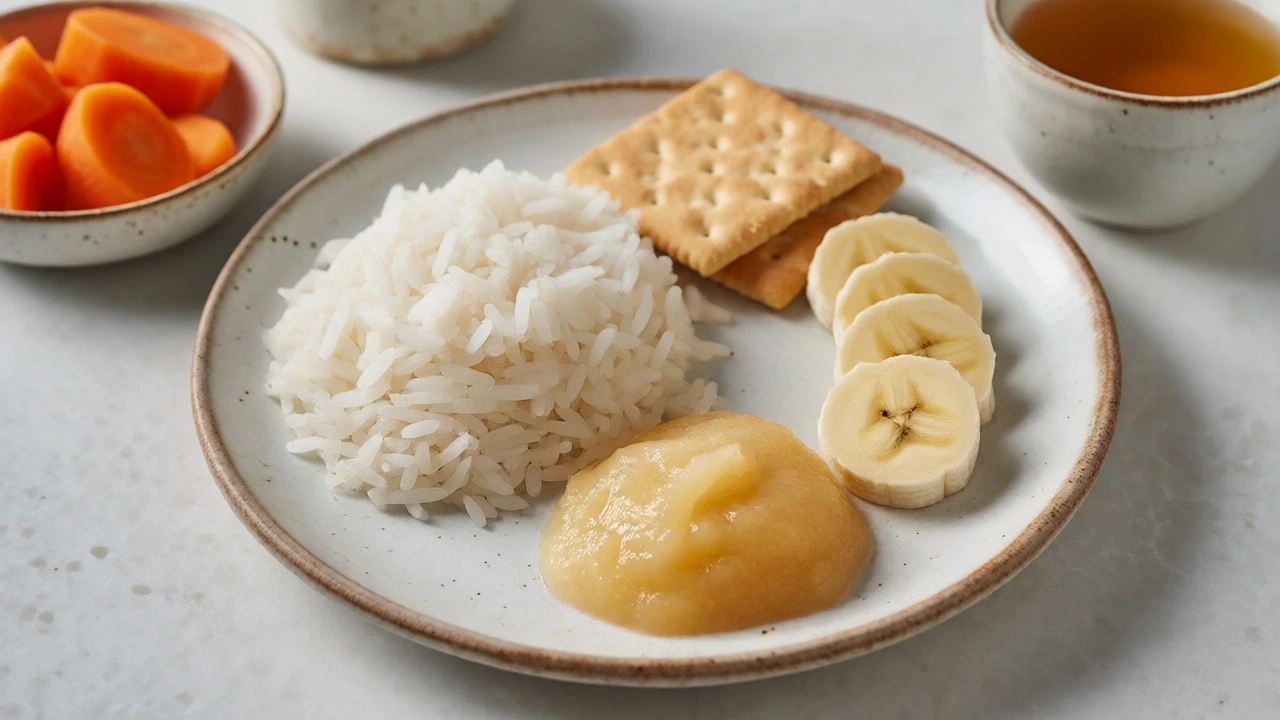
You’ve probably heard of the BRAT diet: Bananas, Rice, Applesauce, Toast. For decades, doctors recommended this for anyone with an upset stomach. It’s bland, low-fiber, and binding, meaning it helps firm up loose stools. But modern nutrition science suggests we shouldn’t rely on BRAT exclusively because it lacks protein and fat, which are crucial for immune function.
Use BRAT as a starting point, not the whole plan. Once you can keep toast down, try adding a thin layer of peanut butter (if tolerated) or a slice of turkey breast. The goal is to transition from simple carbs to balanced meals as soon as your stomach settles.
| Food Item | Why It Helps | Best For | Cautions |
|---|---|---|---|
| White Rice | Easy to digest, provides quick energy | Nausea, diarrhea | Lacks fiber; pair with broth for nutrients |
| Bananas | High in potassium, gentle on stomach | Replenishing electrolytes | Ripe bananas are better than green ones |
| Chicken Soup | Hydrating, anti-inflammatory, comforting | Colds, flu, sore throat | Avoid heavy cream bases if nauseous |
| Plain Crackers | Absorbs stomach acid, reduces nausea | Morning sickness, empty stomach | Choose low-sodium options |
Protein Without the Heavy Feeling
Your immune system runs on protein. Antibodies are proteins, after all. But chewing a steak when you feel like death is unappealing. You need protein sources that require minimal effort to digest.
Eggs are the gold standard here. A soft-boiled egg or scrambled eggs cooked in a little oil or broth are packed with leucine, an amino acid that supports muscle repair. If eggs smell too strong, try poaching them in broth instead of frying them. The steam carries less odor, and the texture is slippery enough to slide down easily.
Another great option is smoothies. Don’t just blend fruit; that’s mostly sugar. Blend Greek yogurt, a banana, and a spoonful of honey. Greek yogurt contains probiotics, which can help restore gut bacteria if antibiotics knocked them out. If dairy bothers you, use silken tofu blended into a fruit puree. It adds protein without any distinct taste.
Foods to Avoid When You Have No Appetite
Just as important as knowing what to eat is knowing what to skip. Certain foods demand more work from your digestive system than they’re worth when you’re weak.
- Dairy (except yogurt): Milk and cheese can increase mucus production or cause bloating in some people during a cold. Stick to fermented options like yogurt or kefir, which are easier to process.
- Raw Vegetables: Salads are healthy, but raw veggies are hard to break down. They require significant mechanical digestion (chewing) and chemical breakdown. Save the kale salad for next week. Cooked carrots or zucchini are far gentler.
- Fried or Greasy Foods: Fat slows down stomach emptying. If you’re nauseous, greasy fries will sit in your stomach like a brick, likely leading to more discomfort.
- Caffeine and Alcohol: Both dehydrate you. While a hot coffee might sound nice, it can irritate an acidic stomach. Herbal teas are safer bets.
Practical Tips for Eating When You Can’t
So, you know what to eat. But how do you actually get yourself to take a bite? Motivation is low, and energy is lower. Here are some strategies that work in real life.
Start with temperature. Cold foods often smell less intense than hot foods. If the aroma of cooking chicken makes you gag, try chilled melon, popsicles, or ice chips. Popsicles made from diluted juice provide hydration and a tiny bit of sugar for energy without overwhelming your senses.
Make it visually appealing. When you’re sick, everything looks gray. A bright bowl of orange soup or colorful fruit can psychologically signal "energy" and "health." Use a pretty mug for your tea. Small aesthetic wins can trick your brain into wanting to eat.
Eat before you’re hungry. Wait until you’re starving, and you’ll likely be too weak to prepare anything. Keep pre-portioned snacks nearby. A handful of pretzels, a small container of applesauce, or a few crackers within arm’s reach removes the barrier of having to get up and cook.
Listen to your body’s rhythm. Some people find their appetite returns slightly in the late afternoon or early evening. Others do better with small bites every hour. There’s no rulebook. If you only manage two bites of toast, that’s fine. Two bites are better than zero.
When to Seek Medical Help
Loss of appetite is common with minor illnesses. But sometimes, it signals something more serious. If you haven’t eaten or drunk anything for more than 24 hours, or if you show signs of severe dehydration (dark urine, dizziness upon standing, dry mouth), call a doctor. Infants and elderly individuals are particularly vulnerable to rapid dehydration, so monitor them closely.
Also, consider medication side effects. Many prescription drugs, including antibiotics and painkillers, suppress appetite or cause nausea. If you suspect your meds are the culprit, ask your pharmacist if taking them with a small snack (like a cracker) would help mitigate the side effect.
Sample Day of Eating for Low Appetite
Here’s what a realistic day looks like when you’re barely hanging on. Notice the portion sizes-they are tiny.
- Morning: Sip half a cup of ginger tea. Eat one plain saltine cracker.
- Lunch: Half a cup of clear chicken broth with a few noodles. One tablespoon of applesauce.
- Afternoon Snack: A few sips of coconut water or an ice pop.
- Dinner: Scrambled eggs (two eggs) with a slice of white toast. Maybe a few bites of steamed carrot.
- Evening: Chamomile tea to relax and aid sleep.
This plan provides roughly 600-800 calories. It’s not a lot, but it keeps your blood sugar stable and gives your body the raw materials it needs to heal. As you improve, gradually increase portion sizes and reintroduce variety.
Is it okay to fast when I’m sick?
Short-term fasting (12-24 hours) is generally safe for healthy adults and may give the digestive system a rest. However, prolonged fasting can weaken the immune system. Focus on hydration during any period of reduced eating.
Should I take multivitamins if I can’t eat?
Multivitamins can help fill gaps, but they aren't a substitute for food. Some vitamins (like Iron or Zinc) can cause nausea on an empty stomach. Consult a healthcare provider before starting new supplements during acute illness.
Does spicy food help clear congestion?
Spicy foods can temporarily clear nasal passages due to capsaicin, but they can also irritate the stomach lining. If you have nausea or gastritis, avoid spicy foods. If congestion is your main issue and your stomach is fine, a mild spice might offer relief.
How long does loss of appetite last after being sick?
Appetite usually returns gradually over 2-5 days after the acute phase passes. Full return to normal hunger cues might take a week or two. Be patient and don't force large meals immediately.
Are smoothies good for sick people?
Yes, smoothies are excellent because they combine hydration, calories, and nutrients in a form that requires no chewing. Just avoid adding too much sugar or acidic fruits if you have a sore throat or acid reflux.