
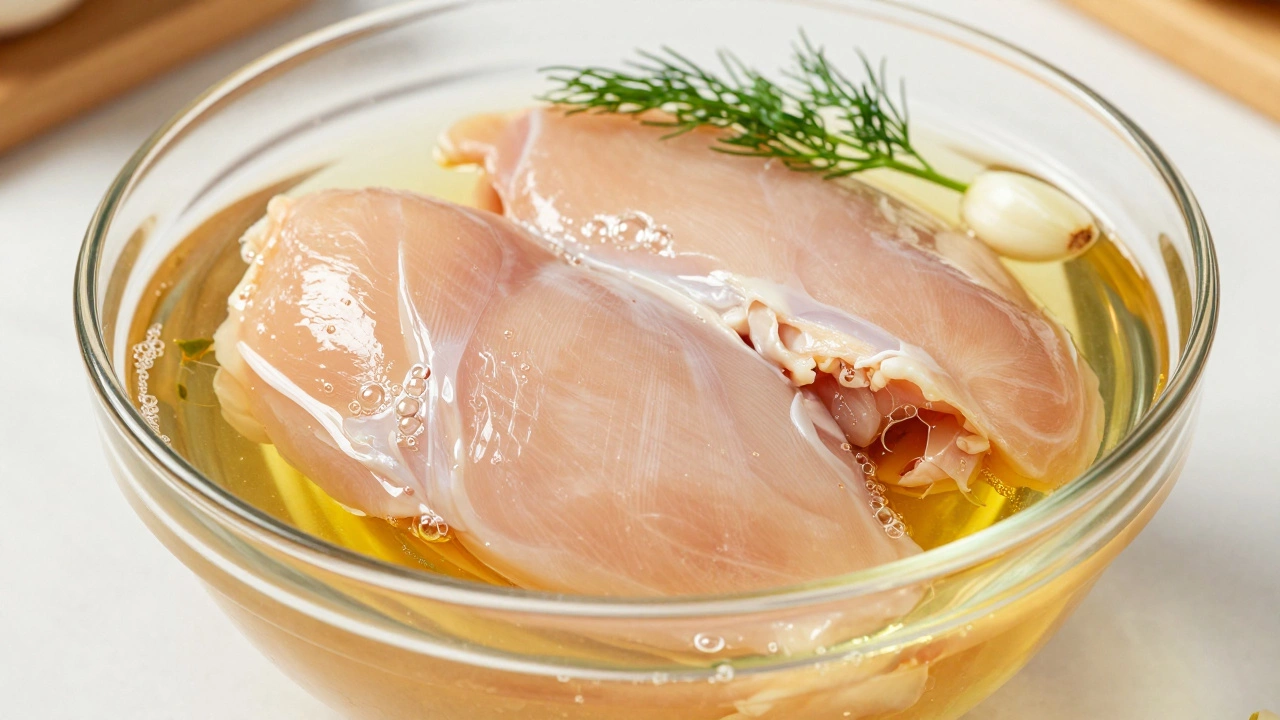
Pickle Juice Brining Timer & Guide
Pro Tip:
Boneless breasts are lean and dry out easily. This short soak ensures maximum juiciness without mushy texture.
Have you ever looked at a half-empty jar of pickles and wondered if it’s trash or treasure? For years, I tossed the liquid right down the sink. Then I tried dipping a chicken breast into that brine before grilling it. The result was shockingly moist, with a tangy depth that regular salt water just couldn’t match. If you’ve been cooking dry, bland chicken, you might be missing out on one of the simplest kitchen hacks available.
The short answer is that pickle juice acts as a powerful brine. It transforms tough, lean poultry into tender, flavorful meat through chemistry rather than magic. But to get it right, you need to understand exactly what those acids and salts are doing to your protein fibers.
The Chemistry: Why Acid and Salt Change Meat
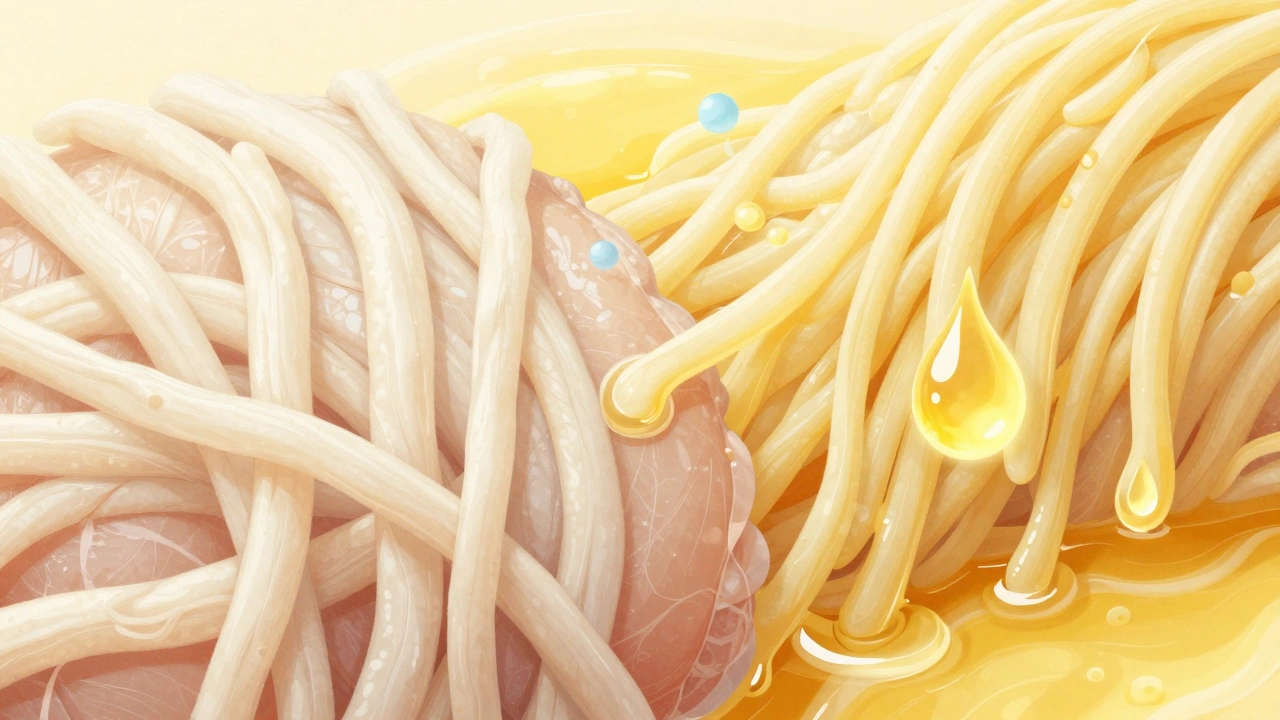
To understand why this works, we have to look at what happens inside a chicken muscle. Raw chicken contains proteins called myofibrils. When you cook chicken, heat causes these proteins to tighten up like a wrung-out towel. As they squeeze together, they push out all the natural moisture. That’s why overcooked chicken tastes like cardboard-it has literally lost its water content.
Pickle juice stops this process in two ways. First, it contains sodium chloride (salt). Salt dissolves some of the muscle proteins, allowing them to hold onto more water even when heated. This is known as osmosis followed by diffusion. The salt moves into the meat, and the water stays there.
Second, pickle juice contains acetic acid, which comes from vinegar. Acid denatures proteins differently than heat does. It breaks down the connective tissues slightly, making the texture softer. However, too much acid for too long can turn the surface of the chicken mushy, similar to ceviche. The goal is balance. You want enough acid to add flavor and slight tenderness, but not so much that the texture suffers.
| Component | Source in Jar | Effect on Chicken |
|---|---|---|
| Sodium Chloride | Salt added during pickling | Increases water retention; prevents drying out |
| Acetic Acid | Vinegar | Tenderizes surface; adds bright, tangy flavor |
| Dextrose/Sugar | Added sweetener | Aids browning (Maillard reaction); balances acidity |
| Spices/Herbs | Dill, garlic, mustard seed | Infuses aromatic flavor throughout the meat |
Best Cuts of Chicken for Pickle Juice Brining
Not all chicken parts benefit equally from this method. While you *can* brine almost anything, some cuts respond better than others.
Chicken Breasts: This is the champion candidate. Breast meat is very lean with little fat. It dries out faster than any other part. A pickle juice brine ensures it stays juicy even if you accidentally overcook it by a minute or two.
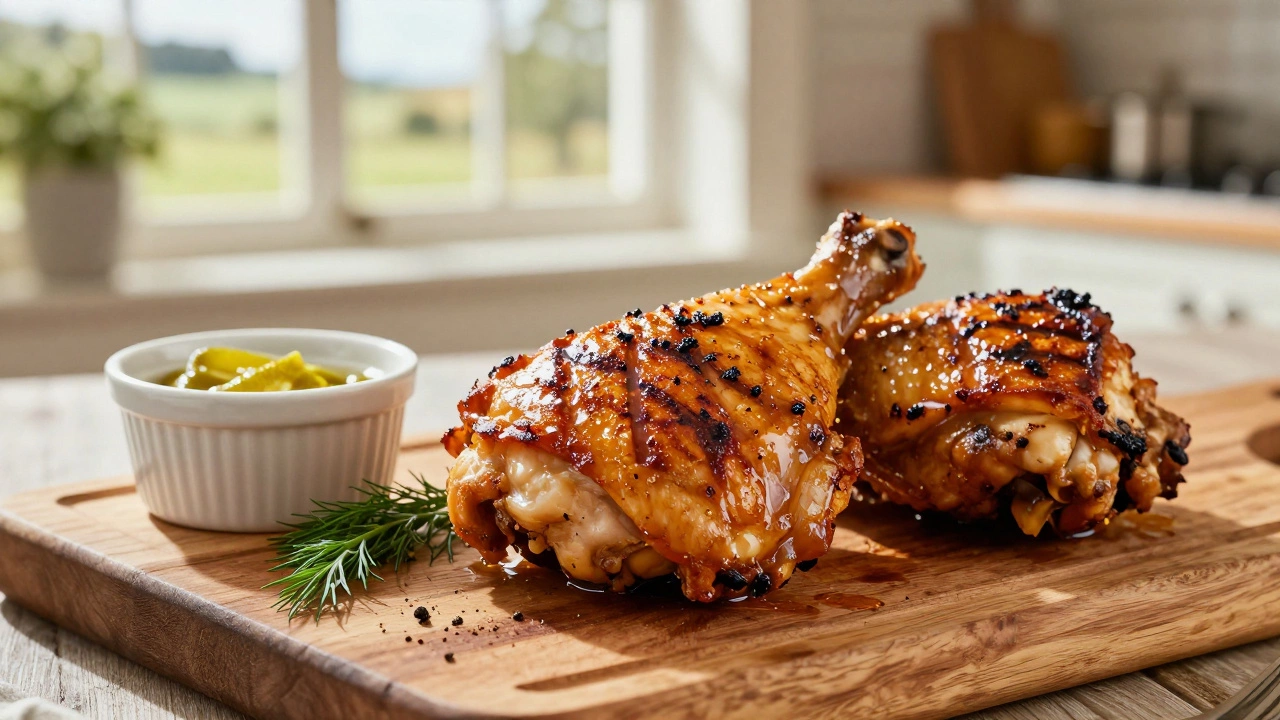
Chicken Thighs: Thighs have more fat and connective tissue, so they are naturally more forgiving. Brining them adds a nice layer of complexity and helps the skin crisp up better due to the sugar content in the brine. It’s less about preventing dryness and more about enhancing flavor.
Wings: Wings are often fried or baked until crispy. Brining wings in pickle juice creates an incredible contrast between the crunchy exterior and the succulent interior. Many food trucks use this technique for their viral "dill pickle wings."
Whole Chicken: Yes, you can brine a whole bird. However, because the legs and thighs are dark meat and the breasts are white meat, they cook at different rates. Brining helps equalize the juiciness, ensuring the breast isn’t dry while you wait for the thigh to reach a safe internal temperature.
How Long Should You Soak the Chicken?
Timing is everything. Leaving chicken in pickle juice for too long ruins the texture. The acid begins to "cook" the outer layers, turning them opaque and mealy. Here is a practical guide based on cut size:
- Boneless, Skinless Breasts: 30 minutes to 2 hours. Anything longer risks a chalky texture on the outside.
- Bone-In Breasts or Thighs: 2 to 4 hours. The bone provides insulation, slowing down the penetration of the brine.
- Wings: 1 to 2 hours. They are small and absorb flavors quickly.
- Whole Chicken: 4 to 6 hours maximum. Do not leave a whole bird in acidic brine overnight unless it is diluted significantly.
If you are short on time, don’t worry. Even a 15-minute soak will impart some flavor and help with surface browning. It won’t penetrate deeply enough to change the entire texture, but it’s better than nothing.
Step-by-Step Guide to Brining Chicken in Pickle Juice
You don’t need special equipment. Just a zip-top bag or a glass container and your leftover jar.
- Choose Your Brine: Dill pickle juice is the most popular because the herbs complement chicken well. Sweet bread-and-butter pickle juice works great for barbecue-style recipes. Spicy pepperoncini juice adds heat. Avoid heavily sugary or overly salty varieties if possible, as they can burn easily on the grill.
- Submerge the Meat: Place the chicken in a resealable plastic bag. Pour in enough pickle juice to completely cover the chicken. Squeeze out the air and seal the bag. If using a bowl, ensure the chicken is fully underwater. Floating pieces won’t brine evenly.
- Refrigerate: Keep the chicken cold. Never brine at room temperature. Bacteria grow rapidly in the "danger zone" between 40°F and 140°F (4°C and 60°C).
- Rinse and Pat Dry: This step is crucial. After soaking, remove the chicken and rinse it under cold water. This removes excess surface salt and acid. If you skip this, your chicken might taste too salty or develop a bitter crust. Pat it thoroughly dry with paper towels. Wet chicken steams instead of sears, preventing that delicious golden-brown crust.
- Cook as Usual: Grill, bake, fry, or pan-sear. Because the surface is wet from rinsing, make sure your pan or grill is hot before adding the chicken to ensure a good sear.
Common Mistakes to Avoid
I’ve made these errors myself, and they can ruin a good meal. Learn from my mistakes.
Skipping the Rinse: As mentioned, pickle juice is concentrated. Without rinsing, the final dish can be overwhelmingly sour or salty. The salt inside the meat is balanced, but the salt on the surface is not.
Over-Marinating: Remember, this is a brine, not a slow-cook marinade. Unlike oil-based marinades that sit on the surface, acid penetrates. Two days in pickle juice will turn your chicken breast into a strange, gelatinous mess. Stick to the time limits above.
Using the Wrong Cut: Dark meat like drumsticks doesn’t need brining as desperately as breast meat. If you brine drumsticks for four hours, they might become too soft. Save the heavy brining for the lean whites.
Neglecting Seasoning: Pickle juice adds salt and acid, but it doesn’t replace other spices. After rinsing and drying, season your chicken with black pepper, paprika, or garlic powder. The brine provides the base; your seasoning provides the character.
Does It Work for Other Meats?
While chicken is the star here, pickle juice brining is versatile. Pork chops, which are also lean and prone to drying out, benefit immensely from this treatment. Turkey breasts, especially large ones for holidays, stay incredibly moist when brined in a mixture of pickle juice and water.
Beef is trickier. Steaks generally don’t need brining because of their fat content. However, leaner cuts like flank steak or skirt steak used for fajitas can handle a short pickle juice soak to help tenderize them before grilling. Just keep the time under an hour for beef to avoid altering the texture too much.
Storage and Safety Tips
Never reuse pickle juice that has touched raw chicken. Once raw poultry juices mix with the brine, bacteria like Salmonella can contaminate the liquid. Discard the brine after use. Do not save it for future salads or drinks.
If you plan to marinate multiple batches, prepare a fresh batch of brine each time. You can mix fresh pickle juice with water if you find the straight juice too intense. A 50/50 mix of pickle juice and water is a great starting point for larger birds or if you are sensitive to strong vinegar flavors.
Can I use the leftover pickle juice for salad dressing?
Only if it has never touched raw meat. If you used the same jar to brine chicken, throw it away. If you poured fresh juice into a separate container for brining, that unused portion is safe to use in dressings, marinades for vegetables, or as a deglazing liquid for pans.
Should I dilute the pickle juice with water?
It depends on the brand and your taste preference. Some commercial pickle juices are extremely salty. If you are worried about over-salting your chicken, mix equal parts pickle juice and water. This also reduces the acidity, preventing the meat from becoming mushy if you accidentally leave it in a bit longer.
Does pickle juice make chicken taste like pickles?
It adds a subtle tangy note, but it shouldn’t overpower the chicken. The primary effect is juiciness and tenderness. If you use dill pickle juice, you’ll notice herbal notes. If you want a stronger pickle flavor, consider adding chopped pickles to your rub or serving the chicken with relish on top.
Can I freeze chicken after brining in pickle juice?
Yes, you can. Brine the chicken, rinse it, pat it dry, and then freeze it. In fact, brining before freezing can help protect the texture during the thawing process. Just label the bag clearly so you remember it’s already seasoned and ready to cook.
Is it safe to brine chicken overnight?
Generally, no. For chicken breasts, overnight brining in pure pickle juice will likely result in a mushy, unpleasant texture due to the high acidity. If you must brine overnight, dilute the juice significantly with water (at least 75% water) to reduce the acid concentration. For best results, stick to the shorter time frames recommended above.