
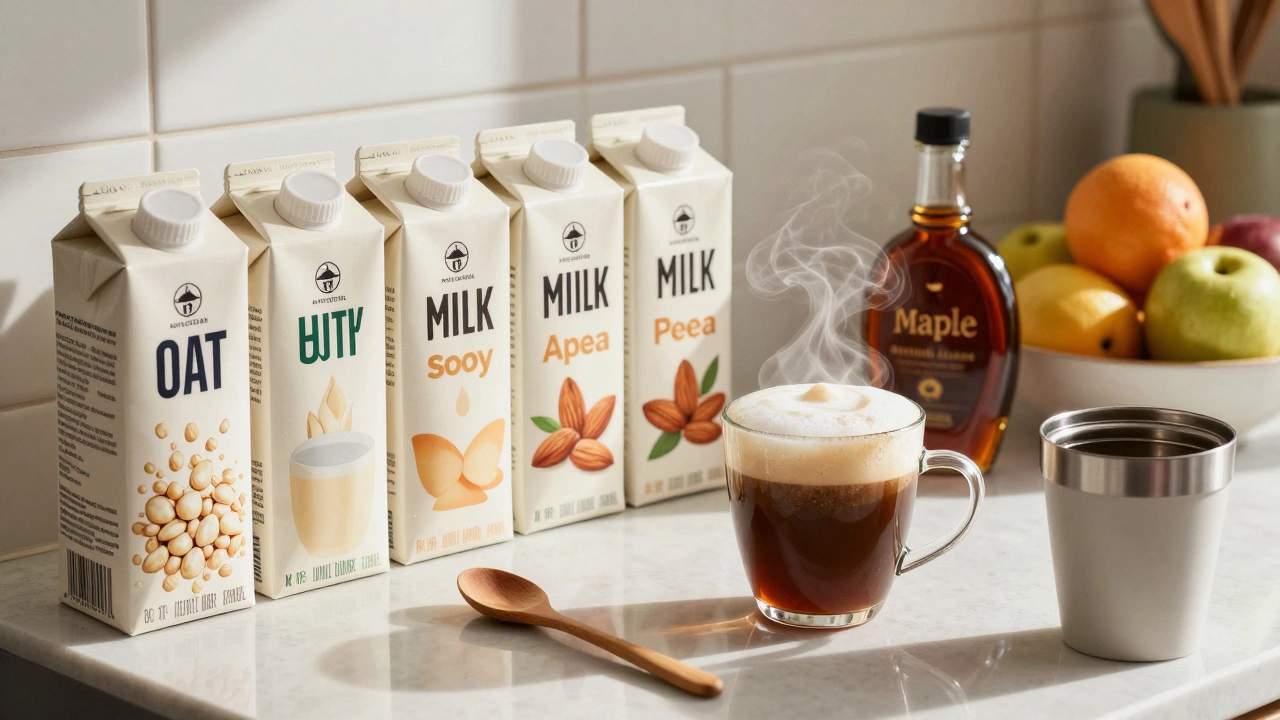
When you go vegan, the first thing you notice isn’t the food-it’s the drinks. That glass of milk on your cereal? Gone. The latte at your favorite café? Not anymore. Even your morning orange juice might not be what you thought. So what do vegans actually drink? It’s simpler than you think, but there are a few things you need to know to avoid surprises.
Plant-Based Milks Are the New Normal
Forget cow’s milk. Vegans drink plant-based milks, and there are more options than ever. Soy milk is still the most common-it’s got protein close to dairy, and it froths well for coffee. Almond milk is popular for its light taste, but watch out: many brands add sugar and barely any almonds. Oat milk? It’s creamy, naturally sweet, and now the top pick in coffee shops across Manchester. Coconut milk drinks are great for tropical flavors but low in protein. Then there’s pea milk, flax milk, and even cashew or hemp milk-each with its own texture and nutrition profile.
Not all plant milks are created equal. Some are fortified with calcium and vitamin D, which matters because you’re not getting those from dairy. Look for brands that list calcium carbonate or tricalcium phosphate on the label. Avoid ones with added gums like carrageenan if your stomach gets upset easily. And always check the sugar content. A carton labeled "vanilla" might have 15 grams of sugar-more than a candy bar.
Coffee and Tea: Easy, But Watch the Add-Ins
Most black coffee and plain tea are naturally vegan. That’s the good news. The tricky part? Creamers, syrups, and sweeteners. Many coffee shops use dairy-based creamers or honey. Even some "non-dairy" creamers contain casein, a milk protein. Always ask if the creamer is plant-based. In the UK, most major chains now offer oat, soy, or almond milk as standard. Ask for "plant milk"-it’s quicker than saying "vegan milk."
Flavored syrups are another hidden trap. Vanilla syrup? Usually fine. But some brands use honey or dairy-derived flavorings. Stick to simple syrups made from sugar and water, or check the brand’s website. Starbucks’ classic syrup is vegan. So is Monin’s vanilla and caramel. If you’re making tea at home, skip honey. Use maple syrup, agave, or coconut sugar instead.
Juices, Smoothies, and Soft Drinks
Not every juice is vegan. Some apple and orange juices are filtered through animal-derived gelatin or isinglass (a fish bladder product) to make them clear. That’s not obvious from the label. Brands like Innocent and Lakewood Juice are transparent about being vegan. If you’re unsure, look for a vegan certification logo or check the company’s website. Organic juices are more likely to be vegan, since they avoid animal-based processing aids.
Smoothies are easy if you make them yourself. Blend fruit, plant milk, and maybe some chia or flaxseed. Store-bought ones? Read the ingredients. Some add yogurt, whey, or honey. Even "green" smoothies can sneak in dairy-based protein powder. Stick to ones labeled vegan or make your own.
Soft drinks are mostly vegan. Coca-Cola, Pepsi, Sprite, and most sodas are fine. But some red-colored drinks use carmine (crushed beetles) for color. That’s rare, but it happens in certain fruit-flavored drinks. Fanta Orange in the UK is vegan. Red Bull? Yes. Gatorade? All flavors are vegan except for a few with gelatin in the capsule (but those aren’t sold here). When in doubt, check vegan.org’s drink list-it’s updated yearly.

Alcohol: The Hidden Trap
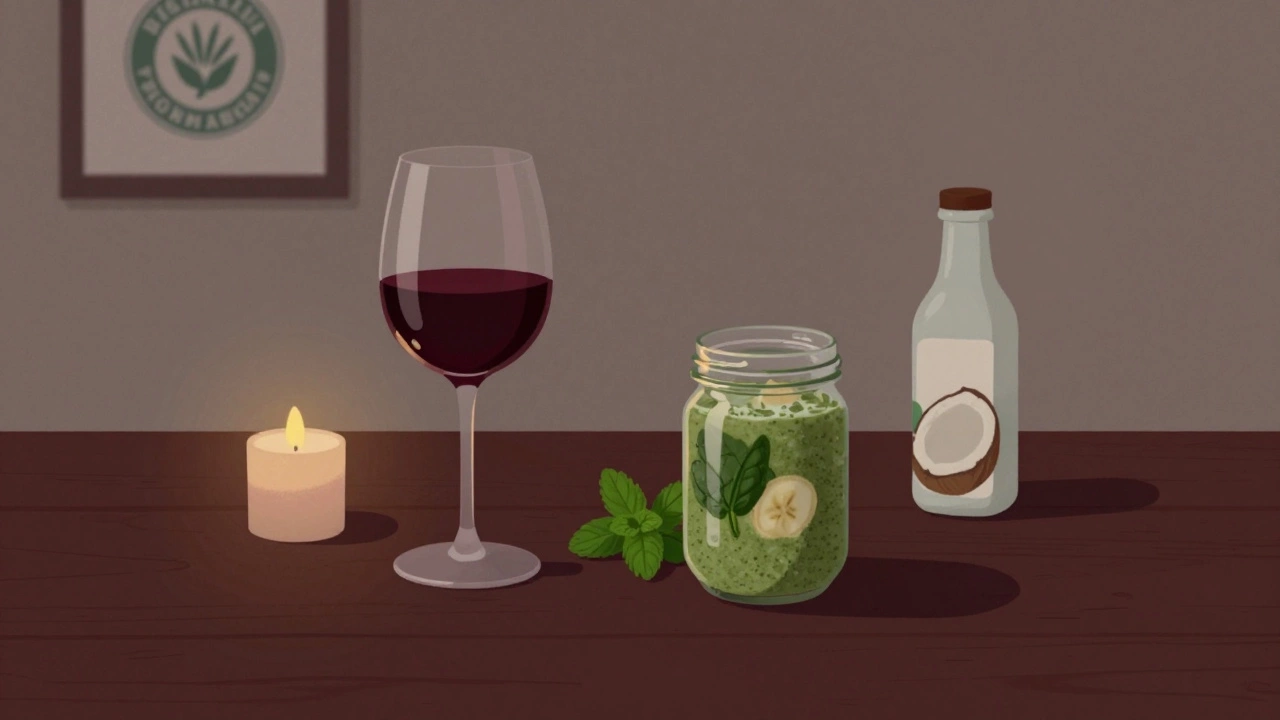
This one catches people off guard. Beer, wine, and spirits aren’t automatically vegan. Many use animal products in filtering. Isinglass (from fish), gelatin, egg whites, or even milk proteins are used to clear the haze. You can’t tell by looking. A bottle of wine might say "organic" or "natural," but still be filtered with fish bladders.
Thankfully, there are tools. Apps like Barnivore and websites like Veganuary list thousands of vegan-friendly drinks. In the UK, most lagers and ales from smaller breweries are vegan. Guinness? It switched to vegan-friendly filtration in 2018. Wine? Look for bottles labeled "unfiltered" or check with the producer. Many natural wines skip fining agents entirely. Spirits like vodka, gin, and rum are almost always vegan-distillation removes impurities. But avoid cream liqueurs (like Baileys) unless they’re plant-based versions.
Water, Herbal Teas, and Other Simple Choices
Plain water is the most vegan drink you can have. Tap water in the UK is safe and vegan. If you prefer filtered water, most home filters (like Brita) don’t use animal products. Herbal teas-chamomile, peppermint, rooibos-are all plant-based and naturally vegan. Just avoid teas with honey or milk powder added. Some "wellness" teas include collagen or gelatin-rare, but it happens.
Coconut water? Yes. Kombucha? Yes, unless it’s sweetened with honey. Plant-based protein shakes? Check the label. Many use whey or casein. Look for pea, rice, or soy protein. Even sports drinks like Nuun or Powerade have vegan versions. You just have to read the fine print.
What to Avoid
Here’s the short list of drinks vegans steer clear of:
- Milk, cream, half-and-half (unless plant-based)
- Honey (not plant-based)
- Wine, beer, or cider filtered with isinglass or gelatin
- Some fruit juices processed with animal-derived clarifiers
- Flavored drinks with dairy-based creamers or whey
- Cola drinks with carmine (rare, but check labels)
It sounds overwhelming, but you don’t need to memorize every ingredient. Just get used to checking labels, asking questions, and trusting apps like Barnivore or the Vegan Society’s logo. After a few weeks, it becomes second nature.
Real-Life Examples
Think about a typical day. Morning: oat milk in coffee, no sugar. Midday: sparkling water with lemon. Afternoon: homemade smoothie with banana, spinach, and almond milk. Evening: a glass of red wine labeled vegan, maybe with a plant-based tonic. That’s it. No fancy substitutions. No deprivation.
One friend in Manchester switched to veganism last year. She used to drink chai lattes with honey. Now she uses oat milk and maple syrup. She says the taste is better. Another guy gave up beer for six months because he didn’t know how to find vegan options. He started using Barnivore and now drinks local ales without worry. It’s not about restriction. It’s about awareness.
Final Thoughts
What do vegans drink? Just about anything-once you know what to look for. The key isn’t to avoid everything. It’s to choose wisely. You’re not giving up flavor or variety. You’re expanding your options. There are more plant-based drinks today than ever before. And most of them taste great.
Start simple. Swap your milk. Check your coffee. Read one label. That’s enough to begin. You don’t need to be perfect. Just informed.
Is almond milk vegan?
Yes, almond milk is vegan by default since it’s made from ground almonds and water. But check the ingredients-some brands add honey, vitamin D3 from lanolin (sheep wool), or dairy-based stabilizers. Look for brands that list only almonds and water, or those with a vegan certification.
Can vegans drink coffee?
Absolutely. Black coffee is vegan. The issue comes with add-ins. Creamers, syrups, and sweeteners may contain dairy, honey, or animal-derived ingredients. Use plant-based milk and vegan sweeteners like maple syrup or coconut sugar. Always ask baristas if their creamer is plant-based.
Is wine vegan?
Not always. Many wines use animal products like isinglass (fish bladder), gelatin, or egg whites to clarify the liquid. These aren’t listed on labels. To be sure, look for wines labeled "vegan" or check databases like Barnivore. Natural wines, which skip fining agents, are more likely to be vegan.
What about soda? Are sodas vegan?
Most sodas in the UK are vegan, including Coca-Cola, Pepsi, Sprite, and Fanta. Some red-colored drinks may contain carmine (crushed insects), but that’s rare. Avoid drinks with honey or gelatin. If in doubt, check the brand’s website or use the Vegan Society’s app.
Is honey vegan?
No. Honey is made by bees, and vegans avoid all animal products, including those produced by insects. Instead, use maple syrup, agave nectar, brown rice syrup, or date syrup as sweeteners. They work just as well in tea, coffee, or baking.
Can vegans drink tea?
Yes, plain tea-black, green, herbal-is vegan. Avoid teas that contain honey or milk powder. Some specialty teas add collagen or gelatin for "health benefits," so read labels. If you’re unsure, choose loose-leaf teas or brands labeled vegan.