
Chicken Flavor Label Checker
Find Flavorful Chicken
The most flavorful chicken comes from heritage breeds raised on pasture. This tool helps you identify which chicken labels actually deliver taste.
Flavor Potential
0Not all chicken tastes the same. If you’ve ever bitten into a store-bought chicken breast that felt like dry cardboard, you know what I’m talking about. But then there’s that one roast chicken-juicy, rich, with a golden crust and deep flavor-that makes you pause mid-chew. What’s the difference? It’s not just the seasoning. It’s the chicken itself.
Not All Chickens Are Created Equal
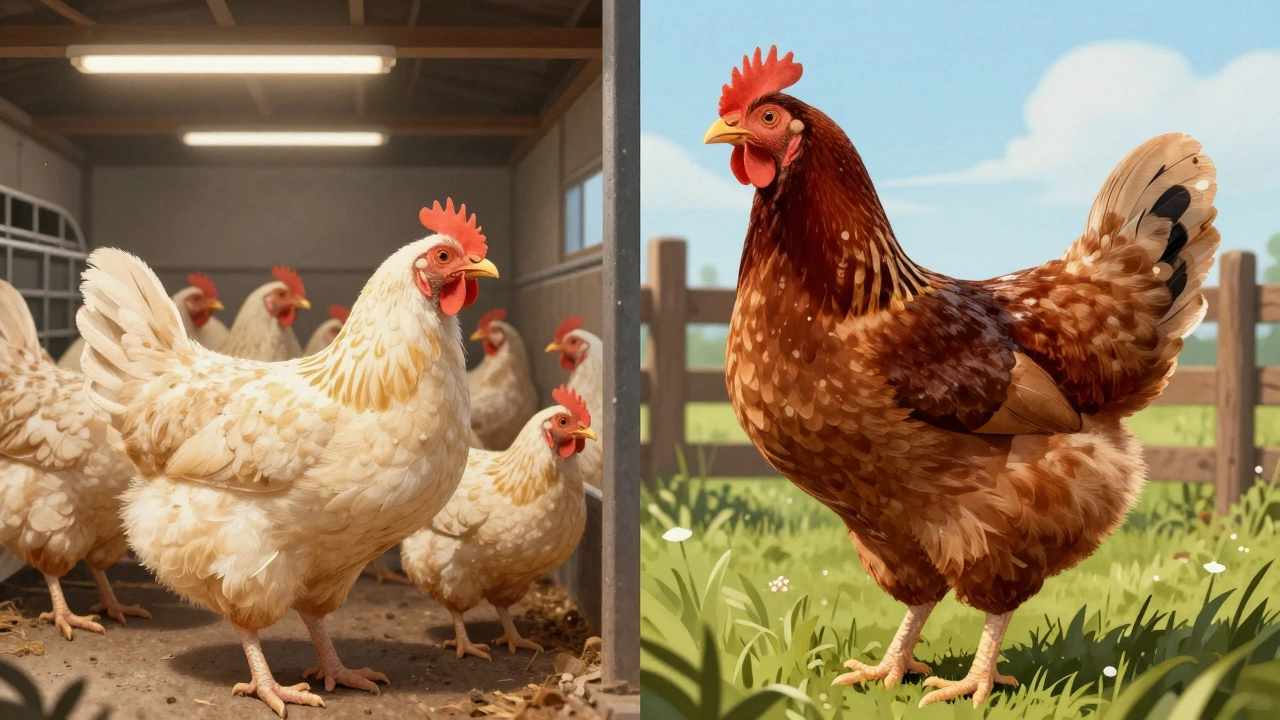
The chicken you find in most supermarkets is almost always a Cornish Cross a hybrid breed developed for rapid growth and uniform size. These birds are bred to hit market weight in just 6 to 8 weeks. They grow fast, but they don’t develop much muscle or flavor. Their meat is pale, soft, and often watery. You’re not tasting chicken-you’re tasting a factory product.
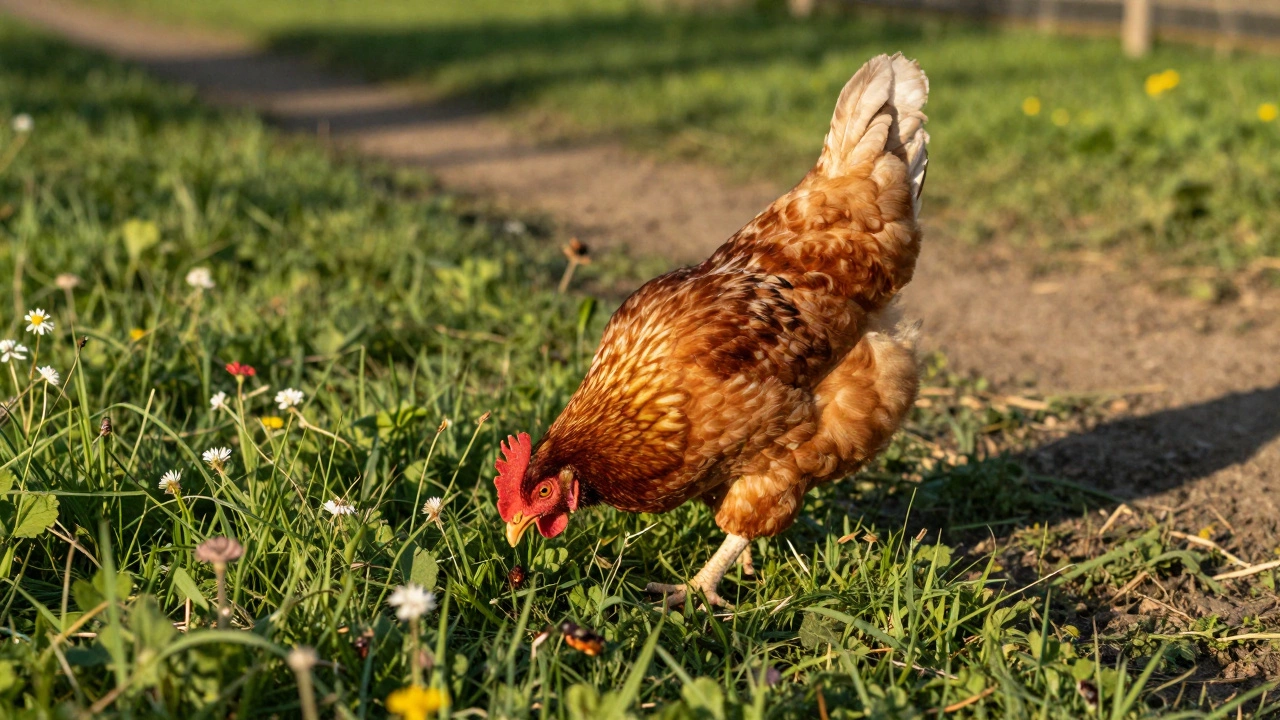
Compare that to a heritage chicken a traditional breed raised slowly, with natural foraging and genetic diversity. These birds take 12 to 16 weeks to mature. They move around, scratch the ground, eat insects and grass. Their muscles develop more fully. Their fat is distributed differently-richer, yellower, more flavorful. The result? Darker meat with a deeper, almost nutty taste. It’s not just chicken. It’s chicken with character.
What Makes Heritage Chicken Taste Better?
It’s not magic. It’s biology. Heritage breeds like the Plymouth Rock a dual-purpose breed known for its balanced meat-to-bone ratio and rich flavor, the Rhode Island Red a hardy breed with deep red meat and strong flavor profile, or the Delaware a heritage breed prized for its tender, flavorful breast meat have been around for decades, even centuries. They weren’t engineered to grow fast. They were raised to live well.
Here’s what changes when you raise a chicken slowly:
- More fat marbling - Fat carries flavor. Heritage chickens develop natural fat layers that melt during cooking, basting the meat from the inside.
- Denser muscle fibers - Movement builds stronger, more flavorful muscle. A chicken that forages all day has tougher, tastier meat than one stuck in a barn.
- Natural diet - Corn, soy, and commercial feed are fine for mass production. But chickens that eat worms, grass, and seeds develop complex flavors you can’t replicate with seasoning.
- Age at slaughter - Flavor builds over time. A 12-week-old chicken has had months to develop umami compounds. An 8-week-old one hasn’t even started.
Studies from the Journal of Agricultural and Food Chemistry found that heritage-breed chickens had up to 40% more intramuscular fat and significantly higher levels of omega-3 fatty acids than conventional birds. That’s not just nutrition-that’s taste.
Free Range vs. Organic vs. Pastured
Labels on chicken packaging can be confusing. Here’s what actually matters:
- Free range - The USDA says this means the chicken had "access" to the outdoors. That could mean a tiny door leading to a dirt patch. Doesn’t guarantee movement or natural diet.
- Organic - Means feed is pesticide-free and no antibiotics. But the bird could still be a Cornish Cross, raised in crowded conditions, and slaughtered at 6 weeks.
- Pastured - This is the real deal. The chicken lives on open grassland, moves freely, eats what it finds, and is moved to fresh pasture regularly. This is how heritage breeds are typically raised.
Don’t trust the word "organic" alone. Look for "pastured heritage" or ask your farmer: "Did this chicken walk around for at least 10 weeks?" If they hesitate, keep looking.
How to Cook Chicken So It Tastes Its Best
Even the best chicken can be ruined by bad cooking. Here’s how to bring out its full flavor:
- Bring it to room temperature - Take the chicken out of the fridge 1 hour before cooking. Cold meat sears poorly and cooks unevenly.
- Salt it early - Rub coarse salt all over the bird at least 12 hours before roasting. This draws out moisture, then reabsorbs it with salt, seasoning the meat deeply.
- Roast at low heat - Start at 325°F (160°C). Slow roasting lets fat render and collagen break down. A 4-pound bird takes 1.5 to 2 hours.
- Let it rest - Cover loosely with foil and wait 15 minutes after taking it out. The juices redistribute. Skip this, and you’ll lose half the flavor.
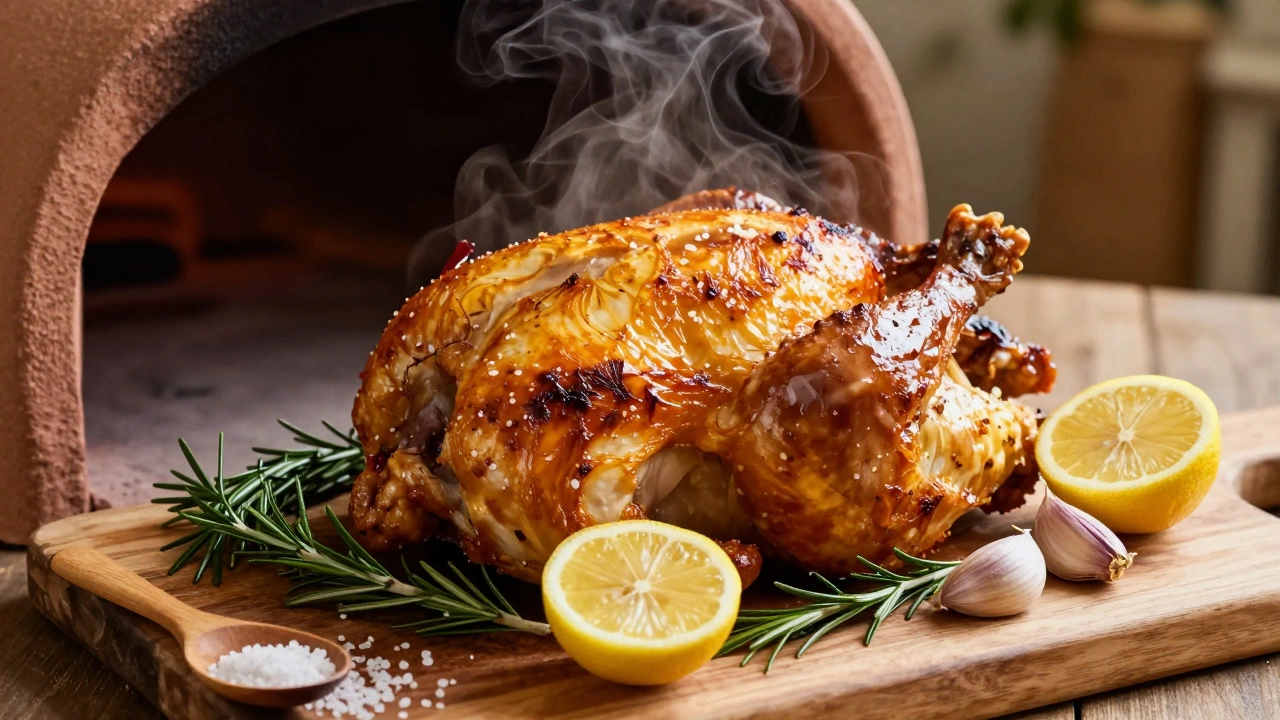
For extra depth, roast with garlic, rosemary, lemon halves, and a splash of apple cider vinegar. The acid cuts through richness. The herbs lift the natural flavor. Don’t drown it in sauce. Let the chicken speak for itself.
Where to Find the Best Tasting Chicken
You won’t find heritage pastured chicken at Walmart. You won’t even find it at most grocery stores. But you can find it:
- Local farmers markets - Talk to the farmers. Ask about breed, age, and pasture rotation.
- CSA shares - Community Supported Agriculture programs often include heritage poultry. You get a whole bird or parts monthly.
- Online specialty butchers - Companies like Butterball Heritage or McKenzie’s ship whole birds nationwide.
- Butcher shops with traceable sourcing - Ask if they know where the chicken came from. If they say "I don’t know," move on.
It costs more. A whole heritage chicken might run $8 to $12 per pound. But you’re not buying meat. You’re buying flavor, ethics, and tradition. One roast feeds a family. Two meals. No leftovers. And you remember it.
Why This Matters Beyond Taste
Choosing heritage chicken isn’t just about flavor. It’s about supporting farming that protects biodiversity. Heritage breeds are disappearing. Only 1% of chickens raised in the U.S. are heritage. Most farms use just two breeds. That’s a genetic bottleneck. If a disease hits, the whole system could collapse.
By choosing slower, smaller farms, you’re helping preserve genetic diversity. You’re supporting animal welfare. You’re eating food with a story. And yes-you’re eating chicken that actually tastes like chicken.
Final Thought: It’s Not About the Recipe. It’s About the Bird.
You can follow the best chicken recipe in the world. But if the chicken is factory-farmed, you’re just making dry meat taste better with spices. The real magic happens before the oven even turns on.
Next time you’re at the market, skip the plastic tray. Ask for the chicken that walked. The one that pecked at bugs. The one that grew slowly. That’s the chicken with soul. And that’s the one you’ll remember.
Is organic chicken the best tasting?
Not necessarily. Organic means the chicken was fed organic feed and had no antibiotics, but it can still be a Cornish Cross raised in crowded conditions and slaughtered at 6 weeks. Flavor comes from breed and lifestyle, not just feed. Pastured heritage chickens often taste better than organic conventional ones.
Can you tell the difference between heritage and regular chicken?
Yes, if you’ve tasted both. Heritage chicken has darker, richer meat with a deeper, more complex flavor. The skin is crispier, the fat is more aromatic, and the meat stays moist even when overcooked slightly. Regular chicken often tastes bland, watery, or metallic.
Why is heritage chicken more expensive?
Because it takes longer to raise, uses more land, and produces fewer birds per farm. A heritage chicken takes 4 to 6 times longer to grow than a factory bird. Farmers pay more for feed, labor, and land. You’re paying for time, care, and sustainability-not just meat.
Does cooking method change the taste difference?
It can mask it, but not erase it. Slow-roasting or braising highlights the richness of heritage chicken. Grilling or frying might make both types taste similar if you drown them in sauce. But if you roast a heritage bird simply-with salt, pepper, and herbs-you’ll taste the difference immediately.
Are there any heritage chicken breeds you should avoid?
No breed is bad, but some are better for eating. Avoid extremely rare breeds raised for show, like the Silkie. They’re fluffy, bony, and not meant for meat. Stick with Plymouth Rock, Rhode Island Red, Delaware, or Buff Orpington-they’re known for flavor, size, and texture.