
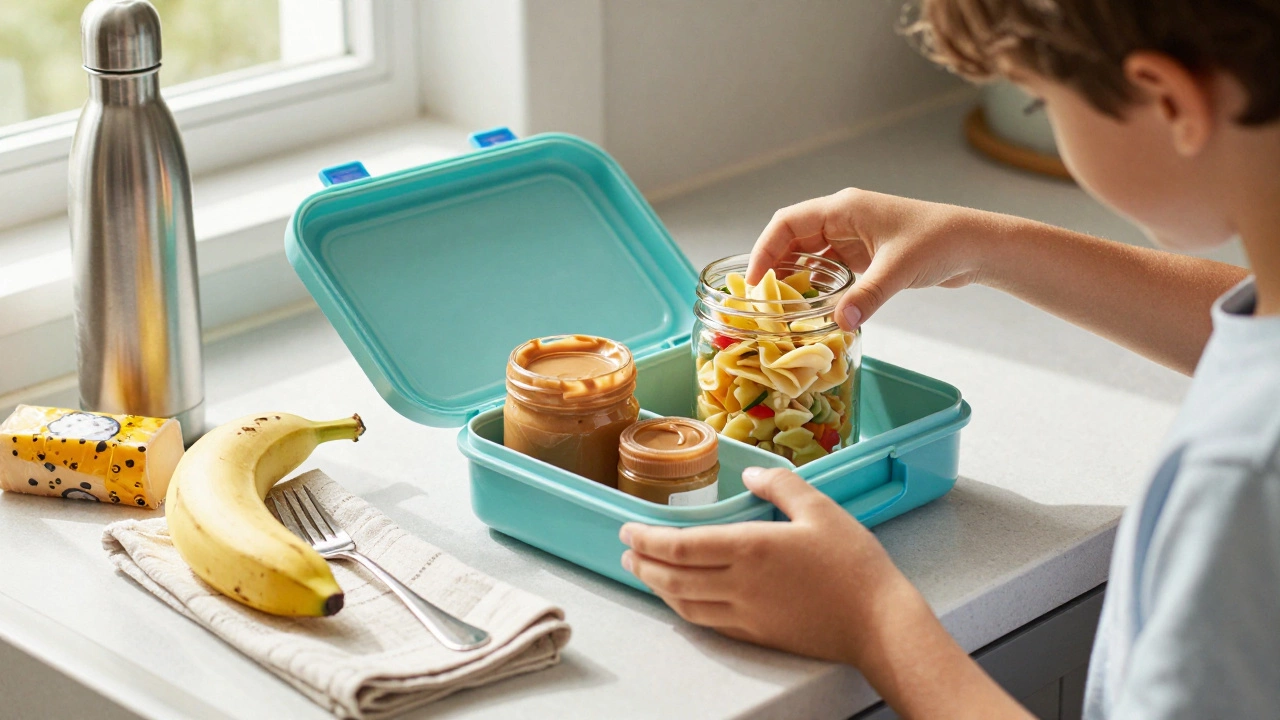
Waste-Free Lunch Savings Calculator
Your Lunch Details
Your Savings Estimate
* Based on average weekly spending of £30 and 15 disposable items
* Savings calculated after 1 year of switching
Every day, millions of lunchboxes end up in bins across schools, offices, and homes. Plastic wrap, disposable bags, single-use utensils, and juice boxes pile up - not because people don’t care, but because it’s easier to grab what’s convenient. But what if your lunch could be just as quick, just as tasty, and leave behind zero trash? That’s the idea behind a waste-free lunch.
A waste-free lunch isn’t about perfection. It’s about replacing one-time-use items with things you can use again and again. It’s about packing food in containers you already own, using cloth napkins instead of paper, and choosing snacks that don’t come wrapped in plastic. It’s not about buying expensive gear. It’s about shifting small habits that add up.
What Exactly Counts as a Waste-Free Lunch?
A waste-free lunch means no disposable items go into the trash after you eat. That includes:
- No plastic wrap, aluminum foil, or Ziploc bags
- No paper napkins or paper towels
- No single-use plastic cutlery, straws, or juice boxes
- No individually wrapped snacks
Instead, you use:
- Reusable containers (glass, stainless steel, or BPA-free plastic)
- Beeswax wraps or silicone lids instead of plastic wrap
- Cloth napkins or dish towels
- Reusable utensils and a metal or bamboo straw
- Loose snacks you portion yourself - like nuts, fruit, or crackers
Think of it like bringing your own coffee cup to a café. You’re not giving up your coffee - you’re just changing how it’s served.
Why Does It Matter?
In Manchester alone, schools send over 120,000 disposable lunch items to landfills each week. That’s more than 6 million pieces a year. Most of it’s plastic - and plastic doesn’t disappear. It breaks into tiny pieces, pollutes rivers, and ends up in the sea.
But it’s not just about the environment. A waste-free lunch saves money. A family that switches from buying pre-packaged snacks and disposable bags to reusable containers can save £300 a year. That’s enough for a weekend trip or a new pair of shoes.
And let’s be honest - food tastes better when it’s not squished in a crumpled plastic bag. Containers keep sandwiches from getting soggy. Fruit stays fresh. Leftovers don’t dry out. You’re not just reducing waste - you’re improving your lunch.
How to Build a Waste-Free Lunch (Step by Step)
You don’t need to overhaul your whole routine overnight. Start small. Here’s how:
- Inventory your lunchbox. Open it up. What’s in there? Count how many disposable items you use each day. That’s your starting point.
- Swap one thing. Pick the biggest offender. Is it the plastic wrap? Try beeswax wraps. Is it the juice box? Switch to a refillable water bottle. Is it the pre-packaged crackers? Buy them in bulk and portion them into a small jar.
- Keep reusable tools handy. Store a set of utensils, a cloth napkin, and a container in your bag or car. That way, you’re never caught without them.
- Plan meals with leftovers. Last night’s roasted vegetables? Toss them in a container with a piece of cheese and a boiled egg. Done. No packaging. No waste.
- Involve the kids. Let them pick their own containers or decorate cloth napkins. When they feel ownership, they’re more likely to stick with it.
After a few weeks, you won’t even think about it. It’ll just be how you pack lunch.
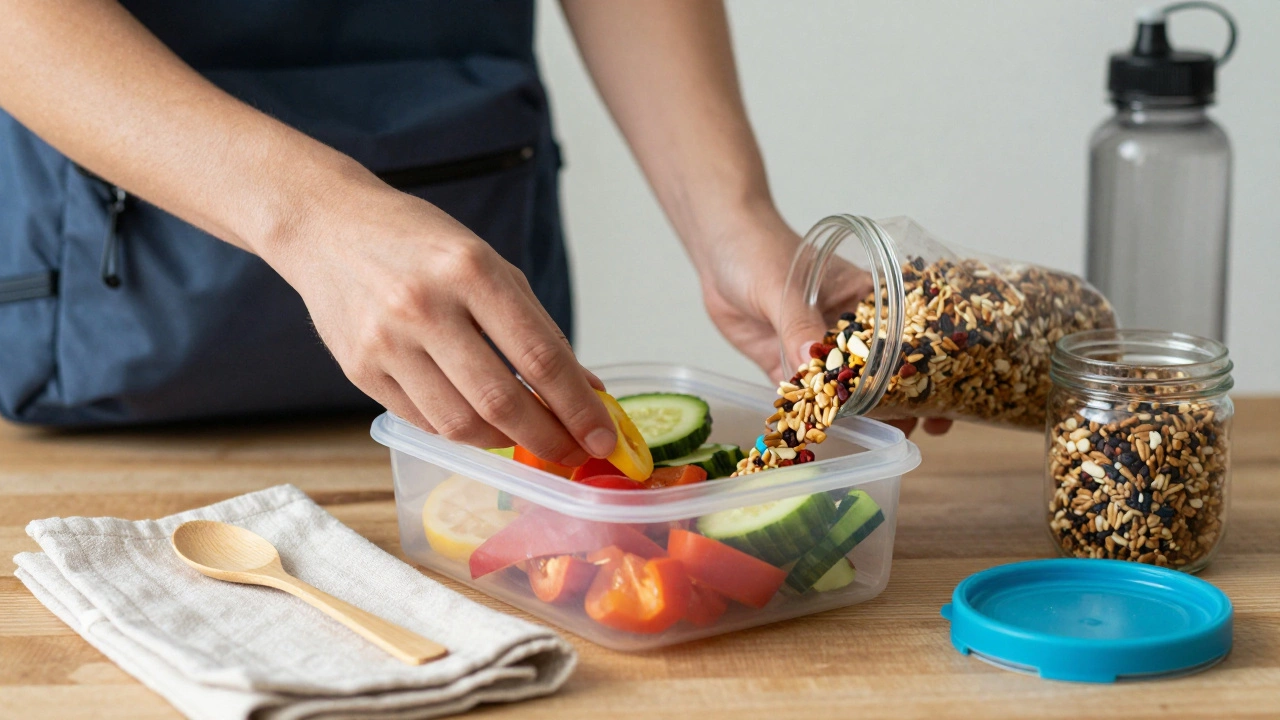
Real Waste-Free Lunch Ideas (No Cooking Required)
Here are five lunch ideas you can throw together in under 10 minutes - all waste-free:
- Leftover Pasta Salad: Toss cold pasta with cherry tomatoes, olives, and a splash of olive oil. Pack in a glass jar. Add a fork.
- Whole Fruit + Nut Butter: An apple or banana with a small jar of peanut butter. Dip with a spoon. No wrappers.
- Trail Mix in a Jar: Mix raisins, almonds, sunflower seeds, and dark chocolate chips. Store in a small reusable container.
- Hard-Boiled Eggs + Veggies: Boil a batch on Sunday. Pack with carrot sticks and a small tub of hummus. Use a metal spoon.
- Wrap It Up: Use a whole wheat tortilla, spread with cream cheese, add spinach and sliced turkey. Roll it up and slice in half. No plastic wrap needed.
These aren’t fancy. They’re simple. And they don’t need a single-use item to make them work.
Common Mistakes (And How to Avoid Them)
Most people try waste-free lunches and quit because they hit the same roadblocks:
- "I forget my container." Solution: Keep a spare set in your car, backpack, or desk drawer.
- "My kid’s lunch gets messy." Solution: Use leak-proof containers with silicone seals. Test them at home first.
- "It’s too expensive." Solution: Start with what you already have. Use old mason jars. Wash and reuse yogurt containers. You don’t need to buy anything.
- "It takes too long." Solution: Prep on weekends. Wash containers. Chop veggies. Portion snacks. Spend 20 minutes on Sunday, and you’re set for the week.
Every mistake is just a setup for your next improvement.
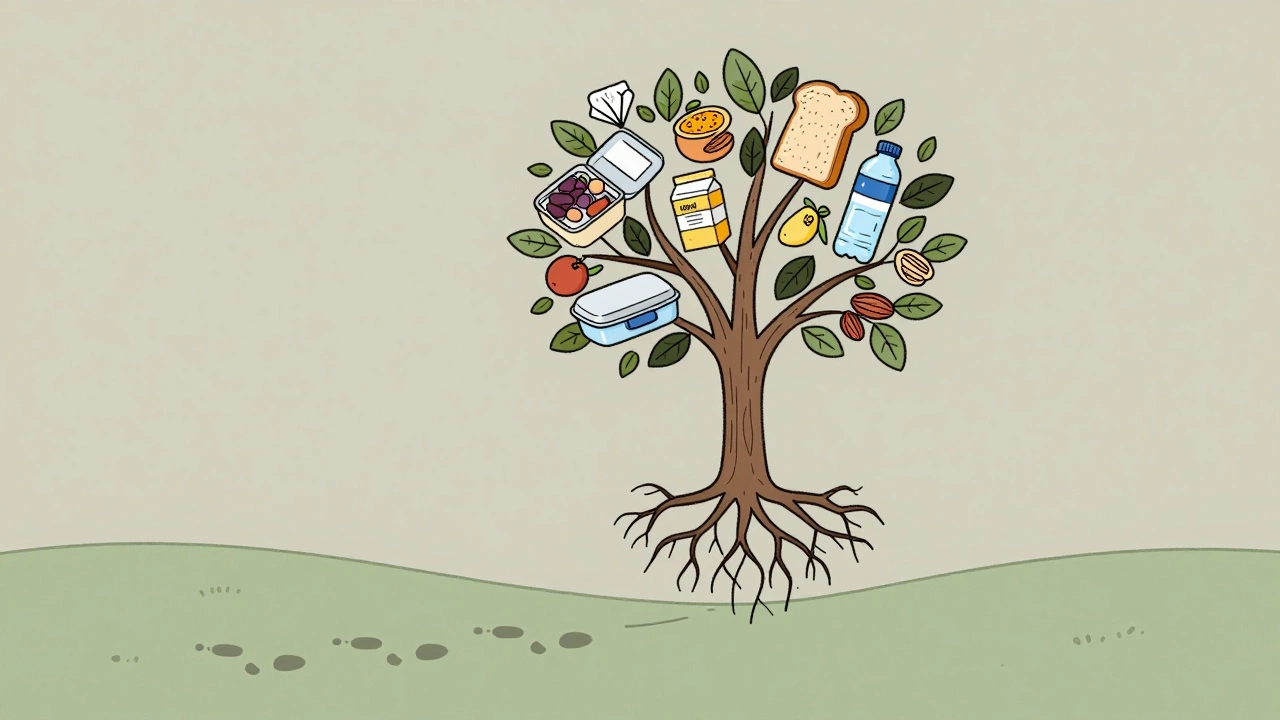
What You Can Reuse (And What You Shouldn’t)
Not everything you think is reusable actually is. Here’s a quick guide:
| Can Be Reused | Should Be Avoided |
|---|---|
| Stainless steel lunch containers | Plastic sandwich bags |
| Beeswax wraps | Aluminum foil |
| Cloth napkins | Paper napkins |
| Reusable water bottles | Single-use juice boxes |
| Metal or bamboo utensils | Plastic forks and knives |
| Loose fruit and bulk snacks | Individually wrapped snacks |
Notice how the reusable options aren’t just eco-friendly - they’re more durable, easier to clean, and often cheaper long-term.
What Happens When You Stick With It?
After three months, most people who stick with waste-free lunches notice three things:
- They spend less on snacks - no more impulse buys at the corner store.
- They eat more whole foods - because packaged stuff is harder to justify.
- They feel less guilty. Not because they’re perfect, but because they’re trying.
One mum from Salford told me she started waste-free lunches for her 8-year-old. Now, her whole family does it. Her son even started a lunchbox club at school. He brought in his own cloth napkin and asked his friends to join. No one laughed. Everyone asked how to do it.
That’s the ripple effect. One lunchbox at a time.
Final Thought: It’s Not About Being Perfect
A waste-free lunch doesn’t mean never using plastic again. It means choosing better options when you can. Maybe today, you swap the plastic wrap for a container. Tomorrow, you ditch the juice box. Next week, you pack your own trail mix.
You don’t need to do it all at once. You just need to start.
Can I still have a waste-free lunch if I buy pre-made food?
Yes - but you need to bring your own container. Many cafés and delis will let you bring your own container for sandwiches, salads, or soups. Ask ahead. Some even offer a discount. It’s not about where you get the food - it’s about what you bring home in.
Do I need special containers to do this?
No. Old yogurt tubs, mason jars, and even clean takeout containers work fine. You don’t need to buy anything new. Start with what you have. When something breaks, replace it with a reusable option - not another disposable one.
What if my child’s school doesn’t allow reusable containers?
Most schools don’t ban them - they just haven’t been asked. Talk to the teacher or PTA. Many schools now have "zero-waste lunch" days or encourage reusable items. You’re not breaking rules - you’re helping change them.
Is a waste-free lunch really cheaper?
Absolutely. A family that switches from buying pre-packaged snacks and disposable bags to buying in bulk and reusing containers saves £20-£40 a month. That adds up to £300-£500 a year. The upfront cost of a few containers is paid off in weeks.
Can I do this if I’m always on the go?
Yes. Keep a small reusable kit in your bag: a foldable spoon, a cloth napkin, and a tiny container for dips or snacks. When you grab coffee, bring your own cup. When you stop for lunch, ask for food in your container. It takes practice - but it gets easier every time.