
Quick Cooking Method Finder
Select a cooking method to see detailed timing comparisons and discover which appliance is right for your specific meal.
Pressure Cooker
10-12 minAir Fryer
12-15 minMicrowave
4-6 minSkillet
10-15 minYou set your Crockpot to low at 7 AM, hoping to come home to a tender roast. But by 4 PM, you realize you forgot the meat. Or worse, you just need dinner on the table in thirty minutes, not six hours. This is the classic dilemma of modern home cooking: we love the convenience of slow cooking, but life doesn't always move at that pace.
If you are asking what cooks faster than a Crockpot, you aren't alone. Slow cookers are fantastic for tough cuts of meat and set-it-and-forget-it meals, but they are notoriously bad when time is short. Fortunately, there are several appliances and techniques that can deliver similar results-or entirely different, equally delicious meals-in a fraction of the time. Let’s look at the real contenders for the title of fastest kitchen helper.
The Pressure Cooker: The Speed Demon
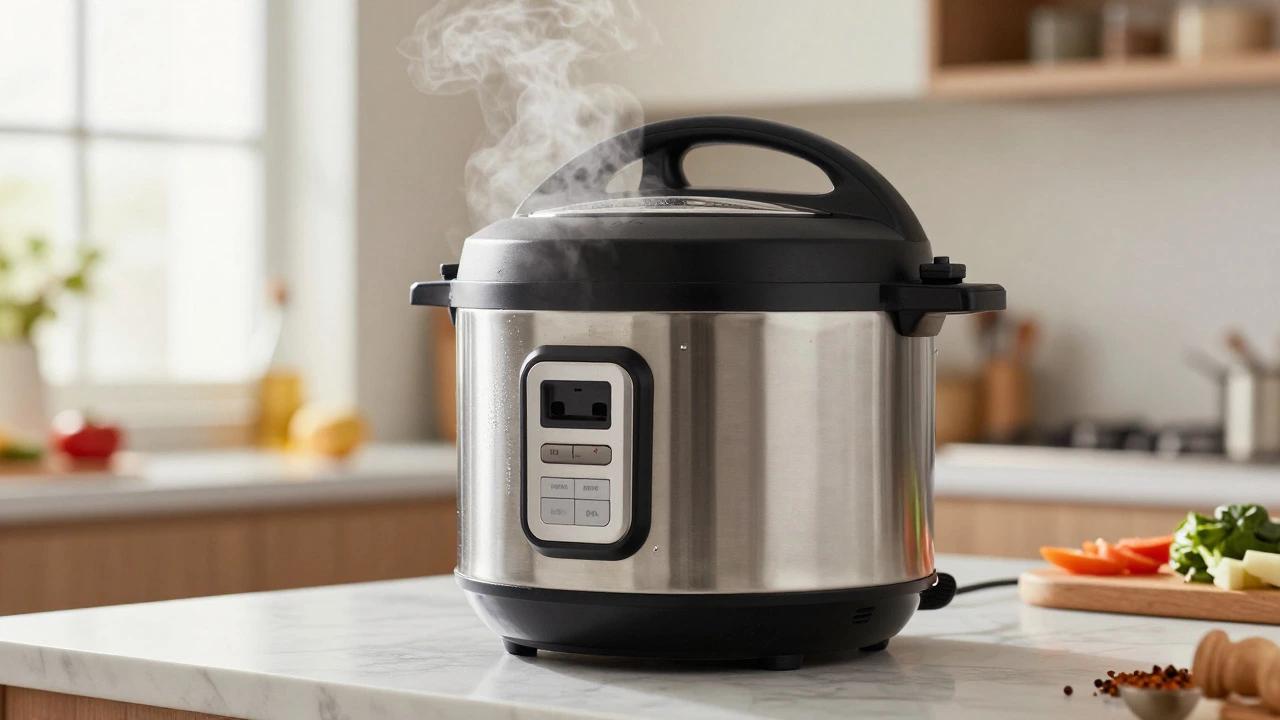
If there is one appliance that directly challenges the slow cooker for dominance, it is the Pressure Cooker. Specifically, electric multi-cookers like the Instant Pot have changed the game. A pressure cooker works by trapping steam inside a sealed pot, which raises the internal pressure and, consequently, the boiling point of water. This allows food to cook at temperatures around 250°F (121°C) instead of the standard 212°F (100°C).
The result? Meals that usually take all day can be ready in under an hour. Think about this: beef stew, which might simmer for eight hours in a Crockpot, takes about 35 minutes in a pressure cooker. That includes the time it takes to build pressure. You get the same tender, fall-apart texture because the high heat breaks down collagen into gelatin rapidly. It’s not magic; it’s physics.
However, pressure cooking isn't just about speed. It’s also about efficiency. Because the lid is sealed, very little moisture escapes. This means your flavors stay concentrated, and you don’t end up with watery soup unless you want to. For busy weeknights, this is a game-changer. You can throw in frozen chicken breasts and have them cooked safely in 10-12 minutes. No thawing required. That is something a slow cooker simply cannot do without risking bacterial growth during the long thawing process.
The Air Fryer: Crispy in Minutes
While the pressure cooker mimics the tenderness of slow cooking, the Air Fryer offers a completely different advantage: speed and texture. An air fryer is essentially a powerful convection oven. It circulates hot air around your food at high speeds, creating a crispy exterior while keeping the inside moist.
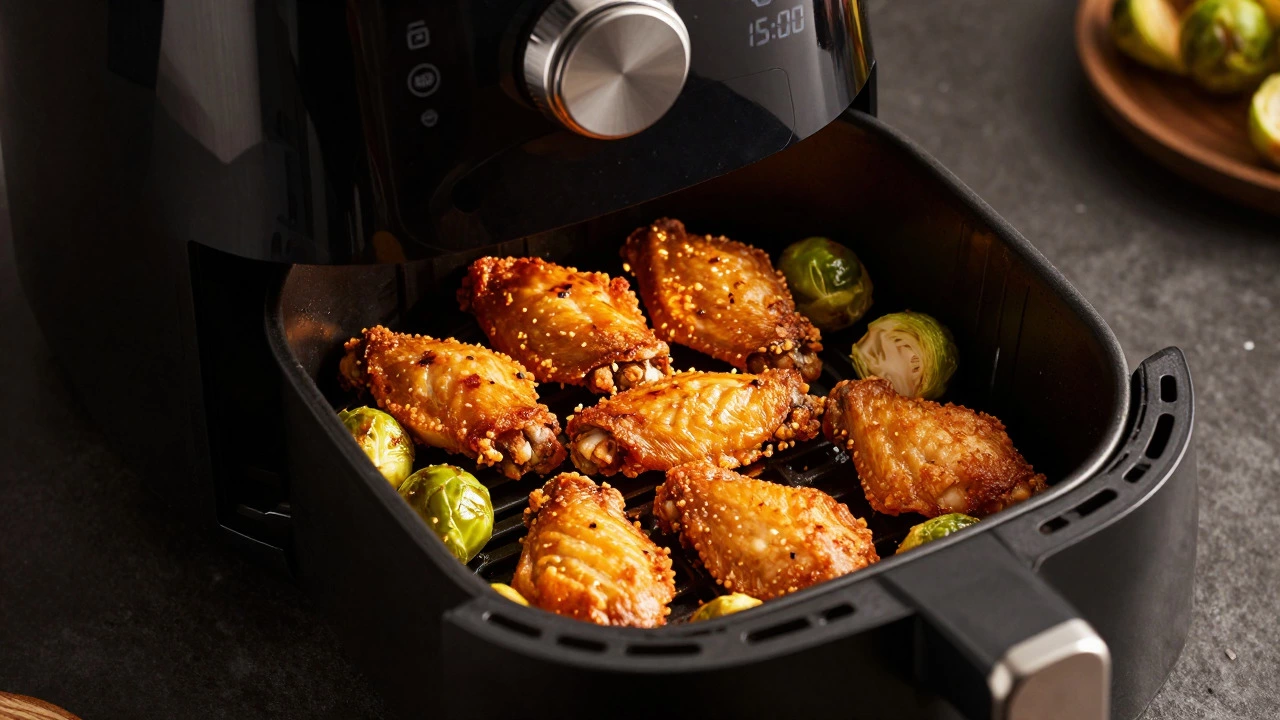
How fast is it? Much faster than an oven, and infinitely faster than a Crockpot. Frozen french fries? Done in 15 minutes. Chicken wings? Crispy and juicy in 20 minutes. Vegetables? Roasted in 10 minutes. If your goal is a quick side dish or a protein that needs browning, the air fryer wins hands down. Slow cookers struggle to brown food; they mostly boil it gently. If you crave that Maillard reaction-the chemical process that gives seared meat its rich flavor-you need high heat, not low and slow.
One common misconception is that air fryers are only for junk food. In reality, they excel at reheating leftovers too. Leftover pizza from last night tastes fresh again in three minutes in an air fryer. Try doing that in a Crockpot, and you’ll just have warm, soggy dough. For anyone living in a small apartment or someone who wants dinner on the table before the kids finish their homework, the air fryer is indispensable.
The Microwave: The Forgotten Hero
Let’s talk about the elephant in the room: the microwave. We often dismiss it as the lazy option, but when speed is the only metric that matters, nothing beats it. Microwaves use electromagnetic radiation to excite water molecules in food, generating heat from the inside out. This is fundamentally different from conductive heating (like a stove) or convective heating (like an oven).
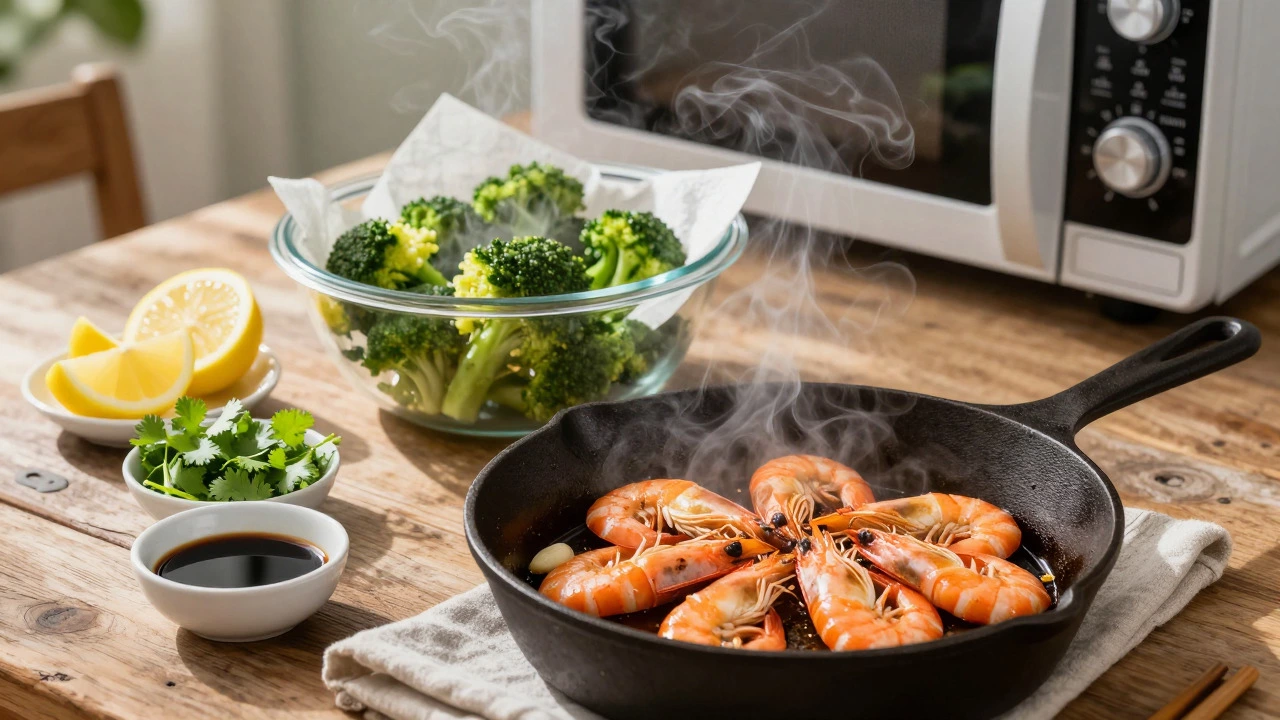
For certain foods, microwaving is actually superior in terms of nutrient retention and speed. Steaming broccoli in the microwave preserves more vitamins than boiling it in a pot for twenty minutes. Reheating rice, steaming fish fillets, or making scrambled eggs can be done in under five minutes. Yes, it lacks the textural complexity of other methods, but if you are starving and have zero prep time, the microwave is king.
To make microwave cooking less bland, try using a damp paper towel over vegetables to create steam, or add a splash of broth to grains. It’s not gourmet, but it’s efficient. And sometimes, efficiency is exactly what you need after a long day at work.
The Skillet: High Heat, Fast Results
Don’t underestimate the power of a good Cast Iron Skillet or a stainless steel pan on a gas burner. Stovetop cooking is often overlooked in the appliance wars, but it offers immediate control and rapid cooking times. Searing a steak, sautéing shrimp, or stir-frying vegetables can be done in 5-10 minutes flat.
The key here is surface area and temperature. A skillet gets much hotter than any slow cooker ever will. This allows for quick caramelization and browning. If you cut your ingredients smaller-dice your chicken, slice your veggies thin-you can cook a entire meal in one pan in under fifteen minutes. Sheet pan dinners are another variation of this concept. Toss everything on a baking sheet and put it in a preheated oven at 400°F (200°C). Most sheet pan meals are done in 20-30 minutes. It’s messy cleanup, but it’s fast.
Comparison: Which Method Fits Your Need?
| Appliance/Method | Avg. Cook Time (Chicken Breast) | Best For | Texture Result |
|---|---|---|---|
| Crockpot (Slow Cooker) | 6-8 hours (Low) | Tough cuts, soups, stews | Tender, falling apart |
| Pressure Cooker | 10-12 minutes (+ pressurizing) | Stews, beans, tough meats | Tender, moist |
| Air Fryer | 12-15 minutes | Frozen foods, wings, veggies | Crispy outside, juicy inside |
| Microwave | 4-6 minutes | Reheating, steaming veggies | Soft, steamed |
| Skillet/Stove | 10-15 minutes | Searing, stir-fry, pasta sauces | Browned, charred |
When to Use Which Method
Choosing the right tool depends on what you are cooking and how much time you have. Here is a simple decision tree:
- Do you have tough meat (brisket, chuck roast)? If you have all day, use the Crockpot. If you have an hour, use the Pressure Cooker. There is no fast way to make brisket tender without breaking down connective tissue, which requires time or extreme pressure.
- Do you want crispy skin or edges? Skip the Crockpot and Pressure Cooker. Use the Air Fryer or a Skillet. These methods provide the dry heat necessary for browning.
- Are you cooking delicate proteins (fish, shrimp)? Use the Skillet or Steam them in the Microwave. Overcooking these in a slow cooker makes them rubbery. Pressure cooking them requires precise timing to avoid turning them into shoe leather.
- Is it just leftovers? Microwave for speed, Air Fryer for quality.
Pro Tips for Faster Cooking Without Sacrificing Flavor
Speed doesn't mean you have to eat bland food. Here are a few tricks to keep things tasty when you're rushing:
- Pre-cut your ingredients. Buying pre-chopped onions or cutting your own veggies into uniform, small pieces reduces cooking time significantly. Smaller pieces cook faster and absorb marinades quicker.
- Use strong acids and aromatics. When you don't have time for flavors to meld over eight hours, punch them up immediately. Add lemon juice, vinegar, soy sauce, garlic, and ginger at the start of cooking. These ingredients deliver big flavor hits instantly.
- Finish with fresh herbs. Since quick cooking methods don't allow herbs to infuse deeply, add fresh cilantro, parsley, or basil right before serving. It brightens the dish and makes it feel more complex.
- Marinate overnight. If you know you'll be short on time tonight, marinate your meat or tofu this morning. Acidic marinades help tenderize and flavor food quickly, so even a 10-minute cook time yields great results.
Final Thoughts on Kitchen Efficiency
The Crockpot has its place, especially for those weekends when you want to come home to a house that smells amazing without lifting a finger. But for the majority of our lives, which are spent racing against the clock, relying solely on slow cooking is impractical. By integrating a pressure cooker for hearty meals, an air fryer for crispy sides, and mastering basic stovetop techniques, you can reclaim your evenings. You don't need to choose between eating well and having free time. You just need the right tools for the job.
Can I convert any slow cooker recipe to a pressure cooker?
Yes, most slow cooker recipes can be converted, but you need to adjust liquid amounts and cooking times. As a general rule, reduce the liquid by half since pressure cookers don't evaporate much. Also, divide the slow cooker time by 3 to 4 to estimate the pressure cooking time. For example, a 6-hour low setting becomes roughly 15-20 minutes under high pressure. Always check specific conversion charts for safety.
Is food cooked in a pressure cooker as healthy as slow cooked food?
Absolutely. In fact, pressure cooking can retain more nutrients than slow cooking. Because the cooking time is shorter and the environment is sealed, fewer vitamins and minerals leach out into the cooking water or degrade from prolonged heat exposure. It is particularly good for preserving B vitamins and antioxidants in vegetables.
What is the fastest way to cook frozen chicken breasts?
The fastest safe method is using a pressure cooker. Place frozen chicken breasts in the pot, add a cup of broth or water, and set to high pressure for 10-12 minutes depending on thickness. Allow for a natural release for 5 minutes, then quick release the rest. This ensures the chicken is cooked through evenly without drying out. Avoid microwaving frozen thick breasts as they often cook unevenly.
Can an air fryer replace an oven entirely?
For many households, yes. An air fryer can bake, roast, and reheat almost anything an oven can, just in a smaller capacity and faster. However, if you need to cook large roasts, multiple trays of cookies, or delicate cakes that require gentle, even heat, a traditional oven is still better. For daily weekday meals, though, the air fryer is often sufficient and more energy-efficient.
Why does my slow cooker food taste watery compared to other methods?
Slow cookers trap steam, which condenses and drips back onto the food. Unlike boiling or braising in an open pot where liquids reduce and concentrate, a Crockpot keeps all that moisture inside. To fix this, you can remove the lid for the last 30 minutes of cooking to let excess liquid evaporate, or thicken the sauce at the end with a cornstarch slurry or by blending some of the vegetables.