
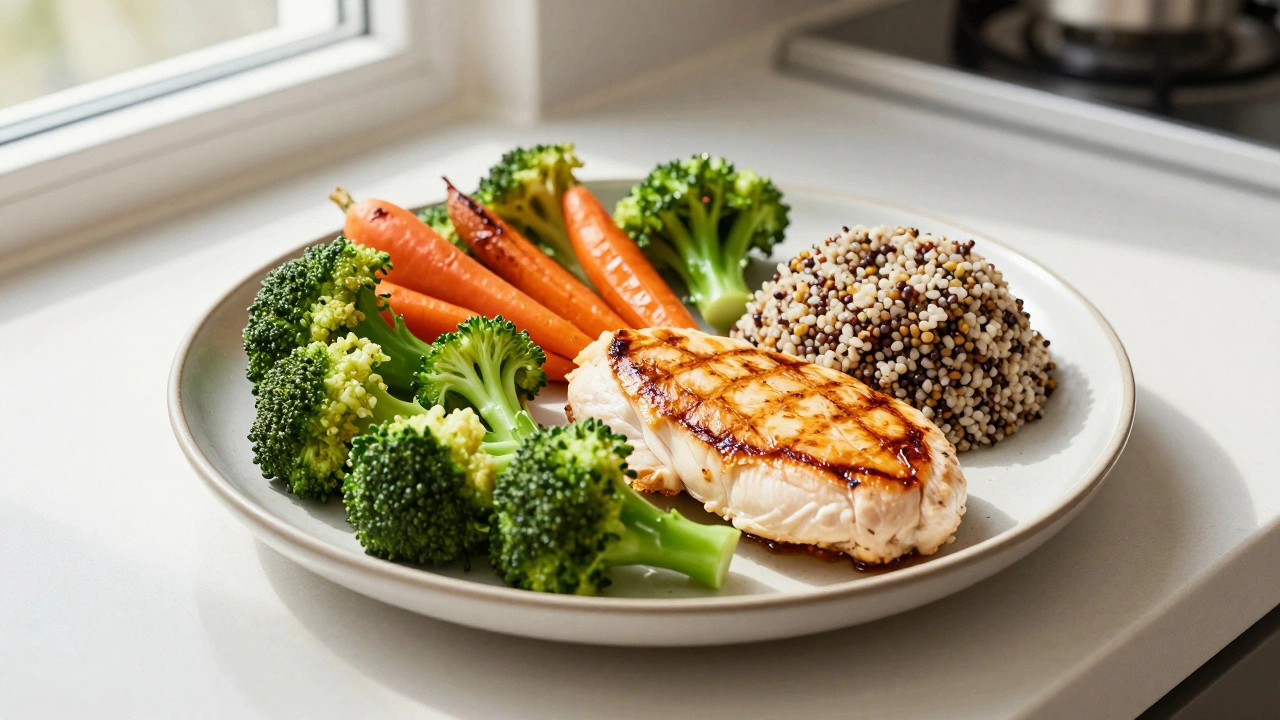
Daily Balanced Plate Builder
Assemble Your Meal
Select an ingredient for each category to see your balanced plate.
Your Meal Composition:
Quick Takeaways
- The "Plate Method" is the easiest way to ensure a balanced daily meal.
- Focus on a mix of lean proteins, complex carbs, and healthy fats.
- Batch cooking and "component prep" save hours of time.
- Rotation is key to avoiding nutritional gaps and flavor boredom.
The Science of the Perfect Daily Plate
To find the best everyday meal, we need to look at what the body actually asks for on a regular basis. You aren't a robot; your needs change if you've spent the day sitting at a desk or hiking in the Peak District. However, a consistent baseline prevents the 3 PM energy crash and late-night cravings.
The most reliable approach is using The Plate Method, which is a visual guide to creating a balanced meal by dividing your plate into specific proportions. Instead of counting calories, which can feel like a chore, you focus on ratios. Half your plate should be vegetables, one quarter should be a lean protein, and the final quarter should be complex carbohydrates. This ensures you get a high volume of micronutrients and fiber while keeping your blood sugar stable.
Why does this work? When you load up on leafy greens or roasted broccoli, you're filling up on low-calorie, high-nutrient foods. Adding a protein like grilled chicken or tofu provides the amino acids needed for muscle repair. Finally, a complex carb like quinoa or sweet potato gives your brain the glucose it needs to function without the spike and crash associated with white bread or sugary pasta.
The Foundation: Choosing Your Daily Components
If you want a meal that works every day, you need a roster of ingredients that are versatile, affordable, and quick to cook. Let's break these down into the three core pillars of a balanced dish.
1. Lean Proteins
Protein is the building block of your body. For an everyday meal, you want options that don't take forever to prep. Salmon is a powerhouse choice because it provides omega-3 fatty acids that support heart and brain health. If you're looking for something cheaper, skinless chicken breast or ground turkey are great staples. For those following a plant-based path, Legumes (like chickpeas and lentils) are essential as they offer both protein and fiber.
2. Complex Carbohydrates
Avoid the "white" carbs. Instead of white rice, try Quinoa, which is a seed that acts like a grain and contains all nine essential amino acids. Sweet potatoes are another win; they are packed with beta-carotene and keep you full longer than a standard potato. Even brown rice or farro can work if you're looking for a chewier texture that satisfies that craving for comfort food.
3. Micronutrient-Dense Vegetables
This is where most people fail. They think a few slices of cucumber count as a vegetable. To make a meal truly "the best," you need variety. Think about colors. Spinach and kale provide iron; carrots and peppers provide Vitamin A and C; zucchini and cauliflower add bulk and texture without adding many calories. The goal is to eat at least two different colors on your plate every single day.
| Standard Choice | The "Best" Everyday Swap | Why it's Better |
|---|---|---|
| White Rice | Quinoa or Cauliflower Rice | More protein, lower glycemic index |
| Processed Deli Meat | Grilled Chicken or Tofu | Less sodium, no nitrates |
| Mashed Potatoes | Roasted Sweet Potato | Higher fiber and Vitamin A |
| iceberg Lettuce | Fresh Spinach or Kale | Significantly higher nutrient density |
Three Everyday Meal Blueprints
Since eating the exact same thing every day is a recipe for burnout, use these three blueprints. They follow the same nutritional logic but change the flavor profile so you don't get bored.
The Mediterranean Power Bowl
This is perfect for lunches. Start with a base of baby spinach and a scoop of quinoa. Add grilled lemon-herb chicken (or chickpeas), sliced cucumbers, cherry tomatoes, and a few Kalamata olives. The secret is the dressing: a simple mix of extra virgin olive oil and lemon juice. This combination hits the healthy fats, lean protein, and fresh produce markers perfectly.
The Sheet-Pan Roast
When you're exhausted after work, the sheet-pan method is your best friend. Toss salmon fillets, asparagus spears, and diced sweet potatoes in olive oil, salt, and pepper. Roast them all at 200°C (400°F) for about 15-20 minutes. You get a high-protein, high-omega-3 meal with only one pan to wash. It's a practical way to maintain a healthy diet when your energy is low.
The Nutrient-Dense Stir-Fry
Grab a wok and sauté tofu or lean beef strips with a massive pile of broccoli, snap peas, and sliced carrots. Use a small amount of low-sodium soy sauce and ginger for flavor. Serve it over a small portion of brown rice. This meal is incredibly fast and allows you to clear out whatever vegetables are left in your fridge, reducing food waste while maximizing nutrition.
Mastering the Art of Component Prep
The biggest barrier to eating a healthy everyday meal is the "decision fatigue" that hits at 6 PM. You don't need to spend your entire Sunday cooking 21 identical containers of food-that's how you end up hating your diet by Wednesday. Instead, try component prep.
Spend two hours on Sunday prepping individual building blocks. Roast a big tray of mixed vegetables, boil a large pot of quinoa, and grill several chicken breasts or bake a batch of tofu. Store these separately in the fridge. During the week, you simply "assemble" your meal. Monday might be a bowl, Tuesday a wrap, and Wednesday a stir-fry, but the core components remain the same. This gives you the variety of a restaurant menu with the health benefits of home cooking.
Keep a "flavor station" ready too. Have a few high-quality condiments like sriracha, pesto, balsamic glaze, or hummus. These allow you to change the taste of your prepped components without adding processed sugars or excessive fats. For example, the same chicken and quinoa base can taste like a Thai dish with peanut sauce or an Italian dish with pesto.
Avoiding Common Daily Nutrition Pitfalls
Even with a good plan, it's easy to slip. One common mistake is overdoing the "healthy" fats. While avocado and olive oil are great, they are calorie-dense. A handful of nuts or a tablespoon of oil is plenty; eating a whole avocado every single meal can lead to unintended weight gain even if the food is "healthy." Keep your fats to about the size of your thumb per meal.
Another pitfall is the "hidden sugar" in store-bought dressings. Many low-fat dressings replace fat with corn syrup or sugar. If you can't read the ingredient list in three seconds, don't put it in your body. Stick to the basics: oil, vinegar, citrus, and herbs. Your palate will actually adjust over time, and you'll find that highly processed foods start to taste unnaturally sweet.
Finally, don't forget hydration. Drinking a glass of water 20 minutes before your meal helps with digestion and prevents overeating. Many people mistake thirst for hunger, leading them to eat larger portions than they actually need. If you're craving a snack shortly after a balanced meal, drink some water first and wait ten minutes.
Can I eat the same meal every day?
While eating the same balanced meal daily is better than eating junk, it can lead to nutritional gaps. Different vegetables provide different vitamins. By rotating your proteins and greens-switching from spinach to kale or chicken to salmon-you ensure your body gets a full spectrum of micronutrients.
Is it expensive to eat healthy every day?
It doesn't have to be. Focus on frozen vegetables, which are often just as nutritious as fresh ones but much cheaper. Buy grains like brown rice and lentils in bulk. Choosing seasonal produce and plant-based proteins like chickpeas can significantly lower your grocery bill compared to buying premium cuts of meat daily.
What if I don't have time to cook during the week?
This is where component prep is a lifesaver. By prepping your grains and proteins on the weekend, the actual "cooking" during the week is just assembly and reheating, which takes less than 10 minutes. Alternatively, using a slow cooker or air fryer can automate the process while you're at work.
What is the best meal for weight loss specifically?
For weight loss, emphasize the vegetable portion of the plate. Increase your greens to 60-70% of the meal and choose lean proteins like white fish or tofu. Keep the complex carbs to a smaller portion (about the size of a clenched fist) and be mindful of the amount of oil used in cooking.
Are there any foods I should avoid in my everyday meal?
Try to limit highly processed seed oils (like soybean or corn oil) and refined sugars. Avoid white flour products and sugary drinks. These add empty calories and can cause inflammation, which works against the goals of a healthy daily diet.
Next Steps for Your Daily Routine
If you're feeling overwhelmed, don't try to change everything tomorrow. Start by picking one meal-usually dinner-and applying the Plate Method for one week. Once that feels natural, move on to your lunch.
For those who struggle with variety, try a "theme night" strategy. Monday is Mediterranean, Tuesday is Asian-inspired, Wednesday is Mexican-style. This keeps the framework the same (Protein + Veggie + Carb) but changes the flavor profile, making it much easier to stick to the habit long-term. If you find yourself slipping back into old habits, remember that one "bad" meal doesn't ruin your progress; just make the next meal a balanced one.