
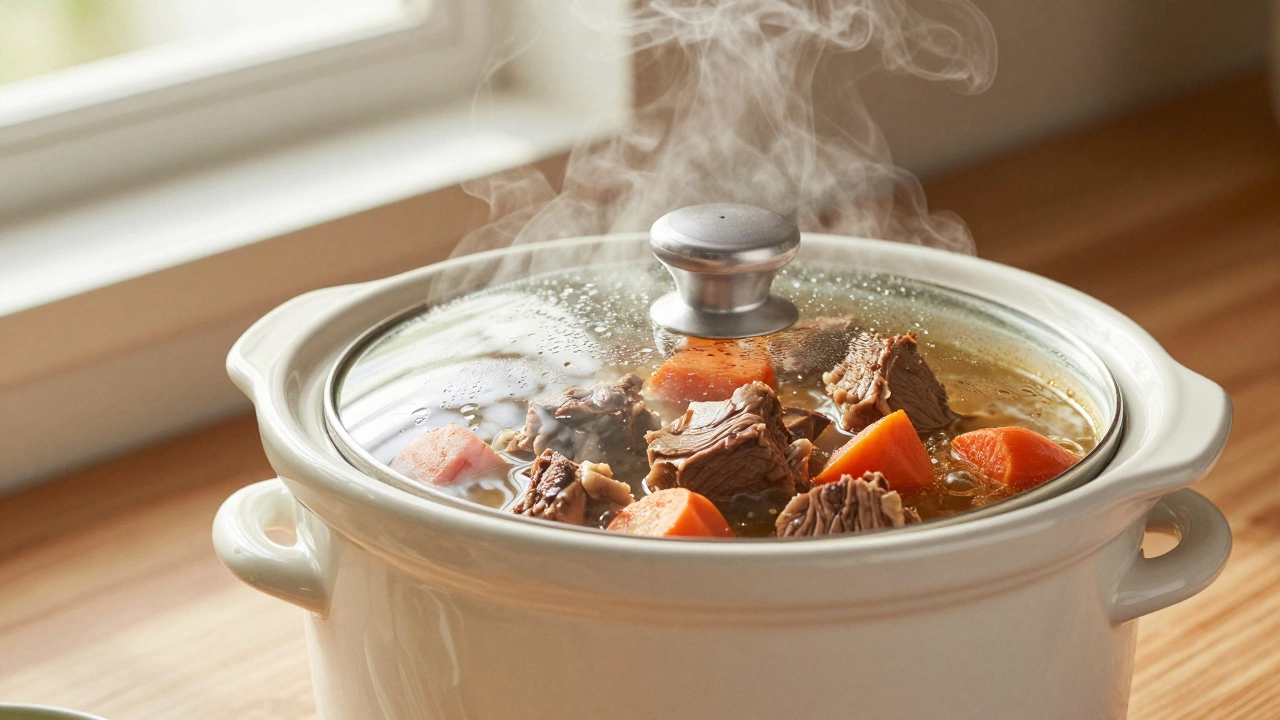
Slow Cooker High vs. Low Converter
It is one of the most persistent myths in home cooking. You read a recipe that calls for eight hours on low, but you only have four hours before dinner. Your instinct tells you to just crank the dial to high and cut the time in half. It sounds logical, right? Double the heat, halve the time. But if you actually do this with a tough chuck roast or a delicate chicken breast, you might end up with meat that is either dangerously undercooked or dry as sawdust.
The short answer is no. Four hours on high is not exactly the same as eight hours on low. While they reach similar internal temperatures eventually, the texture, moisture retention, and safety margins are different. Understanding why matters if you want consistent results from your slow cooker.
The Physics of Heat: Why Time Matters More Than Temperature
To understand why you cannot simply swap these settings, you have to look at how a slow cooker works. Unlike an oven or a stovetop pan, a slow cooker is designed to be inefficient. It uses thick ceramic walls and a tight-fitting lid to trap steam and maintain a gentle, steady temperature.
Most modern slow cookers operate at two distinct temperatures:
- Low Setting: Typically hovers around 190°F to 200°F (88°C to 93°C).
- High Setting: Typically reaches 300°F to 350°F (149°C to 177°C) internally, though the heating element itself may get hotter.
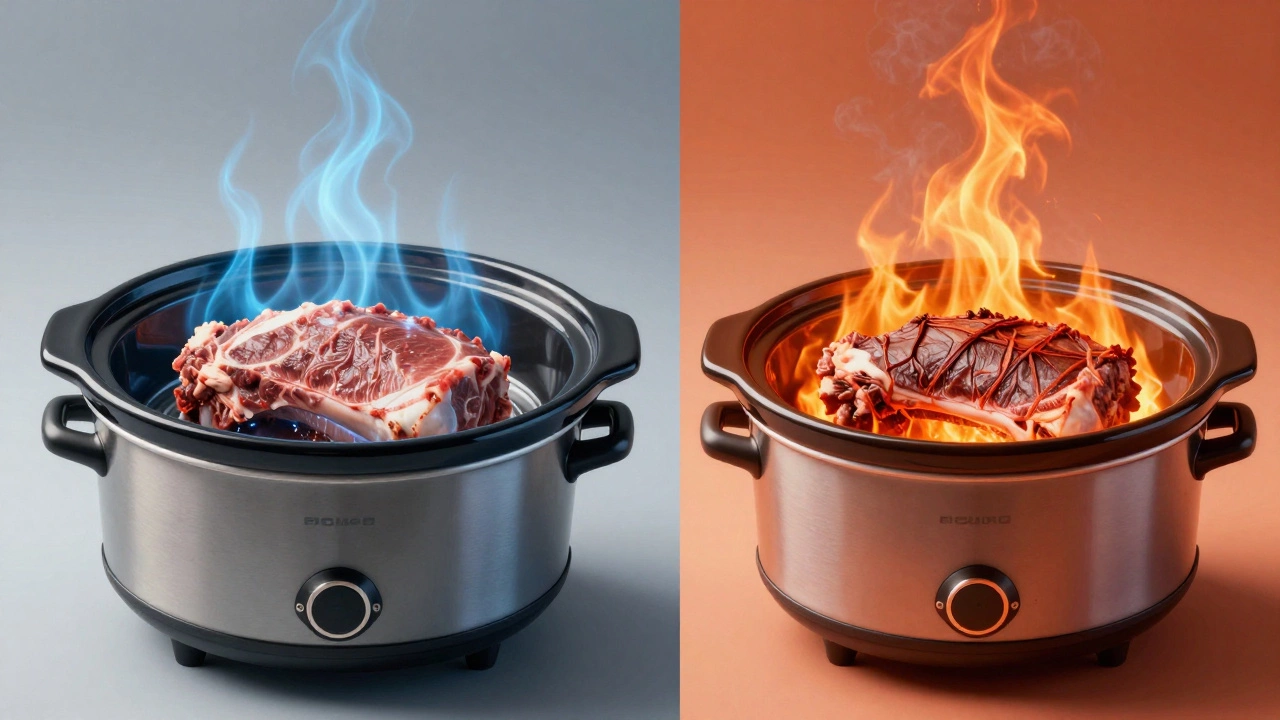
The key difference isn't just the final temperature; it is the rate at which the food gets there. On low, the food warms up slowly. This gradual increase allows collagen in tough cuts of meat to break down into gelatin over a long period. This process, known as hydrolysis, requires both heat and time. If you rush it by using high heat, the proteins tighten up quickly and squeeze out moisture before the connective tissues have a chance to soften properly.
Think of it like boiling an egg. If you drop an egg into rolling boiling water, the white sets instantly. If you start it in cold water and bring it to a simmer, the setting happens more evenly. In a slow cooker, "low" is that gentle simmer. "High" is closer to a boil. For delicate proteins like fish or chicken breasts, high heat can turn them rubbery in minutes, whereas low heat keeps them tender for hours.
The Safety Zone: Bacteria and Internal Temperatures
Safety is the biggest reason you should not blindly halve cooking times. Food safety guidelines rely on the concept of the "danger zone," which is between 40°F and 140°F (4°C to 60°C). Bacteria multiply rapidly in this range.
When you put raw meat into a cold slow cooker and set it to low, it takes about three to four hours for the internal temperature of the pot to rise above 140°F. During those first few hours, the meat is sitting in the danger zone. However, because the total cooking time is so long (8+ hours), the eventual high internal temperature kills off any bacteria that managed to survive the initial phase.
If you switch to high, the pot heats up faster-usually reaching safe temperatures within two hours. This seems safer, right? Not necessarily. The problem arises when people try to cook frozen meat. Many manufacturers explicitly warn against putting frozen blocks of meat into a slow cooker, regardless of the setting. A large frozen roast will stay in the danger zone for too long on low, allowing bacteria to thrive. On high, it might thaw unevenly, leaving cold spots where pathogens survive while the outside cooks.
For best practices, always thaw meat in the refrigerator before slow cooking. This ensures the entire piece enters the pot at a safe starting temperature, reducing the time spent in the danger zone whether you choose high or low.
Texture Differences: Tough Cuts vs. Tender Proteins
The impact of high versus low depends heavily on what you are cooking. Not all ingredients react the same way to heat intensity.
| Ingredient Type | Best Setting | Why? |
|---|---|---|
| Tough Beef (Chuck, Brisket) | Low (8-10 hours) | Needs long, gentle heat to break down collagen without drying out. |
| Pork Shoulder | Low (8-10 hours) | Similar to beef; high heat can make it stringy rather than shreddable. |
| Chicken Thighs (Bone-in) | High (4-5 hours) or Low (6-8 hours) | Fatty enough to handle higher heat, but low yields juicier results. |
| Chicken Breasts | High (2-3 hours max) | Lean meat dries out quickly. Never cook on low for 8 hours; it will be chalky. |
| Vegetables (Carrots, Potatoes) | Add halfway through | They disintegrate if cooked for 8 hours on low or high. |
Notice the chicken breast example. If a recipe calls for eight hours on low for chicken thighs, you cannot substitute boneless breasts and expect the same result. Breasts have very little fat or connective tissue. On low for eight hours, they become dry and fibrous. On high for four hours, they might still be okay, but you risk overcooking them if you aren't careful. This is why generic conversions fail.
Can You Convert Recipes? The General Rule of Thumb
While exact equivalence doesn't exist, you can use a rough conversion guideline for flexible recipes like soups, stews, and braises. The general rule accepted by most culinary experts is:
1 hour on High ≈ 2 to 2.5 hours on Low
This means that if a recipe says 8 hours on low, you could try 3.5 to 4 hours on high. However, this is not a precise science. Here is how to adjust safely:
- Check Early: Start checking the food at the 3-hour mark if converting from 8 hours low to high. Meat carries over cooking, meaning it continues to cook after you take it out of the pot.
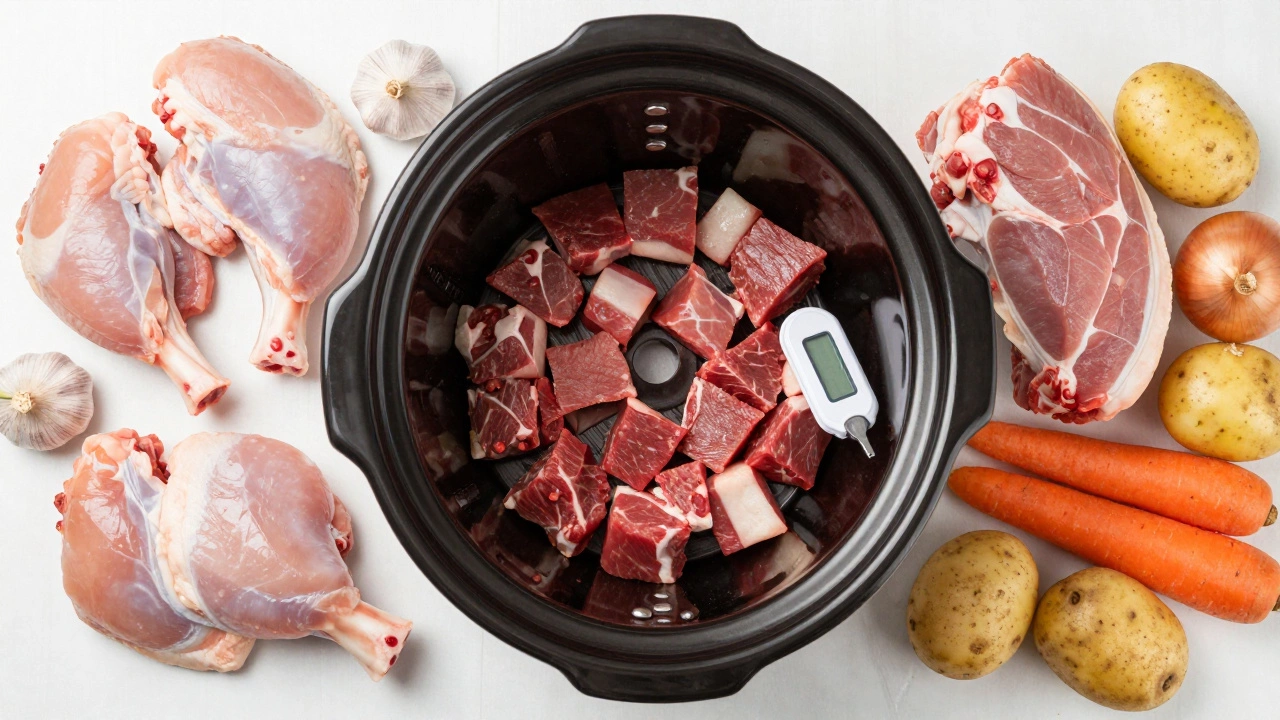
- Use a Thermometer: Don't guess. Insert a digital meat thermometer into the thickest part of the meat. For poultry, aim for 165°F (74°C). For beef stew, you want it tender enough to pull apart with a fork, usually around 195°F-205°F (90°C-96°C) for optimal texture.
- Adjust Liquids: High heat evaporates liquid slightly faster than low heat, even with a lid. You may need to add an extra quarter cup of broth or water if switching to high for a longer duration.
Common Mistakes When Switching Settings
Even experienced cooks make errors when trying to speed up slow cooking. Avoid these pitfalls:
- Lifting the Lid: Every time you open the lid to check on the food, you lose about 15 to 20 minutes of cooking time. The temperature drops significantly, and it takes a while to recover. Resist the urge to peek.
- Crowding the Pot: Slow cookers work by circulating steam. If you pack the pot too full, the center won't heat evenly. This is especially dangerous when using high heat, as the outside may burn while the inside remains raw.
- Adding Dairy Too Early: Milk, cream, and yogurt can curdle if exposed to high heat for too long. If you convert a low-and-slow recipe to high, wait until the last 30 minutes to add dairy products.
- Ignoring Altitude: If you live at high altitude, water boils at a lower temperature. This affects slow cookers less than pressure cookers, but it can still extend cooking times slightly. You may need to add 10-15% more time regardless of the setting.
When to Stick to Low
There are certain scenarios where you should never try to shortcut with high heat. These include:
- Overnight Cooking: If you are leaving the house for the day, low is safer. Most slow cookers are designed to run unattended for 8-10 hours on low. Running on high for 8 hours can lead to burnt bottoms or dried-out food.
- Delicate Fish: Fish fillets fall apart easily. They are better suited to a quick high-heat cook (1-2 hours) or a very gentle low-heat bath (if poaching in liquid). There is no middle ground.
- Large Roasts: A 5-pound pork shoulder needs time for the heat to penetrate to the center. Cooking it on high might cook the exterior to jerky-like consistency before the center is safe.
Practical Tips for Busy Weeknights
If your goal is to save time, consider these strategies instead of just cranking up the heat:
- Pre-cook Ingredients: Sauté onions, garlic, and brown meat in a skillet before adding them to the slow cooker. This adds flavor and reduces the time needed for the flavors to meld.
- Cut Meat Smaller: Cubed beef stew meat cooks much faster than a whole chuck roast. Smaller pieces reach safe internal temperatures quicker and require less time to tenderize.
- Use a Pressure Cooker: If you truly need a meal in 4 hours or less, a pressure cooker (like an Instant Pot) is a different tool entirely. It uses steam pressure to raise the boiling point of water, cooking food up to 70% faster than a slow cooker. However, it does not develop the same deep, caramelized flavors as a long slow cook.
Conclusion: Trust the Process
Slow cooking is called "slow" for a reason. The magic lies in the patience. While you can often get away with swapping 8 hours low for 4 hours high in forgiving dishes like chili or bean soup, it is risky for meats and delicate vegetables. The texture changes are subtle but noticeable. If you have the time, let the low setting do its job. If you are short on time, adjust the recipe format rather than just changing the dial. Cut the meat smaller, pre-sear the ingredients, or switch to a pressure cooker for a true time-saving solution.
Can I leave my slow cooker on high overnight?
It is generally not recommended. Most slow cooker manufacturers advise against running the appliance on high for more than 4-6 hours continuously. Leaving it on high overnight (8+ hours) increases the risk of burning the food, drying it out, or potentially causing a fire hazard if the pot runs empty. Always use the low setting for unattended, long-duration cooking.
Does cooking on high kill more bacteria than low?
Both settings kill bacteria effectively as long as the food reaches a safe internal temperature (165°F for poultry, 145°F for whole cuts of beef/pork/lamb). High heat reaches these temperatures faster, reducing the time food spends in the "danger zone." However, low heat is still safe because the prolonged exposure to heat eventually eliminates pathogens. The key is ensuring the food stays hot enough once cooked.
Why does my meat get tough when I cook it on high?
Toughness usually comes from muscle fibers tightening and squeezing out moisture before the connective tissue (collagen) has broken down. Collagen needs time and sustained heat to turn into gelatin. High heat cooks the muscle fibers quickly, resulting in a dry, chewy texture. Low heat allows the collagen to dissolve slowly, keeping the meat moist and tender.
Can I put frozen meat directly into a slow cooker on high?
No, you should not. Putting a large block of frozen meat into a slow cooker, even on high, keeps the food in the bacterial danger zone for too long. The outside may cook while the inside remains frozen, creating an environment where bacteria can thrive. Always thaw meat in the refrigerator before slow cooking.
What is the best way to speed up a slow cooker recipe?
Instead of just turning up the heat, cut your ingredients into smaller, uniform pieces. This increases surface area and allows heat to penetrate faster. You can also pre-cook aromatics like onions and garlic in a pan to boost flavor quickly. For significant time savings, consider using a pressure cooker, which is designed for rapid cooking.